Satureja thymbra
L.
Thyme-leaved savory, Barrel sweetener, Roman hyssop
iNaturalist· cc-by
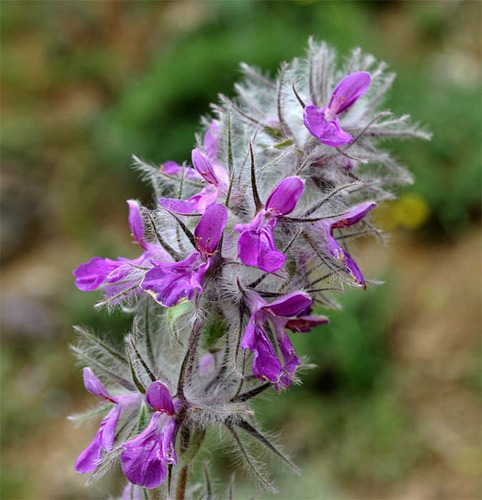
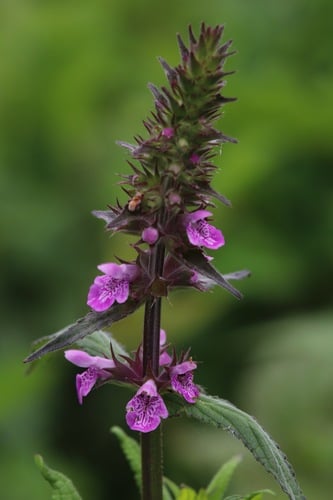
(c) Eleftherios Katsillis, some rights reserved (CC BY), uploaded by Eleftherios Katsillis
iNaturalist· cc-by
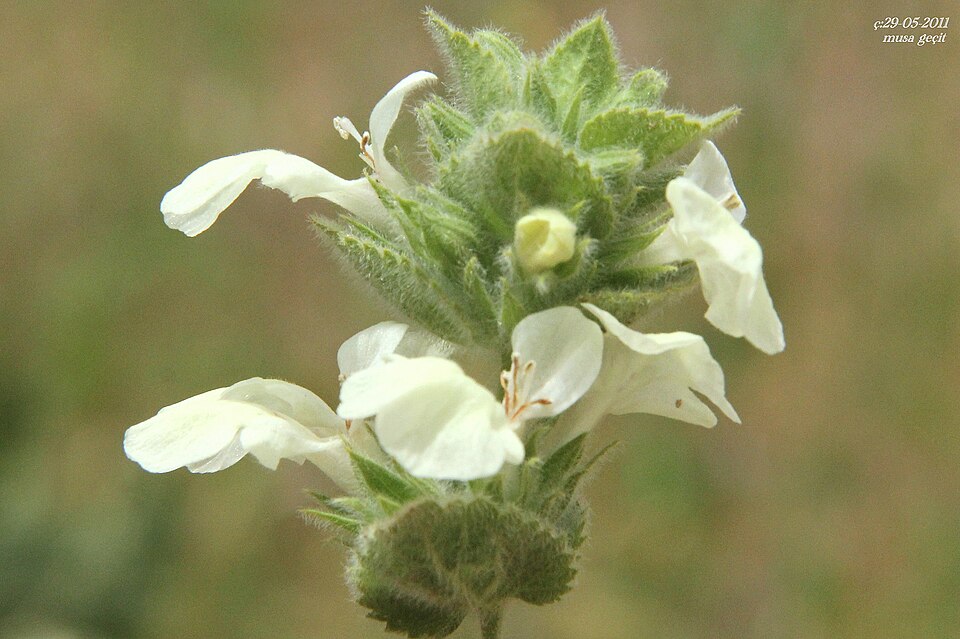
(c) Eleftherios Katsillis, some rights reserved (CC BY), uploaded by Eleftherios Katsillis
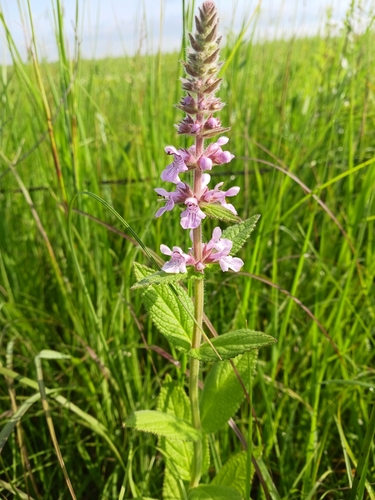
iNaturalist· cc-by-nc
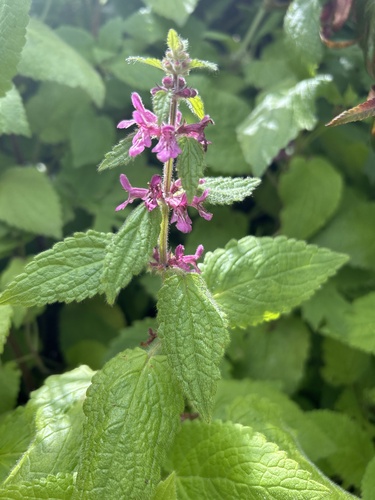
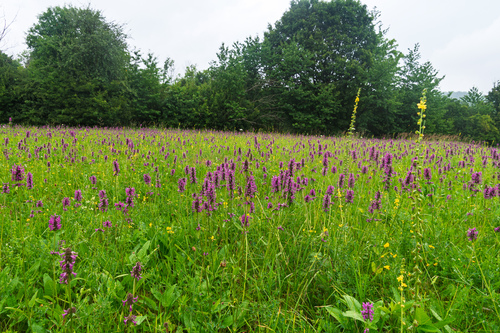
(c) Stefan Neuwirth, some rights reserved (CC BY-NC), uploaded by Stefan Neuwirth
Summary
Source: WikipediaSatureja thymbra, commonly known as savory of Crete, whorled savory, pink savory, and Roman hyssop (Arabic: za'atar rumi; za'atar franji), is a perennial-green dwarf shrub of the family Lamiaceae. It is noted for its dark-green leaves, which grow on numerous, closely compacted branches, reaching a height of 20–50 centimetres (8–19+1⁄2 in). Pink to purple flowers blossom between March and June. It is native to southeastern Europe and Libya, Africa.
Description
Cretan savory is a shrub reaching 40cm tall and wide at a medium growth rate. Hardy to UK zone 7, it flowers from May to June. Self-fertile with both male and female organs, the plant attracts wildlife. It tolerates light sandy, medium loamy, and heavy clay soils across mildly acidic to mildly alkaline pH ranges. The plant can grow in semi-shade or full sun and prefers moist soil.
Edible Uses
The leaves have a thyme-like flavour and are used as a seasoning for pulses, savoury breads, brine-cured olives, and vegetables. The leaves and young shoots also make an excellent tea substitute, said to be among the best-tasting of all herb teas.
Traditional Uses
The leaves are used for flavouring in cooking. It is like thyme. They are used for seasoning brine cured olives, grilled meats, and vegetables. (It is used to clean wine barrels before the next year's vintage.) The leaves are used for tea.
Medicinal Uses
The leaves are antibacterial, aromatic, digestive, expectorant, and tonic. They are used internally to treat minor digestive discomfort and bronchial congestion. Leaves can be harvested during the growing season and used fresh or dried.
Distribution
It is a Mediterranean plant.
Where It Grows
Australia, Europe, Greece, Israel, Jordan, Lebanon, Mediterranean, Middle East, Spain, Syria, Turkey, Türkiye,
Cultivation
Requires a sunny position in a well-drained soil. Plants are intolerant of soils that remain damp. Prefers a neutral to alkaline soil. This species is not very hardy outdoors in Britain, plants suffer damage at temperatures below freezing but they can be grown as annuals, flowering and setting seed in their first year. Plants will be hardier in soils that are very well drained and also if the soil is a bit on the poor side.
Propagation
Surface-sow seed in April in a greenhouse, keeping the compost moist at all times. Germination can be slow and erratic but usually occurs within a month. Prick seedlings into individual pots as soon as they are large enough to handle, and plant out during summer if growth permits; otherwise overwinter in a cold frame and plant out in late spring or early summer the following year. Half-ripe wood cuttings of 5–8cm taken at a node in July or August can be rooted in a frame, potted up in autumn, overwintered under cover, and planted out the following late spring or early summer — a high percentage usually succeed. Young wood cuttings, preferably with a heel, taken in April or May in a frame can be planted out in summer if growing well, or overwintered in a cold frame for planting out the following year. Division in early spring as growth begins works best when soil has been mounded into the bottom 20cm of the plant during the previous summer. Pot up divisions and grow on in a cold frame until established before planting out in summer.
Other Uses
A strong infusion of the herb is traditionally used in autumn to clean wine barrels ahead of the new vintage. An essential oil extracted from the plant contains 19% thymol and is also rich in carvacrol; it is used in the pharmaceutical industry. The plant is a good bee plant and is rarely if ever browsed by deer. It also functions as a dynamic accumulator.
Synonyms
Also Known As
Karakekik, Kekik, Peynir kekigi, Tas kekigi, Thryba, Za-atar rumi
References (12)
- Davis, S.D., Heywood, V.H., & Hamilton, A.C. (eds), 1994, Centres of plant Diversity. WWF. Vol 2. p 340
- Dogan, Y., 2012, Traditionally used wild edible greens in the Aegean Region of Turkey. Acta Societatis Botanicorum Poloniae 81(4): 329-342
- Dogan, Y. et al, 2013, Wild Edible Plants sold in the Local Markets of Izmir, Turkey. Pak. J. Bot. 45(S1): 177-184
- Ertug, F., 2004, Wild Edible Plants of the Bodrum Area. (Mugla, Turkey). Turk. J. Bot. 28 (2004): 161-174
- Ertug, F, Yenen Bitkiler. Resimli Türkiye Florası -I- Flora of Turkey - Ethnobotany supplement
Show all 12 references Hide references
- Facciola, S., 1998, Cornucopia 2: a Source Book of Edible Plants. Kampong Publications, p 136
- Gurdal, B. & Kultur, S., 2014, The edible and miscellaneous useful plants in Marmaris (Southwest Turkey). İstanbul Ecz. Fak. Derg. / J. Fac. Pharm. Istanbul 44(1) 2014 pp.69-78
- Hemphill, I, 2002, Spice Notes. Macmillan. p 361
- Hibbert, M., 2002, The Aussie Plant Finder 2002, Florilegium. p 287
- Ozcan, M., 2004, Mineral contents of some plants used as condiments in Turkey. Food Chemistry 84:437-440
- Rivera, D. et al, 2006, Gathered Mediterranean Food Plants - Ethnobotanical Investigations and Historical Development, in Heinrich M, Müller WE, Galli C (eds): Local Mediterranean Food Plants and Nutraceuticals. Forum Nutr. Basel, Karger, 2006, vol 59, pp 18–74
- World Checklist of Useful Plant Species 2020. Royal Botanic Gardens, Kew