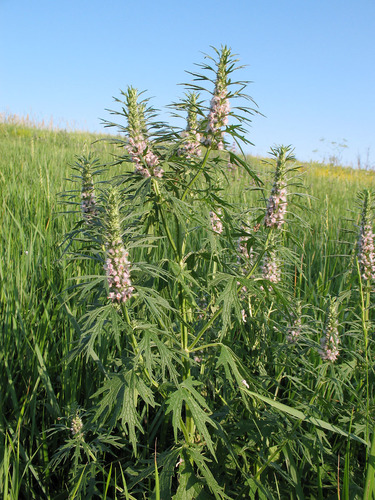
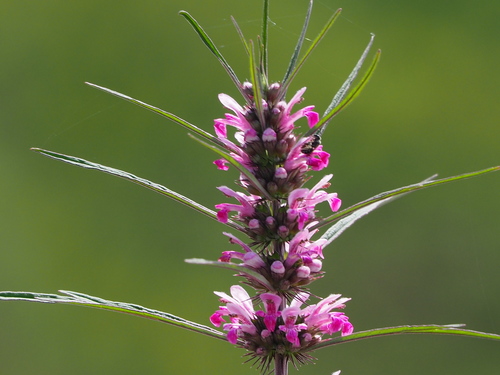
Scutellaria baicalensis
Georgi
Baikal skullcap, Soksokeum-phul
iNaturalist· cc-by-nc
(c) Yao Li, some rights reserved (CC BY-NC), uploaded by Yao Li
iNaturalist· cc-by-nc
(c) Chuangzao, some rights reserved (CC BY-NC)
iNaturalist· cc-by-nc
(c) Chuangzao, some rights reserved (CC BY-NC)
Summary
Source: WikipediaScutellaria baicalensis, with the common name Baikal skullcap or Chinese skullcap, is a species of flowering plant in the family Lamiaceae.
Description
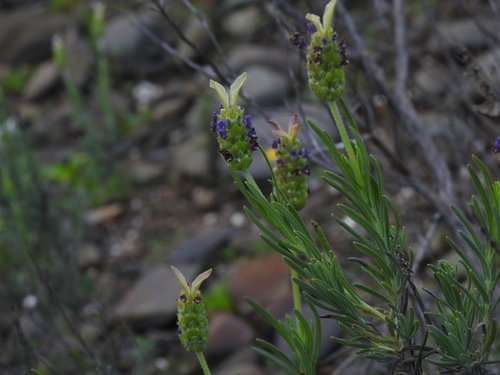
A herb which keeps growing from year to year. It grows 38 cm high. It spreads 20 cm wide. It lies along the ground near its base. The leaves are sword shaped and 3-4 cm long. They are slightly hairy. The flowers are purple-blue and 2.5 cm long. They grow along one side of the stalk.
Edible Uses
Young leaves can be cooked as a vegetable. The whole plant can also be dried and used as a tea substitute.
Traditional Uses
The young leaves are eaten as a boiled vegetable. The plant is dried and used for tea.
This uses section is brief — help expand it
Medicinal Uses
Baikal skullcap is a prominent herb in Chinese medicine, considered one of the 50 fundamental herbs, primarily used for 'hot and damp' conditions such as dysentery and diarrhoea. It has been used medicinally for over 2,000 years. Recent research has found that the roots contain flavonoids that enhance liver function and have anti-inflammatory and antiallergenic effects. The root is anodyne, antibacterial, anticholesterolemic, antipyretic, antispasmodic, astringent, cholagogue, diuretic, expectorant, febrifuge, haemostatic, laxative, nervine, mildly sedative, stomachic, and tonic for tuberculosis. It is reputedly calming to the foetus in pregnant women. Internally, the root is used for enteritis, dysentery, diarrhoea, jaundice, chronic hepatitis, urinary tract infections, hypertension, threatened miscarriage, nosebleed, and haemorrhage from the lungs or bowel. It is one of the ingredients of the Chinese drug 'injection of three yellow herbs'. The root is harvested in autumn or spring from plants 3–4 years old and dried for later use. The seed is used to cleanse the bowels of blood and pus. The plant is also used in the treatment of prostate cancer.
Known Hazards
There have been several reports and small case series of acute liver injury with jaundice arising 1 to 3 months after starting herbal or dietary supplements containing S. baicalensis.
Distribution
It is a temperate plant. It grows in the eastern forest in Manchuria. In northern China it grows between 100-2,000 m above sea level. It suits hardiness zones 5-9.
Where It Grows
Asia, Australia, China*, Japan*, Korea, Manchuria, Mongolia, Russia, Siberia, Tasmania,
Cultivation
Succeeds in a sunny position in any ordinary garden soil that does not dry out during the growing season. Prefers a light well-drained soil in sun or partial shade. This species requires sharp drainage and, once established, is drought tolerant. Plants are hardy to at least -15°c. A very ornamental plant.
Propagation
Sow seed outdoors in situ in late spring. With only a small quantity of seed, sow in a pot in a cold frame in early spring, prick out into individual pots when large enough to handle, and plant out in summer. Divide in spring just before new growth begins. Larger divisions can go directly into permanent positions. Smaller divisions are best potted up and grown on in a lightly shaded cold frame until well established before planting out in summer.
Other Uses
None known
Notes
There are about 300-350 Scutellaria species. It has anticancer properties. It also reduces dengue virus multiplication.
Synonyms
References (12)
- BARANOV,
- Bemerk. Reise Russ. Reich 1:223. 1775
- Bremness, L., 1994, Herbs. Collins Eyewitness Handbooks. Harper Collins. p 217
- Brickell, C. (Ed.), 1999, The Royal Horticultural Society A-Z Encyclopedia of Garden Plants. Convent Garden Books. p 948
- Cundall, P., (ed.), 2004, Gardening Australia: flora: the gardener's bible. ABC Books. p 1327
Show all 12 references Hide references
- Facciola, S., 1998, Cornucopia 2: a Source Book of Edible Plants. Kampong Publications, p 136
- Hibbert, M., 2002, The Aussie Plant Finder 2002, Florilegium. p 289
- Khasbagan, Hu-Yin Huai, and Sheng-Ji pei, 2000, Wild Plants in the Diet of Athorchin Mongol Herdsmen in Inner Mongolia. Economic Botany 54(4): 528-536
- Kintzios, S. E., 2006, Terrestrial Plant-Derived Anticancer Agents and Plant Species Used in Anticancer research. Critical Reviews in Plant Sciences. 25: pp 79-113
- Lawton, B.P., 2002, Mints. A Family of Herbs and Ornamentals. Timber Press, Portland, Oregon. p 194 (Drawing)
- Plants for a Future database, The Field, Penpol, Lostwithiel, Cornwall, PL22 0NG, UK. http://www.scs.leeds.ac.uk/pfaf/
- Urgamal, M., Oyuntsetseg, B., Nyambayar, D. & Dulamsuren, Ch. 2014. Conspectus of the vascular plants of Mongolia. (Editors: Sanchir, Ch. & Jamsran, Ts.). Ulaanbaatar, Mongolia. “Admon“ Press. 334pp. (p. 79-90).