Arctostaphylos uva-ursi
(L.) Spreng.
Bear berry, Kinnikinick, Brawlins, Bear's grape, Creashak, Mountain box, Mealy bearberry, Stoneberry, Mlivnjak
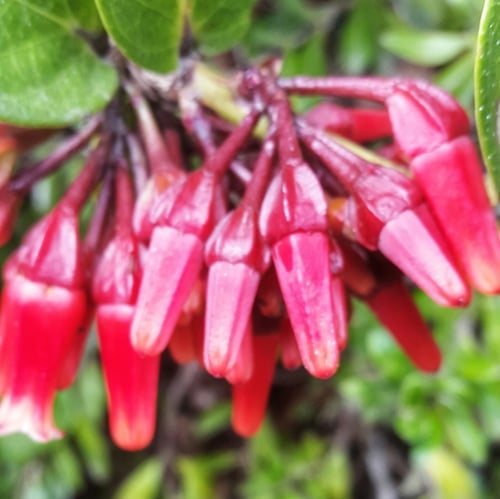
iNaturalist· cc-by-nc
(c) Remington Jackson, some rights reserved (CC BY-NC), uploaded by Remington Jackson
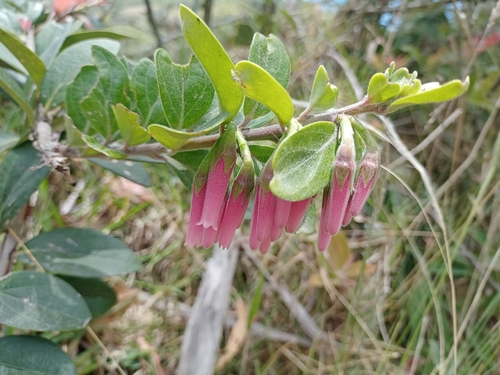
iNaturalist· cc-by-nc
(c) Dmitry Ivanov, some rights reserved (CC BY-NC), uploaded by Dmitry Ivanov
iNaturalist· cc-by-sa
(c) Douglas Goldman, some rights reserved (CC BY-SA), uploaded by Douglas Goldman
Summary
Source: WikipediaArctostaphylos uva-ursi is a plant species of the genus Arctostaphylos widely distributed across circumboreal regions of the subarctic Northern Hemisphere. Kinnikinnick (from the Unami language for "smoking mixture") is a common name in Canada and the United States. Growing up to 30 centimetres (12 inches) in height, the leaves are evergreen. The flowers are white to pink and the fruit is a red berry. One of several related species referred to as bearberry, its specific epithet uva-ursi means "grape of the bear" in Latin, similar to the meaning of the generic epithet Arctostaphylos (Greek for "bear grapes").
Description
It is a shrub. It normally lies along the ground. It often cascades over rocks and walls. It forms mats. It grows 10 cm high and spreads 50 cm wide. The leaves are alternate and simple. They are paddle shaped. They are thick and shiny and 12-25 mm long. The leaves are dark green. The leaves turn red in autumn. The flowers are almost round and in small clusters. They droop. They are dull pink. The fruit are green berries. They turn red as they ripen.
Edible Uses
Edible Parts: Fruit Edible Uses: Tea Fruits are edible but bland and very astringent, with white sawdust-like pulp under red skins. Seeds are rock-hard and not softened by cooking. Despite this, the fruits were eaten by Native Americans fresh, dried, or in mixtures with other berries [2-3]. Fruit - raw or cooked. Insipid, dry and mealy, it becomes sweeter when cooked. Added to stews etc, it is a good source of carbohydrates. The fruit can also be cooked and eaten. They are used for preserves or made into jelly, marmalade, sauces and pastes. The ripe fruit can be soaked in water or butter to reduce the dryness. Plants are best harvested after the first frost which sweetens them. They can be left to lie all winter under the snow. [1-4]. The fruit can also be used to make a cooling drink or used for preserves etc. It can be dried and stored for later use. The fruit is about 6mm in diameter. A tea is made from the dried leaves.
Traditional Uses
The dried fruit are used for tea. The fruit can also be cooked and eaten. They are used for preserves or made into jelly, marmalade, sauces and pastes. The ripe fruit can be soaked in water or butter to reduce the dryness. The dried leaves are used for tea. Caution: Too many fruit can cause stomach problems and should not be eaten by pregnant women.
Medicinal Uses
Antiseptic Astringent Birthing aid Diuretic Hypnotic Kidney Lithontripic Poultice Skin Tonic Urinary Women's complaints Bearberry was commonly used by many native North American Indian tribes to treat a wide range of complaints and has also been used in conventional herbal medicine for hundreds of years, it is one of the best natural urinary antiseptics. The leaves contain hydroquinones and are strongly antibacterial, especially against certain organisms associated with urinary infections. The plant should be used with caution, however, because hydroquinones are also toxic. The leaves are antiseptic, astringent, diuretic, lithontripic, hypnotic and tonic. The dried leaves are used in the treatment of a variety of complaints. These leaves should be harvested in early autumn, only green leaves being selected, and then dried in gentle heat. A tea made from the dried leaves is much used for kidney and bladder complaints and inflammations of the urinary tract such as acute and chronic cystitis and urethritis, but it should be used with caution and preferably only under the supervision of a qualified practitioner. The tea is more effective if the urine is alkaline, thus it is best used in combination with a vegetable-based diet. Externally, a poultice of the infused leaves with oil has been used as a salve to treat rashes, skin sores etc, and as a wash for a baby's head. An infusion of the leaves has been used as an eyewash, a mouthwash for cankers and sore gums and as a poultice for back pains, rheumatism, burns etc. The dried leaves have been used for smoking as an alternative to tobacco. One report says that it is unclear whether this was for medicinal purposes or for the intoxicated state it could produce, whilst another says that the leaves were smoked to treat headaches and also as a narcotic. The herb should not be prescribed to children, pregnant women or patients with kidney disease. Another report says that some native North American Indian tribes used an infusion of the stems, combined with blueberry stems (Vaccinium spp) to prevent miscarriage without causing harm to the baby, and to speed a woman's recovery after the birth. Other uses: fluid retention and bed wetting. Claimed to strengthen the heart muscle and urinary tract and to return the womb to its normal size after childbirth . Treatment should be short (seven days) and used with an alkaline diet . Not recommended for children under 12.
Known Hazards
One review indicated that ingestion of large doses can cause allergic reactions, with nausea and seizures, as a potential emergency condition. Preliminary studies indicate that arbutin may be toxic when ingested in high doses. Uva ursi may cause adverse effects in people with liver or kidney disease, or pregnant and breastfeeding women. The leaves contain arbutin, which metabolizes to form hydroquinone, a potential liver toxin.
Distribution
It is a temperate plant. It grows naturally in the colder regions of the northern hemisphere. It grows in sandy and rocky soils. It suits hardiness zones 4-9.
Where It Grows
Alaska, Albania, Andorra, Arctic, Asia, Australia, Balkans, Bosnia, Britain, Canada, Central America, Estonia, Europe, Finland, Guatemala, Iceland, Lithuania, Macedonia, Mongolia, North America, Norway, Russia, Slovenia, Scandinavia, Spain, Tasmania, Turkey, Türkiye, Ukraine, USA,
Cultivation
Plants can be grown from seed. They can also be grown from cuttings. It needs an acid soil of pH 5.
Propagation
Seed - best sown in a greenhouse as soon as it is ripe. Pre-soak dried seed in boiling water for 10 - 20 seconds or burn some straw on top of them and then stratify at 2 - 5°c for 2 months. The seed usually germinates in 2 - 3 months at 15°c. When large enough to handle, prick the seedlings out into individual pots and grow them on in a cold frame or greenhouse for at least their first winter. Plant out in late spring or early summer. Cuttings of side shoots of the current season's growth, 5 - 8cm with a heel, August to December in a frame. The cuttings are very slow and can take a year to root. Division in early spring. Take care because the plant resents root disturbance. Pot the divisions up and keep them in a lightly shaded position in a cold frame or greenhouse until they are growing away actively. Layering of long branches in early spring.
Other Uses
Beads Dye Pioneer Soil stabilization Tannin Waterproofing A yellowish-brown dye is obtained from the leaves, it does not require a mordant. A grey-brown dye is obtained from the fruit. The dried fruits are used in rattles and as beads on necklaces etc. The leaves are a good source of tannin. The mashed berries can be rubbed on the insides of coiled cedar root baskets in order to waterproof them. A good ground-cover for steep sandy banks in a sunny position or in light shade. A carpeting plant, growing fairly fast and carpeting as it spreads. It is valuable for checking soil erosion on watersheds. This is also a pioneer plant in the wild, often being the first plant to colonize burnt-over areas, especially on poor soils. There are a number of named varieties developed for their ornamental interest. Leaves were widely used in Native American smoking mixtures called “kinnikinnick,” often blended with willow bark, mint, or wild tobacco [2-3]. Forms extensive mats via stolons, important for erosion control and as groundcover in alpine and boreal habitats. Special Uses Food Forest Ground cover
Production
Plants are best harvested after the first frost which sweetens them. They can be left to lie all winter under the snow.
Notes
There are about 50 Arctostaphylos species.
Nutrition
| Part | Moisture | kJ | kcal | Protein | Vit A | Vit C | Iron | Zinc |
|---|---|---|---|---|---|---|---|---|
| Fruit | 75 | 426 | 102 | 0.7 | — | — | 0.7 | 0.5 |
| Leaves - tea | — | — | — | — | — | — | — | — |
Synonyms
Also Known As
Boixerola, Garrolla, Gayuba, Leesikad, Milicw, Mjolbaer, Siaphol, Toloknianka, Vednozeleni gornik
References (53)
- Beckstrom-Sternberg, Stephen M., and James A. Duke. "The Foodplant Database." http://probe.nalusda.gov:8300/cgi-bin/browse/foodplantdb.(ACEDB version 4.0 - data version July 1994)
- Bircher, A. G. & Bircher, W. H., 2000, Encyclopedia of Fruit Trees and Edible Flowering Plants in Egypt and the Subtropics. AUC Press. p 39
- Bodkin, F., 1991, Encyclopedia Botanica. Cornstalk publishing, p 96
- Bonet, M. A. & Valles, J., 2002, Use of non-crop food vascular plants in Montseny biosphere reserve (Catalonia, Iberian Peninsula). International Journal of Food Sciences and Nutrition (2002) 53, 225–248
- Bremness, L., 1994, Herbs. Collins Eyewitness Handbooks. Harper Collins. p 94
Show all 53 references Hide references
- Brown, D., 2002, The Royal Horticultural Society encyclopedia of Herbs and their uses. DK Books. p 127
- Cormack, R. G. H., 1967, Wild Flowers of Alberta. Commercial Printers Edmonton, Canada. p 243
- Cundall, P., (ed.), 2004, Gardening Australia: flora: the gardener's bible. ABC Books. p 178
- Elias, T.S. & Dykeman P.A., 1990, Edible Wild Plants. A North American Field guide. Sterling, New York p 159
- Esperanca, M. J., 1988. Surviving in the wild. A glance at the wild plants and their uses. Vol. 1. p 88
- Etherington, K., & Imwold, D., (Eds), 2001, Botanica's Trees & Shrubs. The illustrated A-Z of over 8500 trees and shrubs. Random House, Australia. p 102
- Facciola, S., 1998, Cornucopia 2: a Source Book of Edible Plants. Kampong Publications, p 95
- Girard, N. J., 2020, Sustainable Foraging of Wild Edible Plants in Norway. A Biocultural Approach. M. Sc. thesis Norwegian University. p 131
- Glowinski, L., 1999, The Complete Book of Fruit Growing in Australia. Lothian. p 181
- Hedrick, U.P., 1919, (Ed.), Sturtevant's edible plants of the world. p 70
- Heller, C. A., 1962, Wild Edible and Poisonous Plants of Alaska. Univ. of Alaska Extension Service. p 38
- Heywood, V.H., Brummitt, R.K., Culham, A., and Seberg, O. 2007, Flowering Plant Families of the World. Royal Botanical Gardens, Kew. p 140
- Hibbert, M., 2002, The Aussie Plant Finder 2002, Florilegium. p 32
- Holloway, P. S. & Alexander, G., 1990, Ethnobotany of the Fort Yukon Region, Alaska. Economic Botany, Vol. 44, No. 2 pp. 214-225
- Huxley, A. (Ed.), 1977, The Encyclopedia of the Plant Kingdom. Chartweil Books. p 146
- Johansson, A., Laakso, P. and Kallio, H., 1997, Characterization of seed oils of wild, edible Finnish berries. Food Chemistry 204:300-307
- John, L., & Stevenson, V., 1979, The Complete Book of Fruit. Angus & Robertson p 75
- Jones, A., 2010, Plants that we eat. University of Alaska Press. p 122
- Kalle, R. & Soukand, R., 2012, Historical ethnobotanical review of wild edible plants of Estonia (1770s-1960s) Acta Societatis Botanicorum Poloniae 81(4):271-281
- Kiple, K.F. & Ornelas, K.C., (eds), 2000, The Cambridge World History of Food. CUP p 1785
- Kolosova, V., et al, 2020, Foraging in Boreal Forest: Wild Food Plants of the Republic of Karelia, NW Russia. Foods 2020, 9, 1015; p 9
- Kremer, B.P., 1995, Shrubs in the Wild and in Gardens. Barrons. p 112. (Fruit listed as inedible)
- Kuhnlein, H. V., et al, 2009, Indigenous Peoples' food systems. FAO Rome
- Lyle, S., 2006, Discovering fruit and nuts. Land Links. p 77
- MacKinnon, A., et al, 2009, Edible & Medicinal Plants of Canada. Lone Pine. p 120
- Pardo-de-Santayana, M., et al, 2005, The gathering and consumption of wild edible plants in the Campoo (Cantabria, Spain). International Journal of Food Sciences and Nutrition. 56(7): 529-542
- Pardo-de-Santayana, M., et al, 2007, Traditional knowledge of wild edible plants used in the northwest of the Iberian Peninsula (Spain and Portugal): a comparative study. Journal of Ethnobiology and Ethnomedicine 2007, 3:27
- Pieroni, A. & Soukand, R., 2018, Forest as Stronghold of Local Ecological Practice: Currently Used Wild Food Plants in Polesia, Northern Ukraine. Economic Botany, XX(X) pp. 1-21
- Plants for a Future database, The Field, Penpol, Lostwithiel, Cornwall, PL22 0NG, UK. http://www.scs.leeds.ac.uk/pfaf/
- Porsild, A.E., 1953, Edible Plants of the Arctic, Arctic 6:15-34, page 23
- Porsild, A.E., 1974, Rocky Mountain Wild Flowers. Natural History Series No. 2 National Museums of Canada. p 304
- Redzic, S. J., 2006, Wild Edible Plants and their Traditional Use in the Human Nutrition in Bosnia-Herzegovina. Ecology of Food and Nutrition, 45:189-232
- Ryan, S., 2008, Dicksonia. Rare Plants Manual. Hyland House. p 8
- Scotter, G. W., & Flygare, H., 1993, Wildflowers of the Canadian Rockies. Hurtig. p 118
- Shikov, A. N. et al, 2017, Traditional and Current Food Use of Wild Plants Listed in the Russian Pharmacopoeia. Frontiers in Pharmacology. Vol. 8 Article 841
- Stubbs, R. D., 1966, An investigation of the Edible and Medicinal Plants used by the Flathead Indians. MA thesis University of Montana. p 41
- Syst. veg. 2:287. 1825
- Tardio, J., et al, 2006, Ethnobotanical review of wild edible plants in Spain. Botanical J. Linnean Soc. 152, 27-71
- Toupal, R. S. & Hollenback, K., 2009, An Ethnobotany of Indiana Dunes National Lakeshore: Plant Uses of the Ojibwa People. Bureau of Applied research in Anthropology. University of Arizona
- Tozer, F., 2007, The Uses of Wild Plants. Green Man Publishing. p 32
- Turner, N., 1995, Food Plants of Coastal First Peoples. Royal BC Museum Handbook p 76
- Turner, N., 1997, Food Plants of Interior First Peoples. Royal BC Museum Handbook p 109
- Turner, N., et al, 2011, "Up on the Mountain": Ethnobotanical Important of Montane Sites in Pacific Coastal North America. Journal of Ethnobiology 31(1): 4-43
- Urgamal, M., Oyuntsetseg, B., Nyambayar, D. & Dulamsuren, Ch. 2014. Conspectus of the vascular plants of Mongolia. (Editors: Sanchir, Ch. & Jamsran, Ts.). Ulaanbaatar, Mongolia. “Admon“ Press. 334pp. (p. 79-90).
- Vanhanen, S. & Pesonen, P., 2015, Wild plant gathering in Stone Age Finland. Quaternary International xxx (2015) 1-13
- Whitney, C. W., et al, 2012, A Survey of Wild Collection and Cultivation of Indigenous Species in Iceland. Human Ecology 40:781-787
- www.ediblewildfood.com
- Young, J., (Ed.), 2001, Botanica's Pocket Trees and Shrubs. Random House. p 101