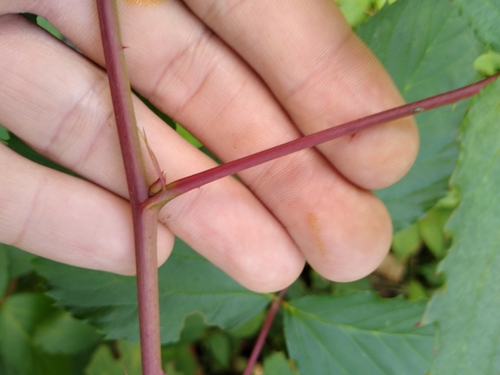
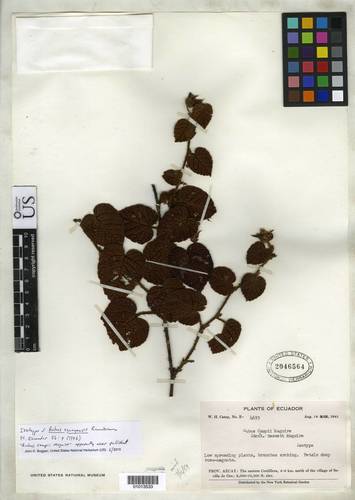
Sanguisorba canadensis
L.
American great burnet, Canadian burnet
iNaturalist· cc-by-nc
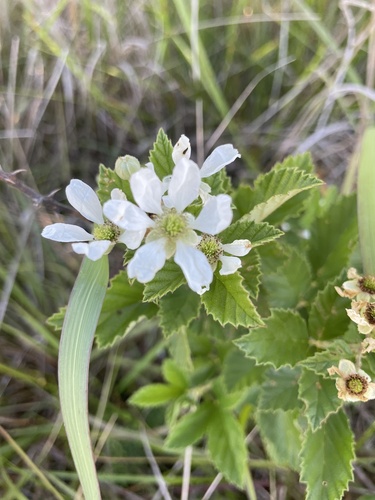
(c) David McCorquodale, some rights reserved (CC BY-NC), uploaded by David McCorquodale
iNaturalist· cc-by-nc
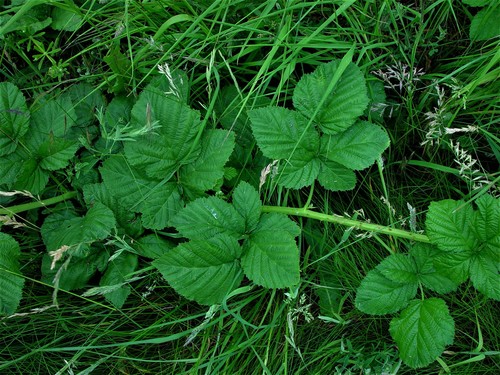
(c) Jeff White, some rights reserved (CC BY-NC), uploaded by Jeff White
iNaturalist· cc-by-nc
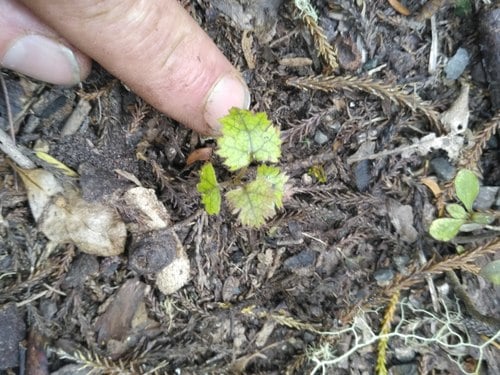
(c) Léo-Guy de Repentigny, some rights reserved (CC BY-NC), uploaded by Léo-Guy de Repentigny
Summary
Source: WikipediaSanguisorba canadensis, the white burnet or Canadian burnet, is a species of flowering plant in the rose family Rosaceae, native to North America. This herbaceous perennial commonly grows in bogs, swamps, and roadsides from Labrador to Georgia. It grows four to five feet (1.2 to 1.5 m) tall, with creamy white flowers in cylindrical spikes, appearing from summer into autumn. Unlike its close relatives, Sanguisorba officinalis (great burnet) and Sanguisorba minor (salad burnet), the leaves must be cooked to be eaten, in order to remove the bitterness.
Description
A perennial plant. It grows 1.2-1.8 m high and 60-90 cm wide. The leaves are pale green. They are divided into leaflets along the stalk. The flowers are bottle brushes and are slender and white or pink. They are carried on erect stems. The flower heads are 5-15 cm long.
Edible Uses
The leaves are edible when boiled, then washed in water to remove bitterness, and eaten with salt and miso.
Traditional Uses
Asia, Australia, Canada, Japan, North America, Slovenia, USA,
This uses section is brief — help expand it
Medicinal Uses
None known
Distribution
It is a temperate plant. It is frost hardy. It grows in wet places and marshes. It can be on the banks of rivers and ponds. It suits hardiness zones 4-8.
Where It Grows
NORTHERN AMERICA: United States, Alaska, Connecticut, Indiana, Maine, Massachusetts, Michigan, New Hampshire, New Jersey, New York, Ohio, Pennsylvania, Rhode Island, Vermont, West Virginia, Illinois, Nebraska, Idaho, Oregon, Washington, Delaware, Georgia (northwest), Maryland, North Carolina (west), Tennessee, Virginia, Canada, Québec, Nova Scotia, Ontario, Prince Edward Island, New Brunswick, Newfoundland and Labrador, Manitoba,
Cultivation
Succeeds in ordinary garden soil. Prefers a good moist soil that does not dry out in the summer, in sun or partial shade. Succeeds in the flower border or in moist grass, plants can become invasive when they are grown by water.
Propagation
Sow seed in spring or autumn in a cold frame. Prick seedlings into individual pots when large enough to handle and grow on in a greenhouse through their first winter. Plant out into permanent positions in late spring or early summer, after the last expected frosts. Division can be done in spring.
Other Uses
None known
Production
There are about 10-18 Sanguisorba species.
Synonyms
Also Known As
Kanadska strašnica
References (11)
- Altschul, S.V.R., 1973, Drugs and Foods from Little-known Plants. Notes in Harvard University Herbaria. Harvard Univ. Press. Massachusetts. no. 1442
- Cundall, P., (ed.), 2004, Gardening Australia: flora: the gardener's bible. ABC Books. p 1309
- Esperanca, M. J., 1988. Surviving in the wild. A glance at the wild plants and their uses. Vol. 1. p 398
- Facciola, S., 1998, Cornucopia 2: a Source Book of Edible Plants. Kampong Publications, p 210
- http://www.botanic-gardens-ljubljana.com/en/plants
Show all 11 references Hide references
- Jackes, D. A., 2007, Edible Forest Gardens
- Joyce, D., 1998, The Garden Plant Selector. Ryland, Peters and Small. p 266
- Kermath, B. M., et al, 2014, Food Plants in the Americas: A survey of the domesticated, cultivated and wild plants used for Human food in North, Central and South America and the Caribbean. On line draft. p 784
- Plants for a Future database, The Field, Penpol, Lostwithiel, Cornwall, PL22 0NG, UK. http://www.scs.leeds.ac.uk/pfaf/
- Slocum, P.D. & Robinson, P., 1999, Water Gardening. Water Lilies and Lotuses. Timber Press. p 135
- Sp. pl. 1:117. 1753