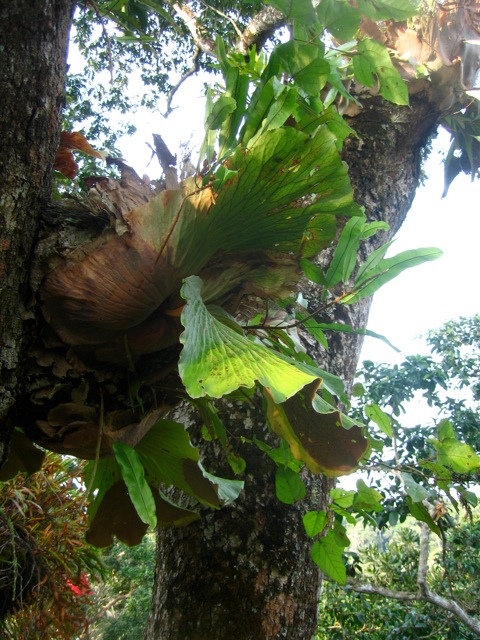
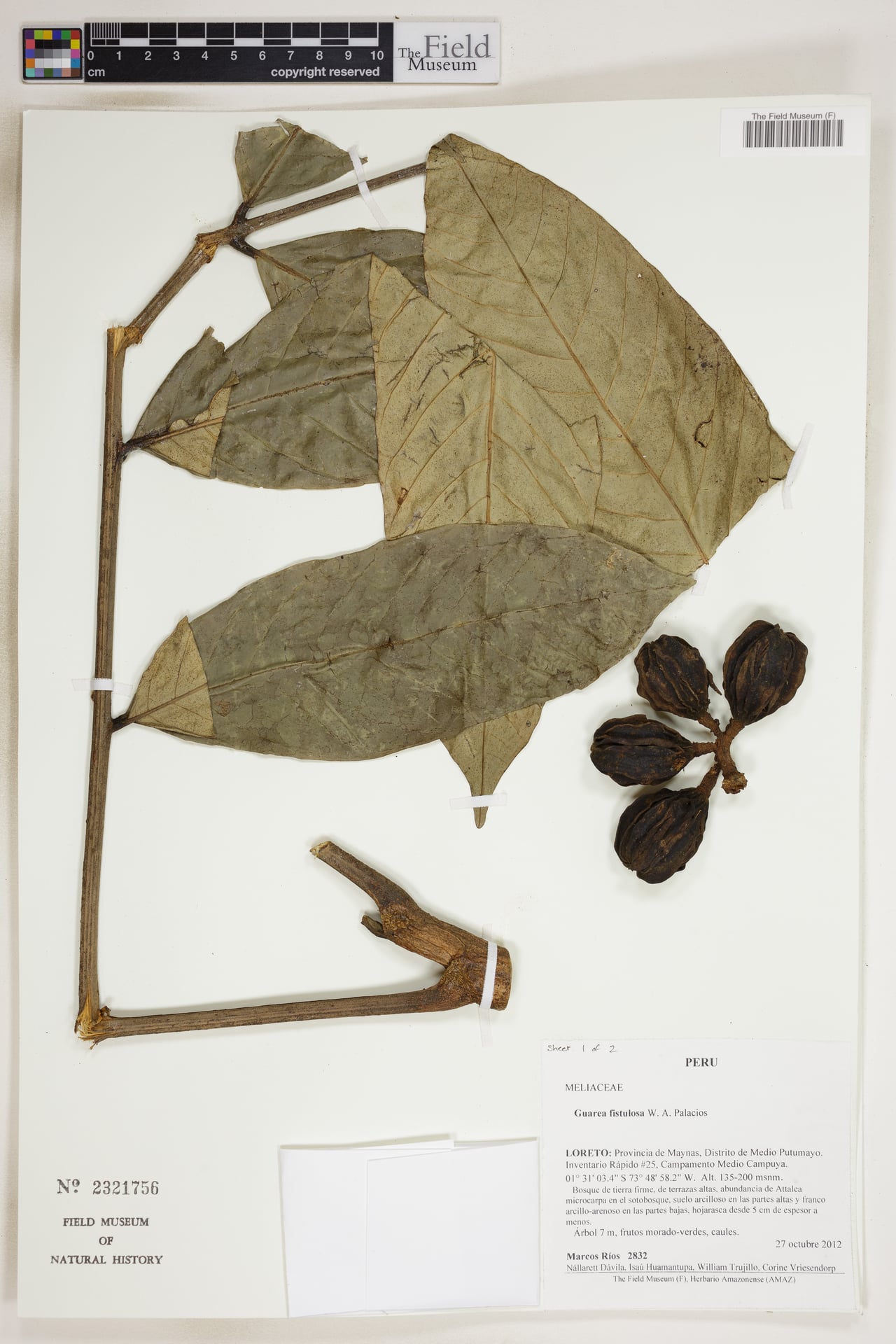
Sandoricum koetjape
(Burm.f.) Merr.
Santol
iNaturalist· cc-by-nc-sa
(c) Jonathan Hiew, some rights reserved (CC BY-NC-SA), uploaded by Jonathan Hiew
iNaturalist· cc-by-nc
(c) Pizzas fear me, some rights reserved (CC BY-NC)
iNaturalist· cc-by-nc-nd
(c) Steve Guttman, some rights reserved (CC BY-NC-ND)
Summary
Source: WikipediaSandoricum koetjape, the santol, sentul, setun or cotton fruit, is a tropical fruit native to maritime Southeast Asia.
Description
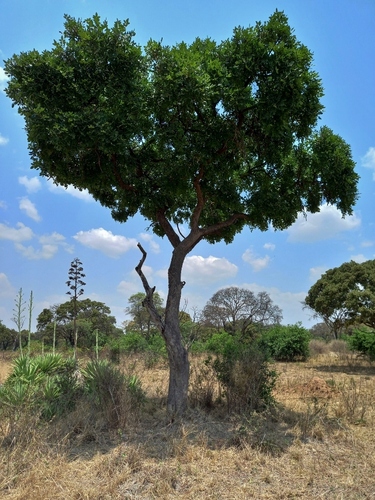
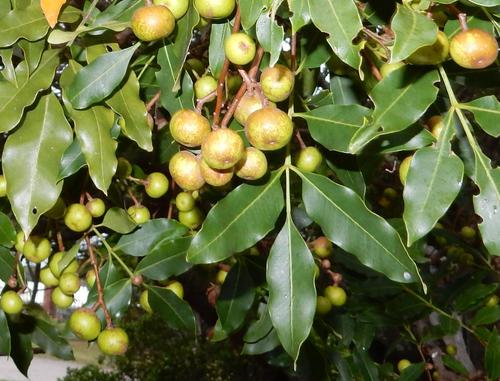
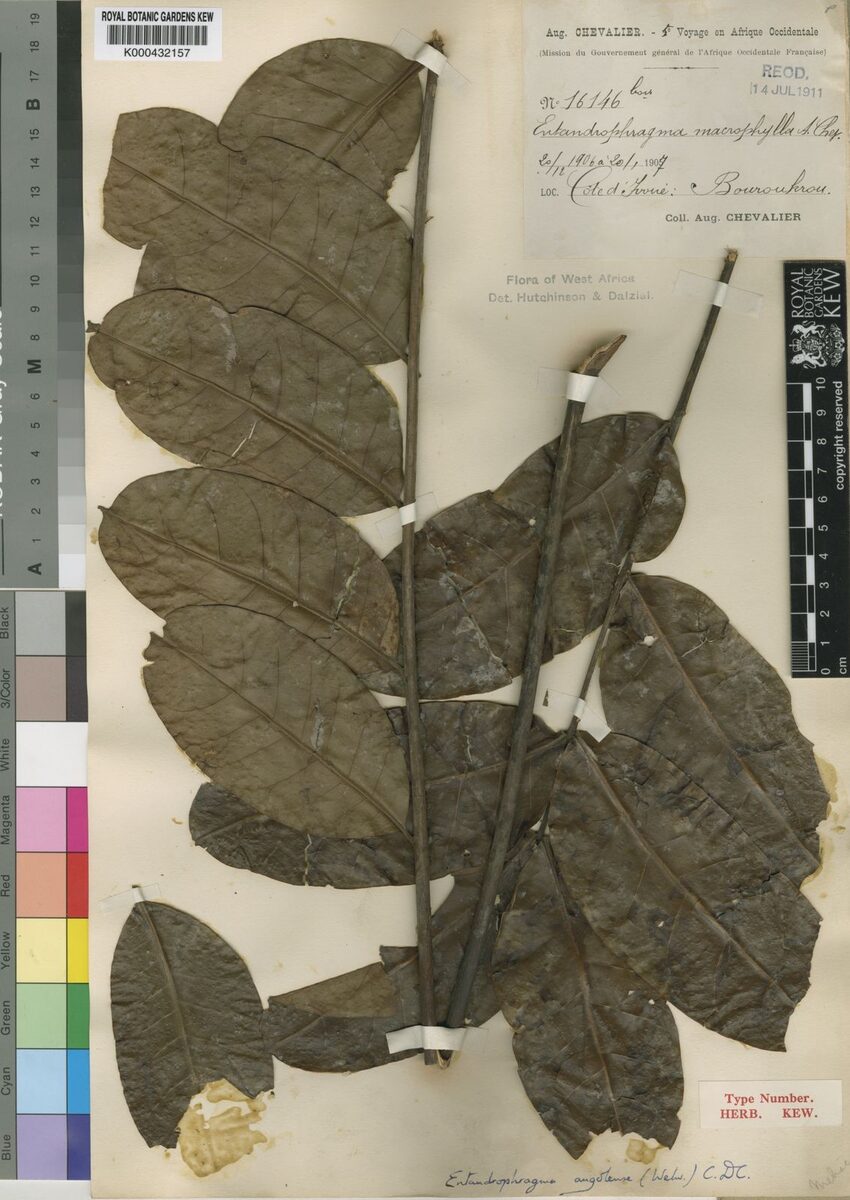
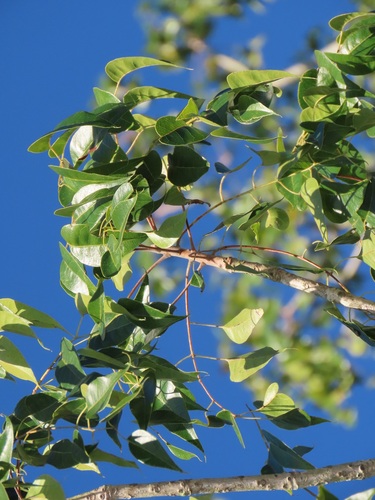
A medium sized tree. It loses its leaves. It grows up to about 25-50 m high. It is 80 cm across the trunk. It can have buttresses 3 m tall. Branches normally develop after 7-10 m. The crown is dense and dark green. The leaves are alternate and have 3 leaflets. The leaves are 18-40 cm long. The leaflets are hairy. They are pointed at the tip and more rounded at the base. They are 10 to 25 cm long. The end leaflet is the largest. The flowering cluster is 2.5-24 cm long. The flowers are greenish yellow and about 1 cm long. They occur in considerable numbers in compound flower clusters. The fruit are rounded and 4 to 6 cm across. They cluster like grapes. The fruit have one stone. They are yellowish or red with a thick outer covering. The flesh of the fruit is white, juicy and allows light through. The seeds are large. The pulp of the fruit is edible.
Edible Uses
The ripe fruits are harvested by climbing the tree and plucking by hand, alternatively a long stick with a forked end may be used to twist the fruits off. The pulp is eaten raw and plain or with spices added. It is also cooked and candied or made into marmalade. In Filipino cuisine, grated rind is cooked in coconut milk (with bits of pork and hot pepper) and served as sinantolan in Southern Luzon. The partly ripe sour fruits are also used as a souring agent in sour broth dishes like sinigang. In Thai cuisine this fruit is used to make som tam when still not fully ripe. It is also one of the main ingredients in the santol and pork (แกงหมูกระท้อน) and santol and prawn Thai curries (แกงคั่วกระท้อนกุ้ง). The wood of the tree is useful for construction, being plentiful and usually easy to work and polish. It makes a good shade tree. The leaves and bark have been used medicinally as a poultice. Several parts of the plant may have anti-inflammatory effects, and some chemical extracts from santol stems have shown anti-cancer properties in vitro. Extracts from santol seeds have insecticidal properties.
Traditional Uses
The fruit are eaten raw or made into preserves. The skin can be eaten. Fruit are made into alcoholic beverages. This is done by fermenting them with rice. Caution: Alcohol is a cause of cancer. The leaves are eaten. The fruit are eaten. The seeds are removed and the skin taken off. They are then boiled and later candied with sugar. They can be made into jams, jellies, and marmalades.
Medicinal Uses
The pounded leaves are sudorific when applied to the skin and are used to make a decoction against diarrhoea and fever. The powdered bark is an effective treatment for ringworms, and contains triterpenes with anti-cancer activity. Both the seeds and the stems are being studied for the anti-carcinogenic substances that they contain. The aromatic roots are employed as an anti-diarrhoeic, anti-spasmodic, carminative, antiseptic, astringent, stomachic and are prescribed as a general tonic after childbirth. The root can be bruised then soaked in vinegar and water to be used as an effective remedy for diarrhoea and dysentery.
Distribution
A tropical plant. It suits the hot, wet tropical lowlands. It is native to SE Asia. It can withstand light frosts. It needs light. They occur from northern Luzon to southern Mindanao in the Philippines and are very common both wild and cultivated. It grows in forests up to 600 m above sea level. It grows in sandy and clay soils.
Where It Grows
Andamans, Asia, Australia, Bangladesh, Brazil, Brunei, Cambodia*, Central America, China, Costa Rica, Cuba, Guam, Hawaii, India, Indochina, Indonesia, Laos*, Malaysia*, Myanmar, Pacific, Papua New Guinea, PNG, Philippines, Pohnpei, SE Asia, Singapore, South America, Sri Lanka, Taiwan, Thailand, USA, Vietnam, West Indies,
Cultivation
Plants can be grown from seed, air-layering or budding. They can also be grafted.
Propagation
Seed - best sown as soon as it is ripe since they have a short viability. Freshly sown, they have a germination rate of 90-95% in 16-31 days. Seeds grow away quickly. Budding. Air layering.
Other Uses
The fragrant wood is used in perfumery. The bark is used for tanning fishing nets. The heartwood is pale red, yellowish-red or yellow-brown with a pink tinge; it can be indistinct or distinguishable from the pale white or pinkish sapwood. The grain is straight or slightly wavy; texture moderately fine to slightly coarse and even. The wood is light to moderate weight; moderately soft to moderately hard; fairly weak to moderately strong. The wood is durable under cover, but non-durable when exposed to the weather or in contact with the ground; it is susceptible to marine borer attack and moderately resistant to insect attack. It is easy to saw; can be planed and finished with good results, though occasionally a little furry; it takes a high polish. The wood is used for making furniture, cabinet work, joinery, interior construction, shop fitting, panelling, planking and decking of boats, scantlings, carving, butlers chopping blocks, packing cases, household and agricultural implements, for production of veneer, plywood, blockboard, pulp and paper. It is used in the construction of traditional houses and boats. Poles from the tree are used for fencing. A good fuel, the wood gives forth an aromatic aroma as it burns. It is used to make a good quality charcoal. The tree is important in its native area in soil conservation. The tree is known to form vesicular arbiscular mycorrhizae, which is useful in soil improvement.
Production
It is fast growing. Fruit mature in about 120 days. In NE Thailand fruit are available March to April.
Other Information
It is cultivated.
Notes
There are 5 Sandoricum species.
Nutrition
| Part | Moisture | kJ | kcal | Protein | Vit A | Vit C | Iron | Zinc |
|---|---|---|---|---|---|---|---|---|
| Fruit | 85 | 192 | 46 | 0.9 | 3 | 86 | 0.4 | — |
Synonyms
Also Known As
Bampenh riech, Bua apo, Buh tul, Donka, Katawn, Katon, Kecapi, Kelampu, Kalempu bukit, Kentuat, Kompinhreach, Kra-thon, Lalalam, Ma tong, Mak tong, Pohon kecapi, Red santol, Santol, Santul, Satawn, Saton, Sau tia, Sayai, Sentol, Sentul, Setui, Seva-manu, Sevai, Sinlol, Sintol, Terapu, Thitto, Visa yan
References (62)
- Ambasta, S.P. (Ed.), 2000, The Useful Plants of India. CSIR India. p 545
- Argent, G et al, nd, Manual of the Larger and More important non Dipterocarp Trees of Central Kalimantan Indonesia. Volume 2 Forest Research Institute, Samarinda, Indonesia. p 424
- Arora, R. K., 2014, Diversity in Underutilized Plant Species - An Asia-Pacific Perspective. Bioversity International. p 86, 109
- Barwick, M., 2004, Tropical and Subtropical Trees. A Worldwide Encyclopedic Guide. Thames and Hudson p 361
- Blench, R., 2004, Fruits and Arboriculture in the Indo-Pacific Region. Indo-Pacific Prehistory Association Bulletin 24. (Taipei Papers Volume 2) p 40
Show all 62 references Hide references
- Bodner, C. C. and Gereau, R. E., 1988, A Contribution to Bontoc Ethnobotany. Economic Botany, 43(2): 307-369
- Brown, W.H., 1920, Wild Food Plants of the Philippines. Bureau of Forestry Bulletin No. 21 Manila. p 86
- Burkill, I.H., 1966, A Dictionary of the Economic Products of the Malay Peninsula. Ministry of Agriculture and Cooperatives, Kuala Lumpur, Malaysia. Vol 2 (I-Z) p 1981 (As Sandoricum indicum)
- Burkill, I.H., 1966, A Dictionary of the Economic Products of the Malay Peninsula. Ministry of Agriculture and Cooperatives, Kuala Lumpur, Malaysia. Vol 2 (I-Z) p 1982 (As Sandoricum nervosum)
- Call, C. A., et al, 2004, Participatory Rural Appraisal in the Upland Ecosystem of Mt Malindang, Misamis Occidental, Philippines. Biodiversity Research Programme for Development in Mindanao. p 56
- Cengel, D. J. & Dany. C., (Eds), 2016, Integrating Forest Biodiversity Resource Management and Sustainable Community Livelihood Development in the Preah Vihear Protected Forest. International Tropical Timber Organization p 110
- Chin, H.F., & Yong, H.S., 1996, Malaysian Fruits in Colour. Tropical press, Kuala Lumpur p 29
- Coronel, R.E., 1982, Fruit Collections in the Philippines. IBPGR Newsletter p 8
- Darley, J.J., 1993, Know and Enjoy Tropical Fruit. P & S Publishers. p 42
- Davis, S.D., Heywood, V.H., & Hamilton, A.C. (eds), 1994, Centres of plant Diversity. WWF. Vol 1 or 2. p 139
- Engel, D.H., & Phummai, S., 2000, A Field Guide to Tropical Plants of Asia. Timber Press. p 62, 90
- Facciola, S., 1998, Cornucopia 2: a Source Book of Edible Plants. Kampong Publications, p 150
- Food Composition Tables for use in East Asia FAO http://www.fao.org/infoods/directory No. 996
- Forest Inventory and Planning Institute, 1996, Vietnam Forest Trees. Agriculture Publishing House p 522 (As Sandoricum indicum)
- Gardner, S., et al, 2000, A Field Guide to Forest Trees of Northern Thailand, Kobfai Publishing Project. p 118
- Giesen, W., 2013, Paludiculture: sustainable alternatives on degraded peat land in Indonesia (revised draft)
- Hariyadi, B., 2008, The Entwined Tree: Traditional Natural Resource Management of Serampas, Jambi, Indonesia. Ph. D thesis. Univ. of Hawaii. p 402
- Hedrick, U.P., 1919, (Ed.), Sturtevant's edible plants of the world. p 592 (As Sandoricum indicum)
- Heyne, K., 1927, p 891 (As Sandoricum indicum)
- Heywood, V.H., Brummitt, R.K., Culham, A., and Seberg, O. 2007, Flowering Plant Families of the World. Royal Botanical Gardens, Kew. p 208
- Hibbert, M., 2002, The Aussie Plant Finder 2002, Florilegium. p 286
- Hu, Shiu-ying, 2005, Food Plants of China. The Chinese University Press. p 507
- John, L., & Stevenson, V., 1979, The Complete Book of Fruit. Angus & Robertson p 291
- Kachenchart, B., et al, 2008, Phenology of Edible Plants at Sakaerat Forest. In Proceedings of the FORTROP II: Tropical Forestry Change in a Changing World. Bangkok, Thailand.
- Kermath, B. M., et al, 2014, Food Plants in the Americas: A survey of the domesticated, cultivated and wild plants used for Human food in North, Central and South America and the Caribbean. On line draft. p 784
- Kiple, K.F. & Ornelas, K.C., (eds), 2000, The Cambridge World History of Food. CUP p 1850
- Lembaga Biologi Nasional, 1977, Buah-Buahan, Balai Pustaka, Jakarta. p 62
- Lorenzi, H., Bacher, L., Lacerda, M. & Sartori, S., 2006, Brazilian Fruits & Cultivated Exotics. Sao Paulo, Instituto Plantarum de Estuados da Flora Ltda. p 433
- Luczaj, L., et al, 2021, Wild food plants and fungi sold in the markets of Luang Prabang, Lao PDR. Journal of Ethnobiology and Ethnomedicine (2021) 17:6
- Macmillan, H.F. (Revised Barlow, H.S., et al) 1991, Tropical Planting and Gardening. Sixth edition. Malayan Nature Society. Kuala Lumpur. p 307
- Martin, F. W., et al, 1987, Perennial Edible Fruits of the Tropics. USDA Handbook 642 p 37
- Milow, P., et al, 2013, Malaysian species of plants with edible fruits or seeds and their evaluation. International Journal of Fruit Science. 14:1, 1-27
- Miguel, E., et al, 1989, A checklist of the cultivated plants of Cuba. Kulturpflanze 37. 1989, 211-357
- Monsalud, M.R., Tongacan, A.L., Lopez, F.R., & Lagrimas, M.Q., 1966, Edible Wild Plants in Philippine Forests. Philippine Journal of Science. p 496
- Martin, M.A., 1971, Introduction L'Ethnobotanique du Cambodge. Centre National de la Recherche Scientifique. Paris.
- Nurfadilah, S., et al, 2017, Species richness, conservation status, and potential uses of plants in Segara Anakan Area of Sempu Island, East Java, Indonesia. BIODIVERSITAS. Volume 18, Number 4
- Pasha, M. K. & Uddin, S. B., 2019, Minor Edible Fruits of Bangladesh. Bangladesh J. Plant Taxon. 26(2): 299–313 (As Sandoricum indicum)
- Phon, P., 2000, Plants used in Cambodia. © Pauline Dy Phon, Phnom Penh, Cambodia. p 547
- Philipp. J. Sci. C 7:237. 1912
- Popenoe,
- PROSEA Vol. 2
- Saw, L.G., LaFrankie, J. V. Kochummen, K. M., Yap S. K., 1991, Fruit Trees in a Malaysian Rain Forest. Economic Botany, Vol. 45, No. 1, pp. 120-136
- Siong, K. H., 2003, Indigenous Fruits of Sarawak. ITTO & Sarawak Forest Department. p 90
- Slik, F., www.asianplant.net
- Staples, G.W. and Herbst, D.R., 2005, A tropical Garden Flora. Bishop Museum Press, Honolulu, Hawaii. p 401
- Sukarya, D. G., (Ed.) 2013, 3,500 Plant Species of the Botanic Gardens of Indonesia. LIPI p 494
- Suksri, S., et al, 2005, Ethnobotany in Bung Khong Long Non-Hunting Area, Northeast Thailand. Kasetsart J., (Nat. Sci) 39: 519-533
- Tanaka,
- Tankard, G., 1990, Tropical fruit. An Australian Guide to Growing and using exotic fruit. Viking p 98
- TodaFruta.com.br
- Turreira Garcia, N., et al, 2017, Ethnobotanical knowledgeof the Kuy and Khmer people in Prey Lang, Cambodia. Cambodian Journal of Natural History 2017 (1): 76-101
- USDA, ARS, National Genetic Resources Program. Germplasm Resources Information Network - (GRIN). [Online Database] National Germplasm Resources Laboratory, Beltsville, Maryland. Available: www.ars-grin.gov/cgi-bin/npgs/html/econ.pl (10 April 2000)
- Wiersema, J. H. & Leon, B., 2013, World Economic Plants. A Standard Reference CRC Press. 2nd Ed. p 612
- Wongprasert, T. et al, 2011, A Synoptic Account of the Meliaceae of Thailand. Thai For. Bull. 39:210-266
- World Checklist of Useful Plant Species 2020. Royal Botanic Gardens, Kew
- www.worldagroforestrycentre.org/treedb/
- Zawiah, N. & Othaman, H., 2012, 99 Spesies Buah di FRIM. Institut Penyelidikan Perhutanan Malaysia. p 210