Viburnum sempervirens
K. Koch
iNaturalist· cc-by-nc
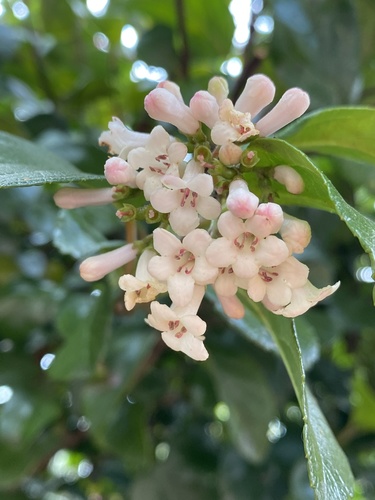
(c) Young Chan, some rights reserved (CC BY-NC), uploaded by Young Chan
iNaturalist· cc-by-nc
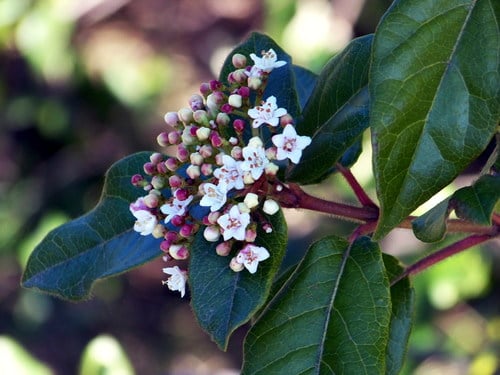
(c) johnallcock, some rights reserved (CC BY-NC)
iNaturalist· cc-by-nc
(c) johnallcock, some rights reserved (CC BY-NC)
Summary
An evergreen shrub reaching 5 m tall. Hardy to UK zone 9 but frost tender. Maintains foliage year-round. Hermaphroditic flowers are insect-pollinated but not self-fertile. Tolerates light, medium, and heavy soils with pH from mildly acidic to mildly alkaline. Can grow in semi-shade or full sun, preferring moist soil.
Description
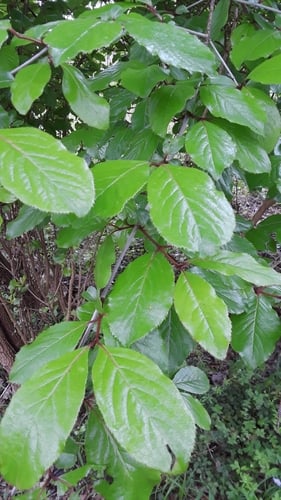
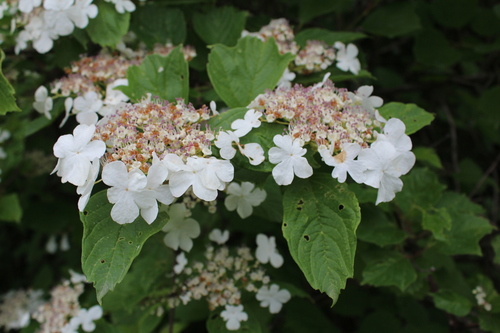
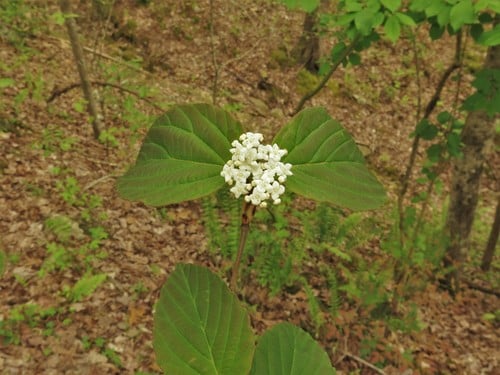
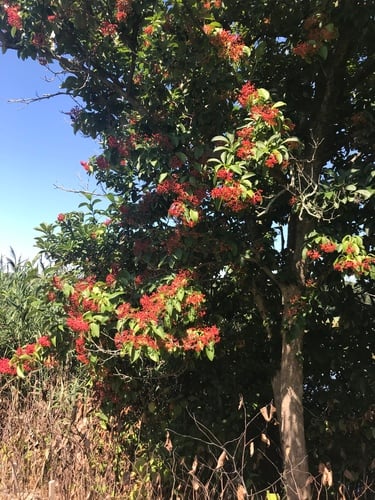
A shrub. It keeps its leaves during the year. It grows 4 m tall. The current year's branches are 4 sided. The leaves are opposite and 4-12 cm long by 3-5 cm wide. They have small brown dots underneath. The flowers are in a compound group at the ends of the branches. The fruit are red when mature. They are 3-6 mm across.
Edible Uses
The leaves can be cooked and eaten, but this is considered a famine food, used only when nothing else is available.
Medicinal Uses
None known
Distribution
It is a subtropical plant. It grows in sparse or dense forests between 100-1,800 m above sea level in southern China. In Sichuan and Yunnan.
Where It Grows
Asia, China,
Cultivation
An easily grown plant, it succeeds in most soils but is ill-adapted for poor soils and for dry situations. It prefers a deep rich loamy soil in sun or semi-shade. Best if given shade from the early morning sun in spring. Not very frost tolerant, this species is only likely to succeed outdoors in the very mildest areas of the country. Plants are self-incompatible and need to grow close to a genetically distinct plant in the same species in order to produce fruit and fertile seed.
Propagation
Seed is best sown in a cold frame as soon as it is ripe. Germination can be slow, sometimes taking more than 18 months. Seed harvested green — fully developed but not yet fully ripe — and sown immediately in a cold frame should germinate the following spring. Stored seed needs 2 months of warm stratification followed by 3 months of cold, and may still take 18 months to germinate. Prick seedlings into individual pots when large enough to handle, grow on in a cold frame or greenhouse, and plant out in late spring or early summer of the following year. Softwood cuttings taken in early summer in a frame should be potted individually once rooting begins and planted out the following late spring or early summer. Half-ripe cuttings, 5–8 cm long with a heel if possible, taken in July or August in a frame should be potted as soon as they start to root. These can be difficult to overwinter and are best kept under glass until the following spring. Mature wood cuttings taken in winter in a frame should root in early spring; pot when large enough and plant out in summer if sufficient new growth has been made, otherwise overwinter in a cold frame and plant out the following spring. Layering of the current season's growth in July or August takes 15 months.
Other Uses
None known Special Uses
Notes
There are about 150 Viburnum species. Also put in the family Caprifoliaceae.
Synonyms
References (3)
- Hort. dendrol. 300. 1853 (Wochenschr. Vereines Befoerd. Gartenbaues Koenigl. Preuss. Staaten 10:109. 1867)
- Plants for a Future database, The Field, Penpol, Lostwithiel, Cornwall, PL22 0NG, UK. http://www.scs.leeds.ac.uk/pfaf/
- Reis, S. V. and Lipp, F. L., 1982, New Plant Sources for Drugs and Foods from the New York Botanical Garden herbarium. Harvard. p 295