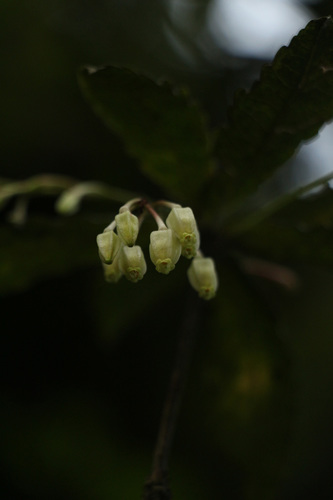
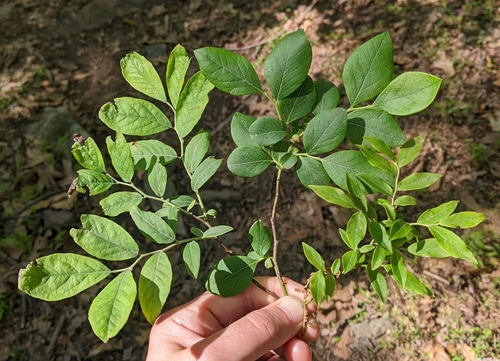
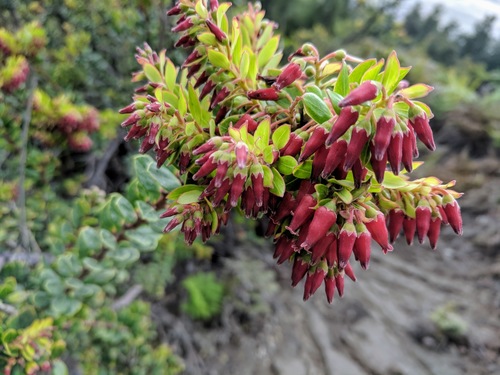
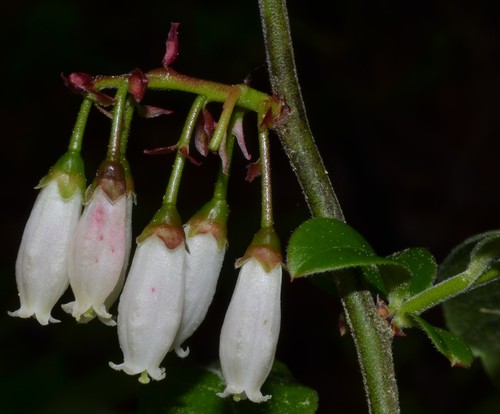
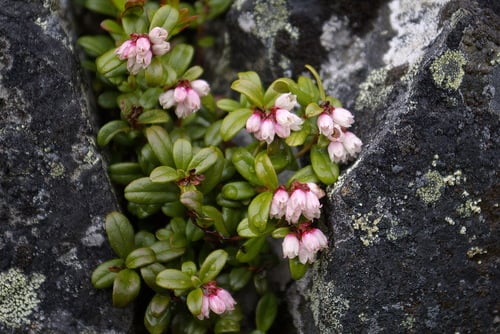
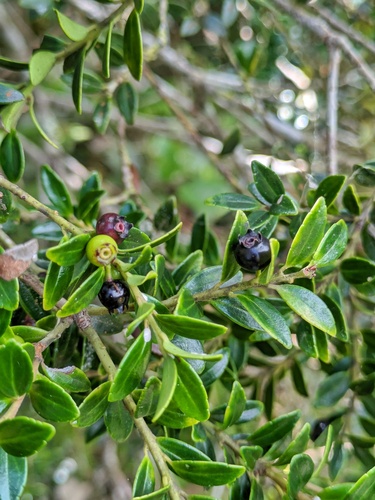
Gaultheria japonica - (A.Gray.)Sleumer.
(A.Gray.)Sleumer.
Creeping Snowberry
gbif· cc-by
Royal Botanic Gardens, Kew
Description
Gaultheria japonica is an evergreen Shrub growing to 0.1 m (0ft 4in) by 1 m (3ft 3in) at a fast rate. See above for USDA hardiness. It is hardy to UK zone 6. It is in leaf all year, in flower from May to June, and the seeds ripen from August to September. The species is hermaphrodite (has both male and female organs) and is pollinated by Insects. Suitable for: light (sandy) and medium (loamy) soils. Suitable pH: mildly acid and neutral soils and can grow in very acid soils. It can grow in semi-shade (light woodland). It prefers moist or wet soil.
Edible Uses
Tea. Fruit - raw or cooked. Pleasantly acid and refreshing, with a delicate flavour of wintergreen. An agreeable sub-acid taste, similar to G. shallon. They can be made into delicious preserves. The fruit is about 6mm in diameter. Leaves - raw or cooked. The leaves are used to make a tea. A mild flavour of wintergreen. Said to be superior to china tea.
Medicinal Uses
Cancer. The plant is said to remove the cancerous taint from the body. An infusion of the leaves has been used as a tonic for a person who has overeaten.
Distribution
E. Asia - central and northern Japan.
Where It Grows
TEMPERATE ASIA: Japan (Honshu (north & central))
Cultivation
Prefers a moist but not boggy humus rich soil in shade or semi-shade. A peat and moisture loving species, it requires a lime-free soil. A fast growing plant. The plant can make a good nesting place for mice, these mice then eat the bark of the stems in winter causing die-back. Plants in this genus are notably resistant to honey fungus. Gaultheria japonica bears a close resemblance to G. hispidula (L.) Bigelow of N. America and sometimes treated as a variety or subspecies of the latter. G. japonica, however, has calyx much longer than the bracteoles, ovate and acute calyx lobes, and shorter anther projections. In G. hispidula the calyx is as long as or slightly longer than the bracteoles, the calyx lobes are broadly ovate and obtuse or subacute, and the anthers have distinct projections.
Propagation
The seed requires a period of cold stratification. Pre-chill for 4 - 10 weeks and then surface sow in a lime-free compost in a shady part of the greenhouse and keep the compost moist. The seed usually germinates well, usually within 1 - 2 months at 20°c, but the seedlings are liable to damp off. It is important to water them with care and to ensure that they get plenty of ventilation. Watering them with a garlic infusion can also help to prevent damping of. Prick out the seedlings into individual pots when they are about 25mm tall and grow them on in light shade in the greenhouse for at least their first winter. Plant them out in late spring or early summer. The seedlings are susceptible to spring frosts so might need some protection for their first few years outdoors. The leaves remain very small for the first few years. Cuttings of half-ripe wood 3 - 6cm long, July/August in a frame in a shady position. They form roots in late summer or spring. A good percentage usually take. Division in spring just before new growth begins. Larger clumps can be replanted direct into their permanent positions, though it is best to pot up smaller clumps and grow them on in a cold frame until they are rooting well. Plant them out in the spring. Layering.
Other Uses
A useful fast growing ground cover plant for shady positions.