Gaultheria humifusa
(Graham) Rydb.
Creeping wintergreen, Alpine wintergreen
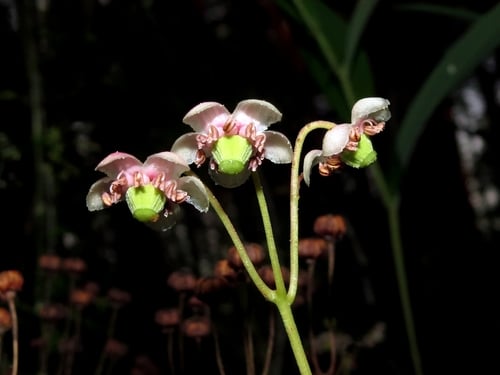
iNaturalist· cc-by-nc
(c) Bryant Olsen, some rights reserved (CC BY-NC)
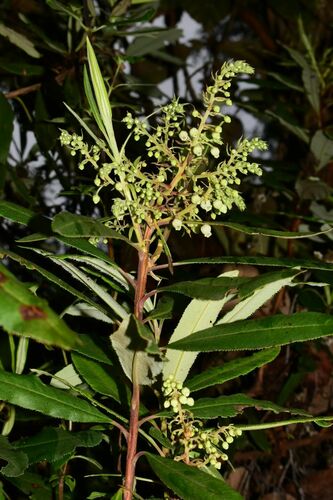
iNaturalist· cc-by-nc
(c) Jacob Martin, some rights reserved (CC BY-NC)
iNaturalist· cc-by-nc-sa
(c) Leo Papandreou, some rights reserved (CC BY-NC-SA)
Summary
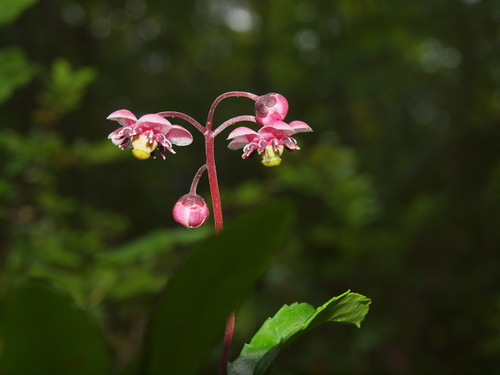
Source: WikipediaGaultheria humifusa is a species of shrub in the heath family which is known by the common names alpine wintergreen and alpine spicy wintergreen. It is native to western North America, from British Columbia to California to Colorado, where it grows in moist subalpine mountain forests. It is a low, spreading shrub which may be quite small, forming flat patches on the ground or amongst rock and leaf litter. The stems are less than 20 cm (7.9 in) in length and have small oval-shaped leaves 1 to 2 cm (0.39 to 0.79 in) long. It bears solitary bell-shaped flowers with white to light pink corollas and golden anthers which, after pollination, mature into bright to dull red berrylike fruit capsules. The leaves and fruit of Gaultheria humifusa are edible.
Description
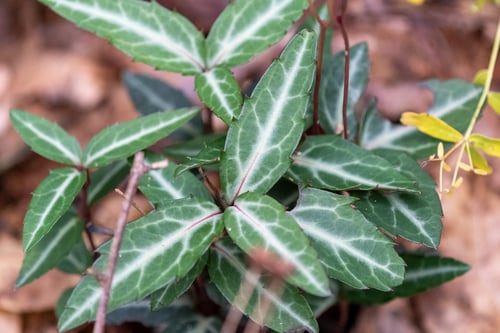
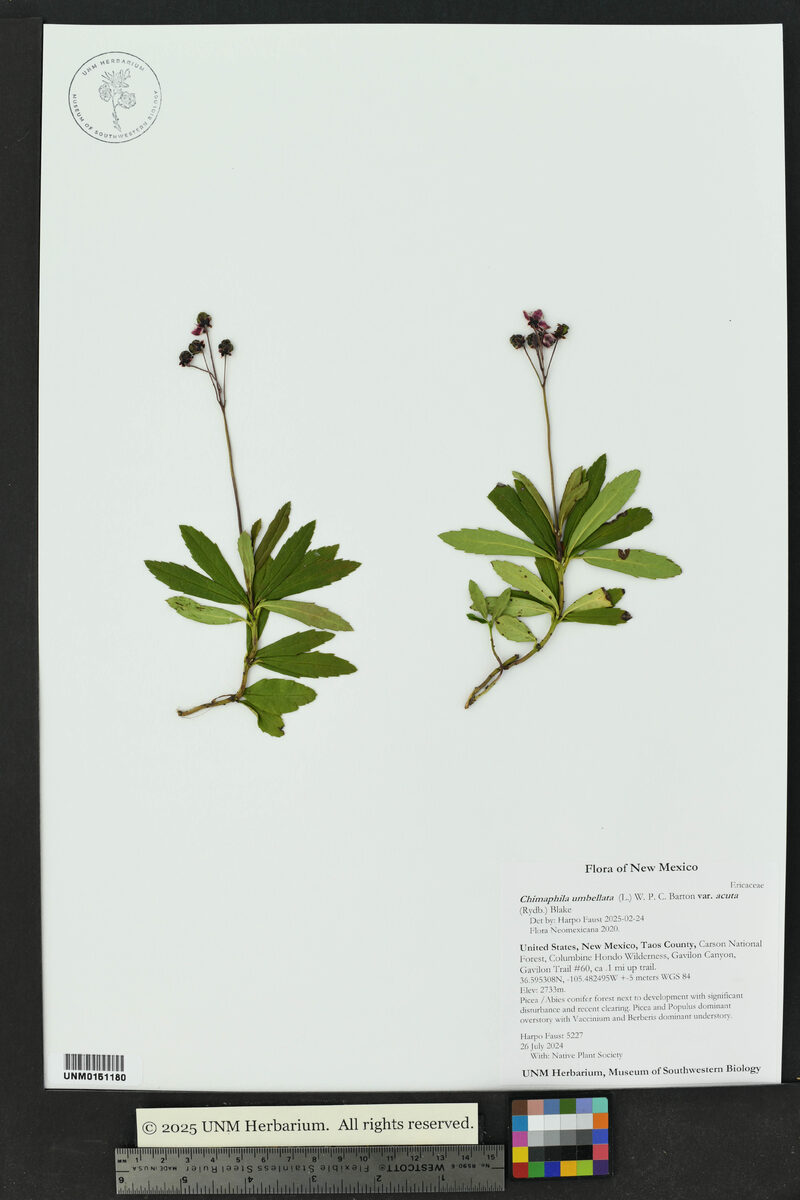
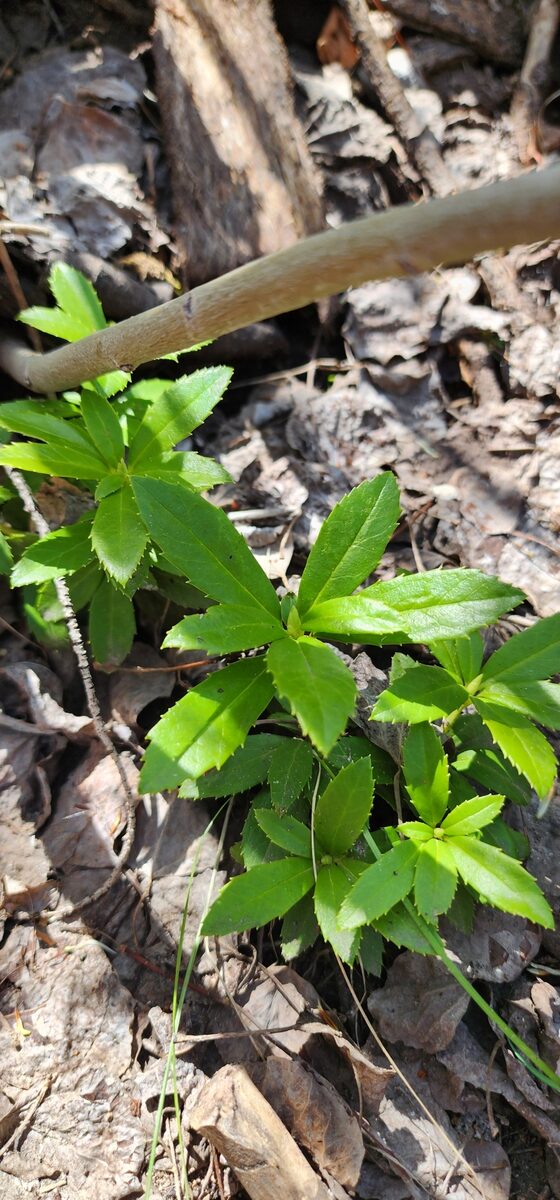
A small shrub. It grows 20 cm high. It is creeping and forms mats. The leaves are oval to round and 1-2.5 cm across. The flowering shoots are in the axils of leaves and the flowers occur singly. The fruit are 6 mm across. They are red.
Edible Uses
The fruit can be eaten raw or cooked. It is aromatic and delicious with a wintergreen flavour and is often used in preserves. Each fruit is about 6mm in diameter. The leaves can be eaten raw as a wayside nibble, with young tender leaves particularly suited for use as greens — they have a delicate wintergreen flavour. A tea can be made from either fresh or dried leaves.
Traditional Uses
The fruit are eaten raw. They can also be cooked, preserved or used in jams and pies. The young leaves are cooked and eaten. The fresh and dried leaves are used for tea.
Medicinal Uses
None known.
Distribution
It is a temperate plant. It is very hardy to cold. It grows in the rocky mountains between 900-3,700 m above sea level. It suits hardiness zone 7.
Where It Grows
North America*, USA,
Propagation
Seed requires cold stratification — pre-chill for 4–10 weeks, then surface sow in lime-free compost in a shady part of the greenhouse, keeping the compost moist. Germination usually occurs within 1–2 months at 20°C, but seedlings are prone to damping off. Water carefully, ensure good ventilation, and consider watering with a garlic infusion to reduce damping off. Prick out seedlings into individual pots at about 25mm tall and grow on in light shade in the greenhouse for at least the first winter. Plant out in late spring or early summer. Protect from spring frosts for the first few years outdoors, as seedlings are susceptible. Leaves remain very small for the first few years. Cuttings of half-ripe wood, 3–6cm long, taken July/August in a shaded frame; roots form in late summer or spring, with a good success rate. Divide in spring just before new growth begins — larger clumps can go straight to permanent positions, though smaller clumps are best potted up in a cold frame until rooting well, then planted out in spring. Layering is also possible.
Other Uses
Suitable as ground cover in sun or light shade. A black dye has been made from the plant.
Production
Plants flower June to July and fruit July to September.
Notes
There are about 170 Gaultheria species.
Synonyms
References (7)
- Beckstrom-Sternberg, Stephen M., and James A. Duke. "The Foodplant Database." http://probe.nalusda.gov:8300/cgi-bin/browse/foodplantdb.(ACEDB version 4.0 - data version July 1994)
- Elias, T.S. & Dykeman P.A., 1990, Edible Wild Plants. A North American Field guide. Sterling, New York p 160
- Facciola, S., 1998, Cornucopia 2: a Source Book of Edible Plants. Kampong Publications, p 95
- Hedrick, U.P., 1919, (Ed.), Sturtevant's edible plants of the world. p 325 (As Gaultheria myrsinites)
- Kermath, B. M., et al, 2014, Food Plants in the Americas: A survey of the domesticated, cultivated and wild plants used for Human food in North, Central and South America and the Caribbean. On line draft. p 384
Show all 7 references Hide references
- Lyle, S., 2006, Discovering fruit and nuts. Land Links. p 219 (As Gaultheria humifusa)
- Plants for a Future database, The Field, Penpol, Lostwithiel, Cornwall, PL22 0NG, UK. http://www.scs.leeds.ac.uk/pfaf/