Araujia sericifera
Brot.
Cruel plant, Moth plant, Moth vine
iNaturalist· cc-by-nc-sa
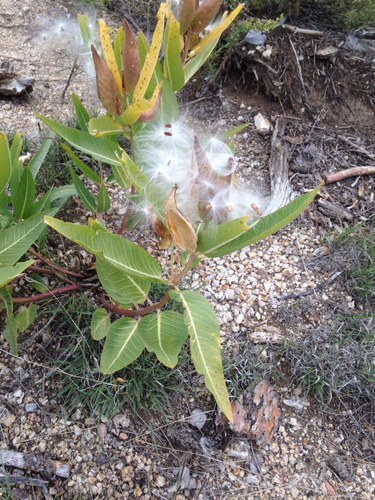
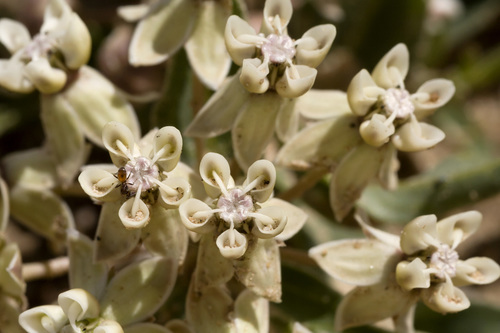
(c) Arthur Chapman, some rights reserved (CC BY-NC-SA)
iNaturalist· cc-by-nc
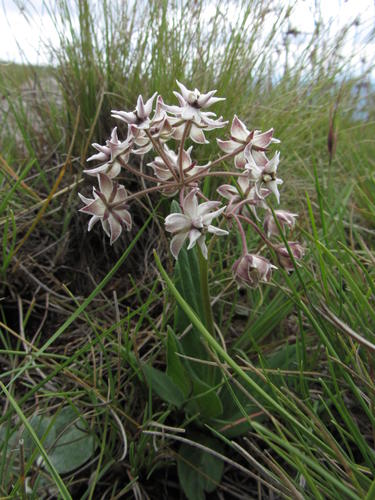
(c) Igmar Grewar, some rights reserved (CC BY-NC), uploaded by Igmar Grewar
iNaturalist· cc-by
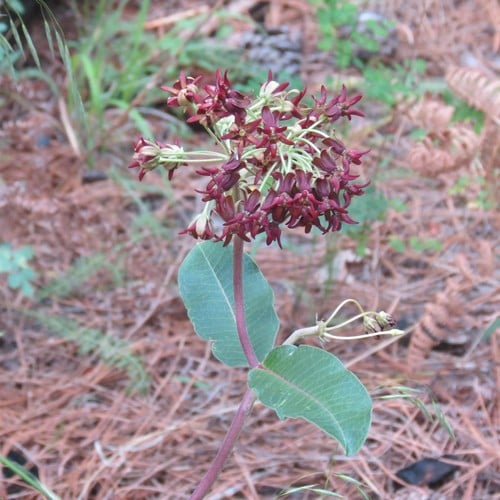
(c) Miriam Sokhet, some rights reserved (CC BY), uploaded by Miriam Sokhet
Summary
Source: WikipediaAraujia sericifera is a perennial vining plant in the genus Araujia, of the family Apocynaceae, that is native to South America. The species was described in 1817 by the Portuguese botanist Félix de Avelar Brotero. The synonym Araujia hortorum is in more frequent use in New Zealand. Its common names include bladderflower, white bladderflower, bladder vine, cruel vine, cruel plant, moth plant, moth vine, common moth vine, and false choko. It was introduced to Europe and other areas as an ornamental plant, but it is now considered a noxious weed. In some countries, such as France, the attractive and abundant fragrant flowering make it a specimen considered worth cultivating. However its strong robustness combined with high seed production can make it invasive in most environments, but not in France due to its sensitivity to frost.
Description
A climbing plant. The stems are twining. The leaves are opposite and grey-green. They are sword shaped with a wavy edge. They are 5-12 cm long by 5-6 cm wide. They are green above and grey-green and hairy underneath. The flowers are bell shaped. They are white or pale pink and 30 mm long. They are in clusters. The fruit are pear shaped. The stalk is at the larger end. The fruit are 6-15 cm long by 3.5-8 cm wide. There are many seeds. The seeds are egg shaped and dark coloured. They have silky hairs attached.
Edible Uses
Edible Parts: Fruit Edible Uses: Fruit - after preparation. No further details are given but the fruit is a long grooved pod 12.5 x 7.5cm, tapering to a fascicle of hairs 2.5cm long.
Traditional Uses
CAUTION The sap is toxic and irritates the skin. The raw peeled root is eaten. The fruit are eaten after roasting.
This uses section is brief — help expand it
Medicinal Uses
None known
Known Hazards
Moth plant is toxic for some people. Skin contact with its sap can cause rashes. Contact with the eyes, in particular, can cause severe discomfort.
Distribution
It is a subtropical plant. It suits low rainfall areas. It needs a well drained soil. They cannot tolerate frost. In Argentina it grows from sea level to 1,300 m above sea level. It suits hardiness zones 9-10.
Where It Grows
Argentina, Australia, Brazil*, Europe, New Zealand, Paraguay, Peru, Slovenia, South Africa, Southern Africa, South America, Uruguay,
Cultivation
Prefers a good loamy soil but succeeds in any fertile soil. Requires a sunny position. Plants are not very hardy outdoors in Britain, they succeed outdoors only in the mildest areas of the country. The young growth in spring, even on mature plants, is frost-tender and so it is best to grow the plants in a position sheltered from the early morning sun. Plants produce fruit when growing on a wall at Glendurgan gardens in Cornwall. A very vigorous twining plant when growing in a suitable position. The flowers have a very strong scent that can be offensive if approached too closely. This scent attracts night-flying moths who are seeking nectar, but the flowers are designed in such a way as to trap the moths by their tongues until morning when those who have survived the ordeal can escape.
Propagation
Seed - sow spring in a greenhouse. The seed can be sown at any time of the year if the greenhouse is heated. Germinates in 3 - 6 weeks at 20°c according to one report whilst another says that it takes 1 - 6 months at 25°c. When large enough to handle, prick the seedlings out into individual pots and grow them on in the greenhouse for their first winter. Plant them out in late spring or early summer, after the last expected frosts. Cuttings of mature wood of the current seasons growth, late autumn in a frame.
Other Uses
Fibre A strong fibre obtained from stems is used in making textiles. As an ornamental. The plant can be used as an alternative food source for caterpillars of the Monarch butterfly. Special Uses Scented Plants
Other Information
The fruit are enjoyed by children.
Notes
There are 2 or 3 Araujia species. They are climbers in temperate and subtropical South America. This one can become invasive.
Synonyms
Also Known As
Abaty, Angelica-de-rama, Chuchu-do-mato, Itsawa
References (14)
- Bircher, A. G. & Bircher, W. H., 2000, Encyclopedia of Fruit Trees and Edible Flowering Plants in Egypt and the Subtropics. AUC Press. p 37
- Brack, P., et al, 2020, Frutas nativas do Rio Grande do Sul, Brasil: riqueza e potencial alimentício. Native fruits of Rio Grande do Sul, Brazil: richness and potential as food. Rodriguésia 71: e03102018.
- Cundall, P., (ed.), 2004, Gardening Australia: flora: the gardener's bible. ABC Books. p 172
- Flora of Australia, Volume 28, Gentiales, Melbourne:CSIRO Australia, 1996. p 211, Map 242, Fig 66 p 148
- Fox, F. W. & Young, M. E. N., 1982, Food from the Veld. Delta Books. p 103
Show all 14 references Hide references
- Hussey, B.M.J., Keighery, G.J., Cousens, R.D., Dodd, J., Lloyd, S.G., 1997, Western Weeds. A guide to the weeds of Western Australia. Plant Protection Society of Western Australia. p 86
- Kinupp, V. F., 2007, Plantas alimenticias nao-convencionais da regiao metropolitana de Porto Alegre, RS, Brazil p 62
- Marinelli, J. (Ed), 2004, Plant. DK. p 444
- Paczkowska, G. & Chapman, A.R., 2000, The Western Australian Flora. A Descriptive Catalogue. Western Australian Herbarium. p 152
- Plants for a Future database, The Field, Penpol, Lostwithiel, Cornwall, PL22 0NG, UK. http://www.scs.leeds.ac.uk/pfaf/
- Ruiters-Welcome, A. K., 2019, Food plants of southern Africa. Ph.D. thesis. Univ. of Johannesburg p 20
- Trans. Linn. Soc. London 12:62, t. 4-5. 1817 "sericofera"
- Welcome, A. K. & Van Wyk, B.-E., 2019, An inventory and analysis of the food plants of southern Africa. South African Journal of Botany 122 (2019) 136–179
- www.colecionandofrutas.org