Thymus herba-barona
Loisel.
Caraway thyme
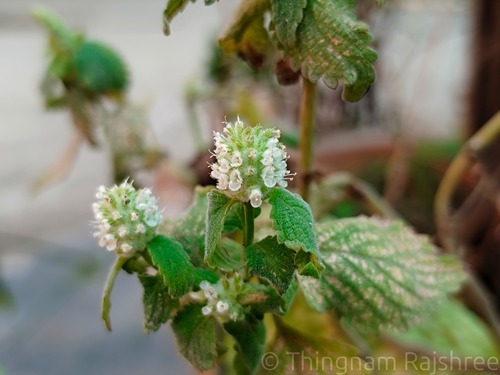
iNaturalist· cc-by-nc
(c) David Renoult, some rights reserved (CC BY-NC), uploaded by David Renoult
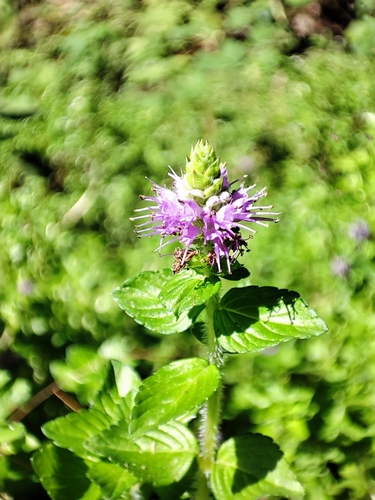
iNaturalist· cc-by-nc
(c) jltasset, some rights reserved (CC BY-NC)
Summary
Source: WikipediaThymus herba-barona is a species of thyme native to Corsica, Sardinia, and Majorca. It is also sometimes known by the common name caraway thyme, as it has a strong scent similar to caraway, for which it can be used as a substitute in any recipe. It can be used in cuisine or as an evergreen ground cover plant for the garden. There are two subspecies: Thymus herba-barona subsp. herba-barona. Corsica, Sardinia Thymus herba-barona subsp. bivalens. Majorca (Spain)
Description
A small herb or shrub which lies along the ground. It grows 10 cm high and spreads 60 cm wide. It forms loose carpets. The flower heads are 5-13 cm high. The leaves are smooth and oval or sword shaped. They are flat, shiny and dark green. They are 1.3 cm long. They can smell like caraway, lemon or nutmeg when crushed. The flowers are bright pink and in rings in spikes.
Edible Uses
This herb has a caraway-like fragrance and makes an excellent flavouring for soups, vegetables, and similar dishes — it pairs particularly well with garlic. For drying, harvest plants in early and late summer just before the flowers open and dry the leaves quickly.
Traditional Uses
The leaves have a scent of caraway seeds and are used to flavour soups, vegetables and poultry.
This uses section is brief — help expand it
Medicinal Uses
The leaves, and particularly their essential oil, are strongly antiseptic, deodorant, and disinfectant. The plant can be used fresh year-round, or harvested as it comes into flower for distillation of the oil or drying for later use.
Distribution
It is a temperate plant. It suits hardiness zone 7-9. Melbourne Botanical Gardens.
Where It Grows
Australia, Canada, Corsica, Europe, Mediterranean, North America, Sardinia,
Cultivation
Requires a well-drained soil in a sunny position. Succeeds in dry soils, tolerating drought once it is established. Grows well between stepping stones on paths, tolerating light treading. Succeeds on walls. Thymes dislike wet conditions, especially in the winter. A layer of gravel on the soil around them will help protect the foliage from wet soils. This species is not hardy in the colder areas of the country, it tolerates temperatures down to between -5 and -10°c. The leaves of the species have a delicious caraway scent. There are some named varieties. 'Nutmeg' is fast growing and has a pronounced fragrance somewhat reminiscent of nutmeg. 'Lemon Scented' has a strong lemon scent. The flowers are rich in nectar and are very attractive to honey bees. This is a very difficult genus taxonomically, the species hybridize freely with each other and often intergrade into each other. Thyme is typically harvested in late spring to early summer, just before the plant flowers for the best flavor. Thyme usually flowers in late spring to early summer, generally from June to August (Northern Hemisphere). Thyme is considered a slow to moderate grower, reaching maturity in about 1 to 2 years under optimal conditions.
Propagation
Sow seed in spring in a cold frame, or in autumn in a greenhouse. Surface sow or barely cover the seed, as germination can be erratic. Prick seedlings into individual pots when large enough to handle and grow on under glass for at least their first winter, then plant out in late spring or early summer after the last expected frosts. Divide plants in spring or autumn; larger divisions can go directly into permanent positions, while smaller ones are best potted up and grown on in light shade until well established, then planted out in summer or the following spring. Take cuttings of young shoots 5–8cm with a heel in May/June in a frame, or half-ripe cuttings 5–8cm with a heel in July/August in a frame. Layering is also possible.
Other Uses
The essential oil obtained from the leaves is used in perfumery, as a mouthwash, and medicinally. Plants work well as a ground cover when spaced approximately 30cm apart each way, and the aromatic foliage attracts pollinators while the strong scent may help confuse or repel certain pests.
Notes
There are between 300 and 400 Thymus species.
References (12)
- Bodkin, F., 1991, Encyclopedia Botanica. Cornstalk publishing, p 983
- Bremness, L., 1994, Herbs. Collins Eyewitness Handbooks. Harper Collins. p 132
- Brickell, C. (Ed.), 1999, The Royal Horticultural Society A-Z Encyclopedia of Garden Plants. Convent Garden Books. p 1011
- Burnie, G & Fenton-Smith, J., 1999, A Grower's Guide to Herbs. Murdoch Books. p 69
- Cheifetz, A., (ed), 1999, 500 popular vegetables, herbs, fruits and nuts for Australian Gardeners. Random House p 159
Show all 12 references Hide references
- Cundall, P., (ed.), 2004, Gardening Australia: flora: the gardener's bible. ABC Books. p 1415
- Facciola, S., 1998, Cornucopia 2: a Source Book of Edible Plants. Kampong Publications, p 137
- Fl. gall. 360. 1807
- Rivera, D. et al, 2006, Gathered Mediterranean Food Plants - Ethnobotanical Investigations and Historical Development, in Heinrich M, Müller WE, Galli C (eds): Local Mediterranean Food Plants and Nutraceuticals. Forum Nutr. Basel, Karger, 2006, vol 59, pp 18–74
- van Wyk, B., 2005, Food Plants of the World. An illustrated guide. Timber press. p 365
- Wiersema, J. H. & Leon, B., 2013, World Economic Plants. A Standard Reference CRC Press. 2nd Ed. p 686
- World Checklist of Useful Plant Species 2020. Royal Botanic Gardens, Kew