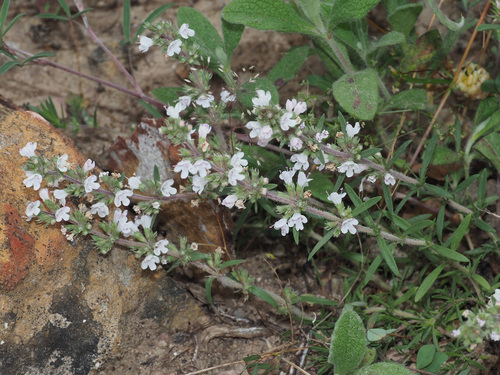
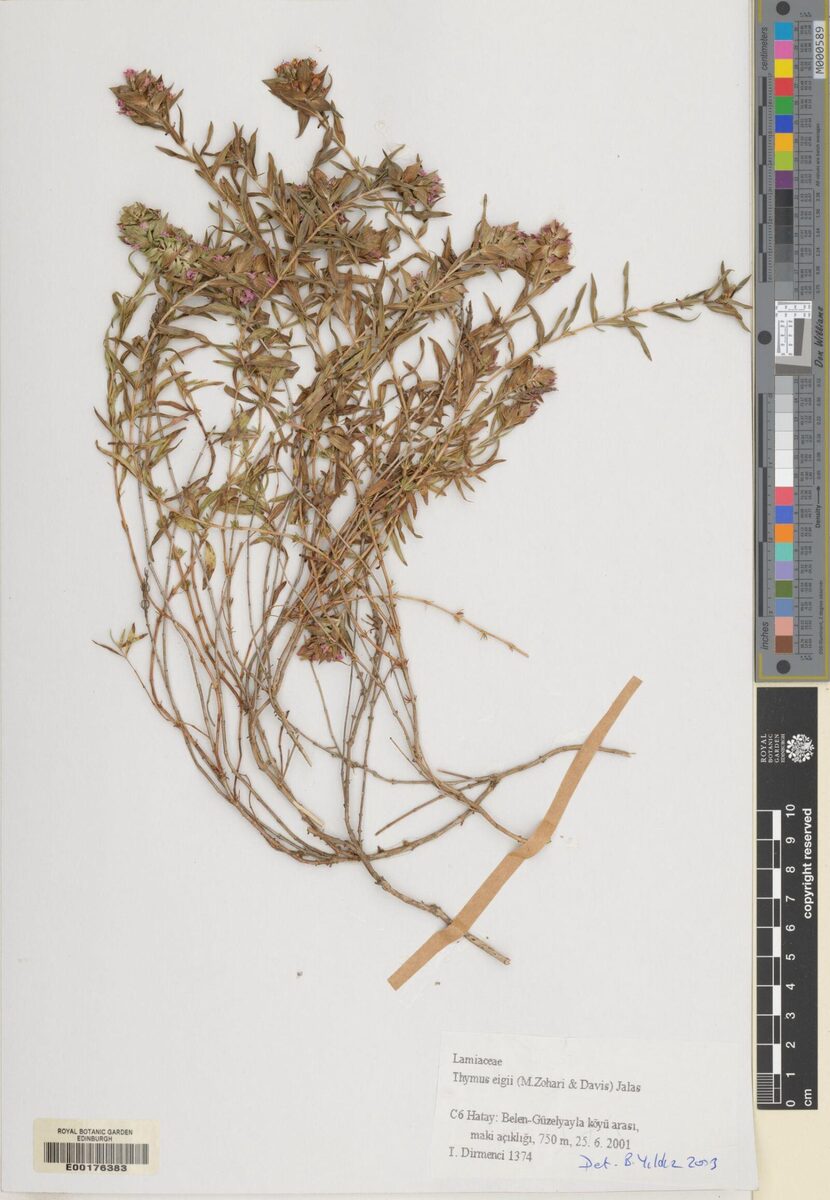
Salvia apiana
Jepson
White sage
iNaturalist· cc-by-nc
(c) soggyfroggy1, some rights reserved (CC BY-NC)
iNaturalist· cc-by-nc
(c) Ron Vanderhoff, some rights reserved (CC BY-NC)
iNaturalist· cc-by-nc
(c) Ron Vanderhoff, some rights reserved (CC BY-NC)
Summary
Source: WikipediaSalvia apiana, the Californian white sage, bee sage, or sacred sage is an evergreen perennial shrub that is native to the southwestern United States and northwestern Mexico, found mainly in the coastal sage scrub habitat of Southern California and Baja California, on the western edges of the Mojave and Sonoran deserts.
Description
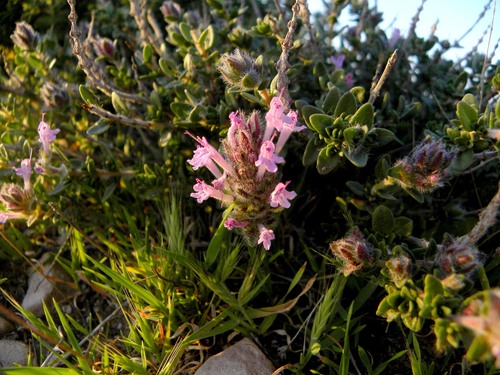
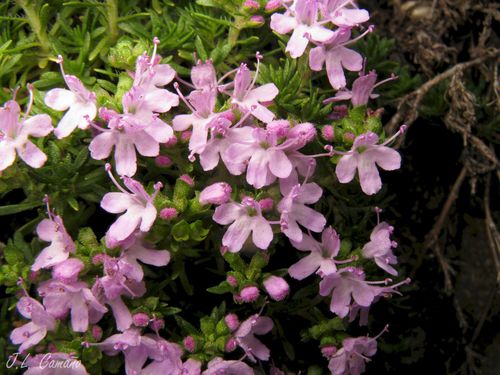
A large shrub. It grows 1-3 m high. It spreads 1 m wide. The leaves are white and hairy. They are 7.5-10 cm long. The leaves have an aroma. The flowers are white to lavender. They grow in much branched rings.
Edible Uses
The seed can be eaten raw or cooked. It may be ground into a powder and used as a mush, or mixed with cereals such as oats or wheat, toasted, and ground into a fine powder to eat dry. Seeds can also be soaked overnight and stirred into water or fruit juice as a drink, or eaten with cereals. They are additionally used as a spice. The leaves are used in cooking as a flavouring, including in seed mushes. Young stalks can be eaten raw, and ripe stem tops can be peeled and eaten raw.
Traditional Uses
The seeds are soaked overnight then drunk in water or juice or used on cereals. The leaves can be used in cooking. They are a spice.
This uses section is brief — help expand it
Medicinal Uses
An infusion of the leaves is used as a blood tonic and as a treatment for coughs and colds. The leaves can be eaten or used in a sweat bath to treat colds. Seeds have been used as eye cleaners — placed in the eye, a seed forms a gelatinous coating to which foreign matter adheres, and it is then washed out naturally by the eye's own tears.
Distribution
It is a warm temperate plant. It suits hardiness zones 9-11. Hobart Botanical Gardens.
Where It Grows
Australia, Mexico, North America, Tasmania, USA*,
Cultivation
Requires a very well-drained light sandy soil in a sunny position. Prefers a rich soil. Plants grow best in a dry climate and can be killed by excessive winter wet. This species is not hardy in the colder areas of the country, it tolerates temperatures down to between -5 and -10°c. The seed is sold in health food shops for its use in making a drink. A good bee plant. Members of this genus are rarely if ever troubled by browsing deer. White sage (Salvia apiana) is self-fertile, but it produces the most seeds when pollinated by other plants. Sage is a moderately fast-growing herb, often reaching maturity in about 1 to 2 years under optimal conditions. Sage leaves can be harvested throughout the growing season, with the best flavor typically from spring to early summer, just before flowering. Sage usually flowers in late spring to early summer, generally between May and June (Northern Hemisphere), depending on the specific species and growing conditions. Sage is a moderately fast-growing herb, often reaching maturity in about 1 to 2 years under optimal conditions.
Propagation
Sow seed in March or April in a greenhouse; germination typically occurs within 2 weeks. Prick out seedlings into individual pots when large enough to handle and plant out in early summer. Where the plant is near the edge of its hardiness range, overwinter young plants under glass and plant out in late spring of the following year. Cuttings of half-ripe wood can be taken at almost any point during the growing season.
Other Uses
Sage can be used as a companion plant to attract pollinators and beneficial insects, and its aromatic foliage may deter some pests. The leaves have been crushed in water and used as a hair shampoo, dye, and hair straightener. A poultice of freshly crushed leaves can be applied to the armpits to treat body odour. The leaves have been burnt as incense to fumigate a house after a contagious disease such as measles. The flowers are rich in nectar and attract bees, butterflies, and hummingbirds. Dense foliage provides some shelter for small animals and invertebrates, and woody stems and leaf litter offer overwintering sites for beneficial insects. The strong aromatic scent can repel harmful insects and herbivores.
Notes
There are about 500-900 Salvia species. They are mostly in subtropical and temperate places.
Synonyms
Also Known As
California white sage, Greasewood, Bee sage
References (11)
- Anderson, M. K., 2012, Edible Seeds and Grains of California Tribes and the Klamath Tribe of Oregon in the Phoebe Apperson Hearst Museum of Anthropology Collections, University of California, Berkeley. USDA p 32
- Cundall, P., (ed.), 2004, Gardening Australia: flora: the gardener's bible. ABC Books. p 1300
- Facciola, S., 1998, Cornucopia 2: a Source Book of Edible Plants. Kampong Publications, p 134
- Hibbert, M., 2002, The Aussie Plant Finder 2002, Florilegium. p 284
- Kermath, B. M., et al, 2014, Food Plants in the Americas: A survey of the domesticated, cultivated and wild plants used for Human food in North, Central and South America and the Caribbean. On line draft. p 777
Show all 11 references Hide references
- Lawton, B.P., 2002, Mints. A Family of Herbs and Ornamentals. Timber Press, Portland, Oregon. p 180
- Moerman, D. F., 2010, Native American Ethnobotany. Timber Press. p 509
- Muhlenbergia 3:144. 1908
- Plants for a Future database, The Field, Penpol, Lostwithiel, Cornwall, PL22 0NG, UK. http://www.scs.leeds.ac.uk/pfaf/
- Saunders, C.F., 1948, Edible and Useful Wild Plants. Dover. New York. p 54 (As Audibertia polystachya)
- World Checklist of Useful Plant Species 2020. Royal Botanic Gardens, Kew