Salacia chinensis
L.
Lolly berry, Snotty Gobbles, Mangrove vine
iNaturalist· cc-by-nc
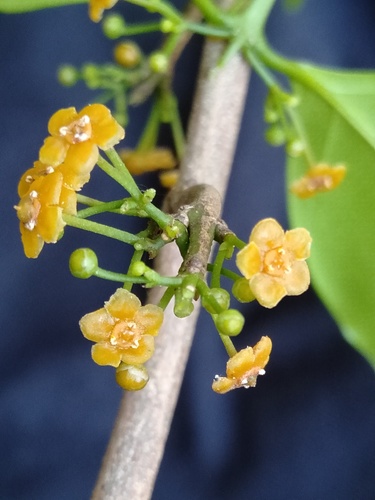
(c) shelbyfarmer, some rights reserved (CC BY-NC), uploaded by shelbyfarmer
iNaturalist· cc-by-nc
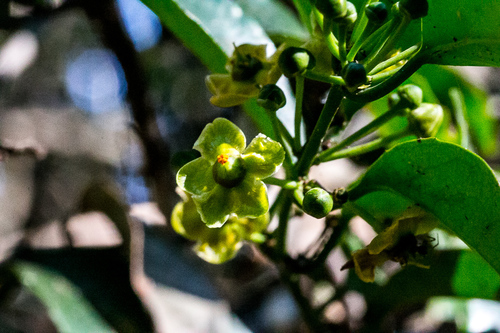
(c) Radha Veach, some rights reserved (CC BY-NC)
iNaturalist· cc-by-nc
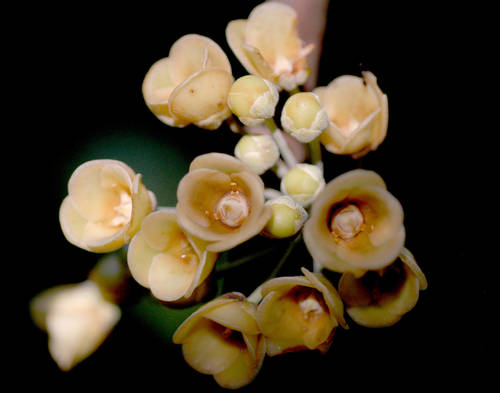
(c) Radha Veach, some rights reserved (CC BY-NC)
Summary
Source: WikipediaSalacia chinensis is a species of plant in the family Celastraceae. A climbing shrub, it is also known as Chinese salacia, lolly berry, and saptachakra in Ayurveda. The plant is found widespread in South-East Asia and Australoceania.
Description
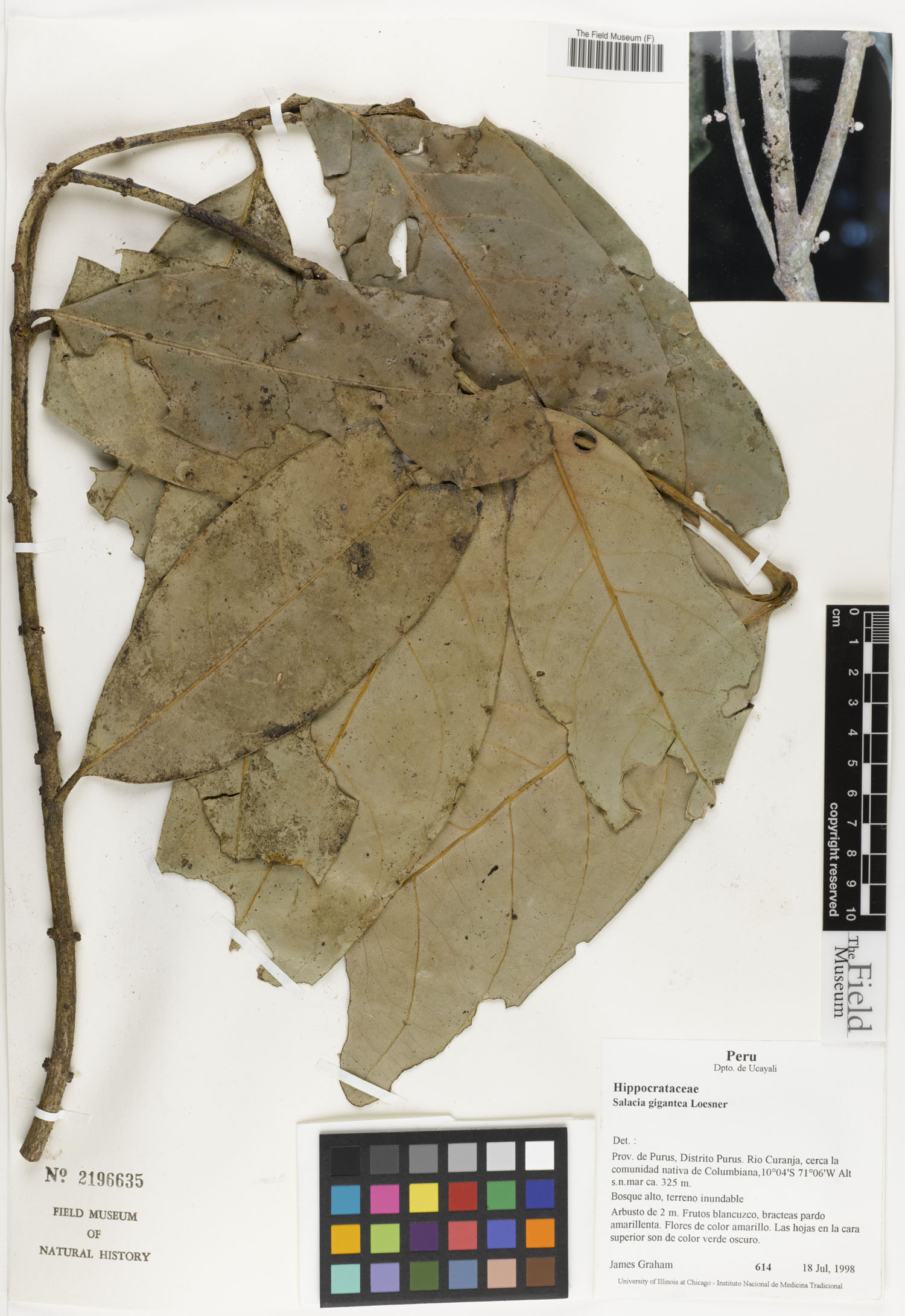
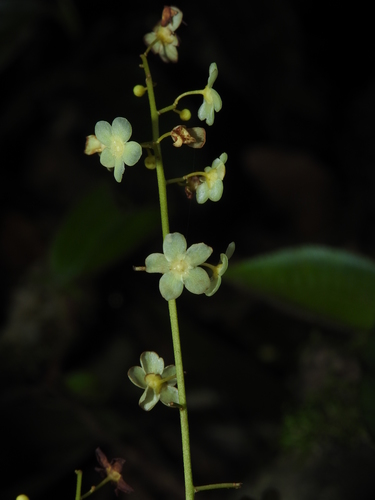
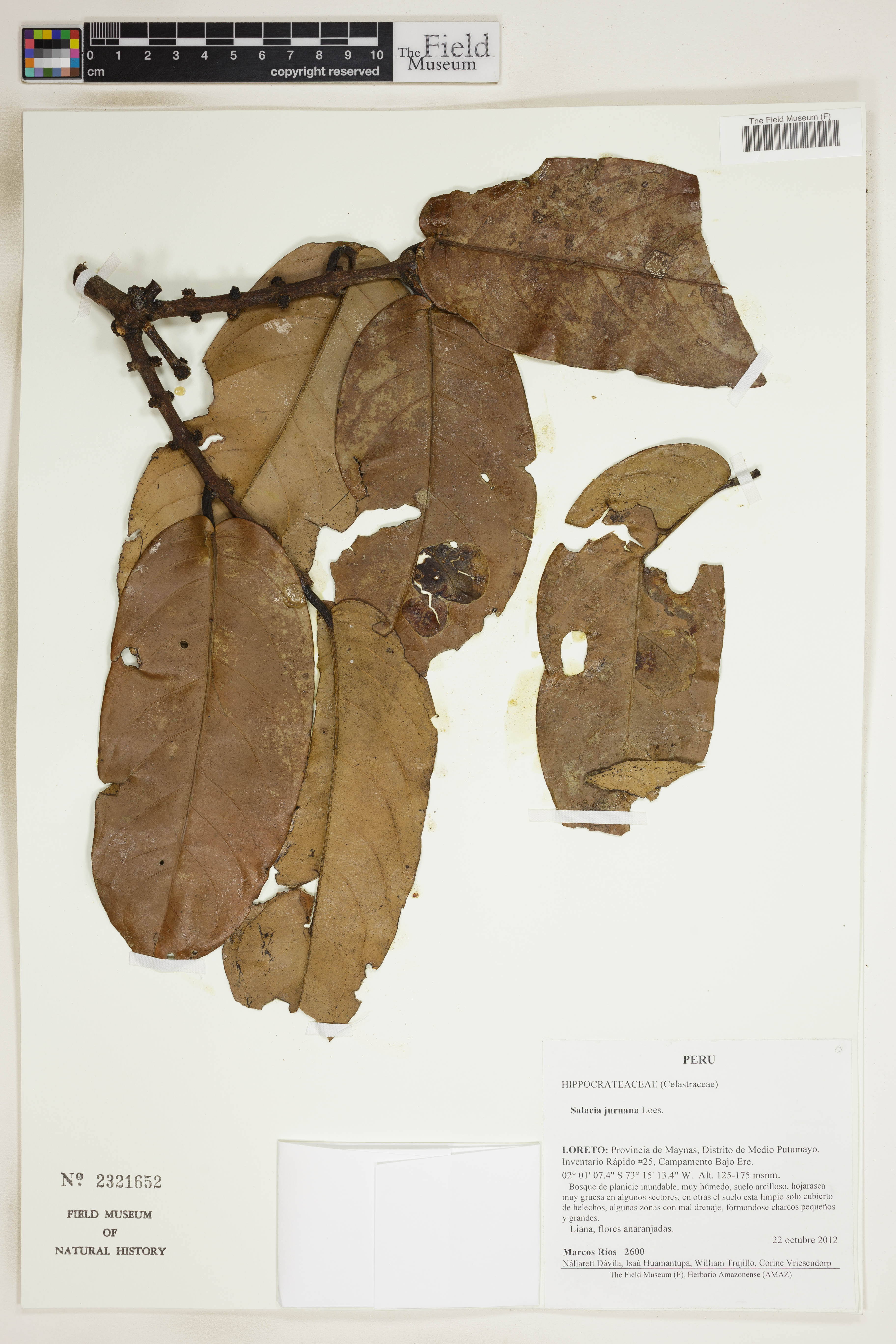
It is a woody climber. The small twigs are slender. New green shoots are flattened. The leaves are oval and produced opposite one another. They are leathery and dark green. They are 10-18 cm long by 4-6 cm wide. The veins in the leaf curve towards the leaf edge. The leaf stalk is 1 cm long. The flowers are greenish and small. They are produced singly or in clusters. They develop below the leaves on leafless twigs from small pads. The fruit is oval orange-red and 3 cm across. The fruit are edible. Fruit have one seed inside.
Edible Uses
Fruit - raw. The small amount of pulp surrounding the seed is eaten. The globose to ovate, red fruit is around 10 - 25mm in diameter, containing a single seed.
Traditional Uses
The flesh of the fruit are eaten. They are sweet. They are peeled.
This uses section is brief — help expand it
Medicinal Uses
The roots are abortifacient and astringent. A decoction is used as a treatment against amenorrhoea and to normalize menstruation in general, and is also given in order to invigorate the circulation.
Distribution
A tropical and subtropical plant. It needs a well-drained soils in a sunny position. In southern China it grows in forests below 100-700 m above sea level. It occurs in the Western Ghats in India.
Where It Grows
Andamans, Asia, Australia, Bangladesh, Cambodia, China, Fiji, India, Indochina, Indonesia, Laos, Malaysia, Myanmar, Pacific, Papua New Guinea, PNG, Philippines, SE Asia, Singapore, Solomon Islands, Sri Lanka, Thailand, Vietnam,
Cultivation
Plants are grown from seed. Seed need to be sown fresh.
Production
In Australia, flowers are produced from August to October and fruit are ripe March to April. They can also produce throughout the year.
Notes
Also put in the family Hippocrateaceae.
Synonyms
Also Known As
Akan pelanduk, Allitiga, Bu, Bwe-thein, Cherukuranti, Chinese salacia, Chota boroi, Dimal, Drauwa, Ingli, Kajipot, Lum nok, Madhu phal, Mata kantjil, Mata kuching hutan, Matang-ulang, Matom kai, Modhuphal, Nisul-bondi, Penghorng, Rakiat kechil, Saptrangi, Virveay, Wole seroso
References (23)
- Altschul, S.V.R., 1973, Drugs and Foods from Little-known Plants. Notes in Harvard University Herbaria. Harvard Univ. Press. Massachusetts. no. 2561 (As Salacia prinoides)
- Ambasta, S.P. (Ed.), 2000, The Useful Plants of India. CSIR India. p 539
- Burkill, I.H., 1966, A Dictionary of the Economic Products of the Malay Peninsula. Ministry of Agriculture and Cooperatives, Kuala Lumpur, Malaysia. Vol 2 (I-Z) p 1977 (Also as Salacia prinoides)
- Cooper W & Cooper W T, 1994, Fruits of the Rain Forest. RD Press p 248
- Cooper, W. and Cooper, W., 2004, Fruits of the Australian Tropical Rainforest. Nokomis Editions, Victoria, Australia. p 119
Show all 23 references Hide references
- Dobriyal, M. J. R. & Dobriyal, R., 2014, Non Wood Forest Produce an Option for Ethnic Food and Nutritional Security in India. Int. J. of Usuf. Mngt. 15(1):17-37
- French, B.R., 2010, Food Plants of Solomon Islands. A Compendium. Food Plants International Inc. p 382
- Hardwick, G., 2001, Economically Useful Plants for Northern Australia: Master Species List. Crusader eBooks. (Also as Salacia prinoides)
- Jones D, L, 1986, Ornamental Rainforest Plants in Australia, Reed Books, p 299, 340 (Also as Salacia prinoides)
- Jones, D.L. & Gray, B., 1977, Australian Climbing Plants. Reed. p 60, 141
- Kachenchart, B., et al, 2008, Phenology of Edible Plants at Sakaerat Forest. In Proceedings of the FORTROP II: Tropical Forestry Change in a Changing World. Bangkok, Thailand.
- Low, T., 1992, Bush Tucker. Australia’s Wild Food Harvest. Angus & Robertson. p 18
- Milow, P., et al, 2013, Malaysian species of plants with edible fruits or seeds and their evaluation. International Journal of Fruit Science. 14:1, 1-2
- Paczkowska, G. & Chapman, A.R., 2000, The Western Australian Flora. A Descriptive Catalogue. Western Australian Herbarium. p 270
- Pasha, M. K. & Uddin, S. B., 2019, Minor Edible Fruits of Bangladesh. Bangladesh J. Plant Taxon. 26(2): 299–313
- Peekel, P.G., 1984, (Translation E.E.Henty), Flora of the Bismarck Archipelago for Naturalists, Division of Botany, Lae, PNG. p 331, 329
- PROSEA No. 2
- Reddy, K. N. et al, 2007, Traditional knowledge on wild food plants in Andhra Pradesh. Indian Journal of Traditional Knowledge. Vol. 6(1): 223-229
- Reis, S. V. and Lipp, F. L., 1982, New Plant Sources for Drugs and Foods from the New York Botanical Garden herbarium. Harvard. p 167 (As Salacia prinoides)
- Scarth-Johnson, V., 2000, National Treasures. Flowering Plants of Cooktown and Northern Australia. Vera Scarth-Johnson Gallery Association. Cooktown, Australia. p 139
- Turreira Garcia, N., et al, 2017, Ethnobotanical knowledgeof the Kuy and Khmer people in Prey Lang, Cambodia. Cambodian Journal of Natural History 2017 (1): 76-101
- Wheeler, J.R.(ed.), 1992, Flora of the Kimberley Region. CALM, Western Australian Herbarium, p 586
- World Checklist of Useful Plant Species 2020. Royal Botanic Gardens, Kew