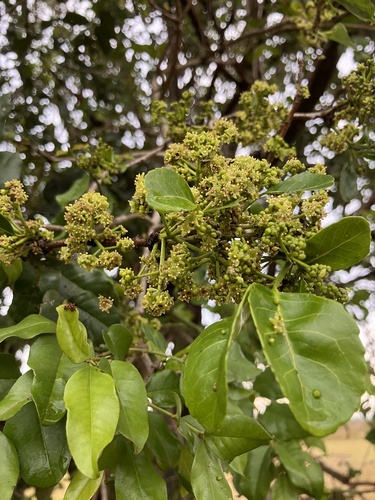
Euonymus hamiltonianus
Wall.
Yeddo euonymus, Hamilton's spindletree
iNaturalist· cc-by-sa
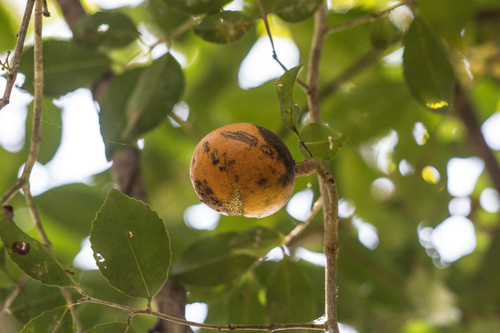
(c) Alpsdake, some rights reserved (CC BY-SA)
wikimedia· cc-by-sa
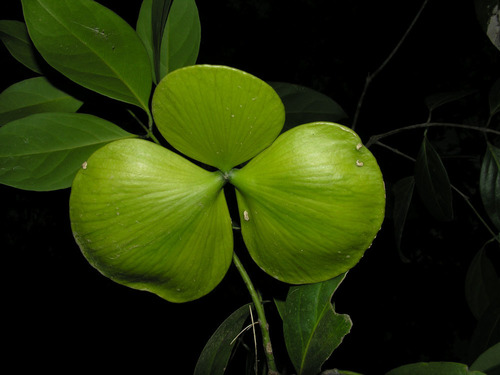
Shuvaev (via Wikimedia Commons)
wikimedia· cc-by
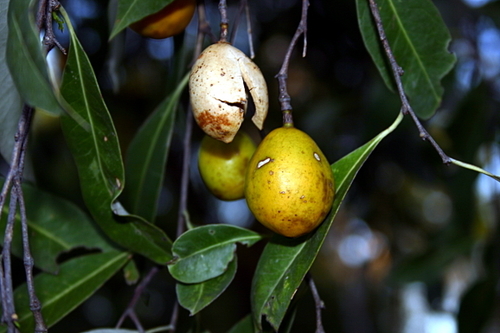
Jean-Pol GRANDMONT (via Wikimedia Commons)
wikimedia· cc-by
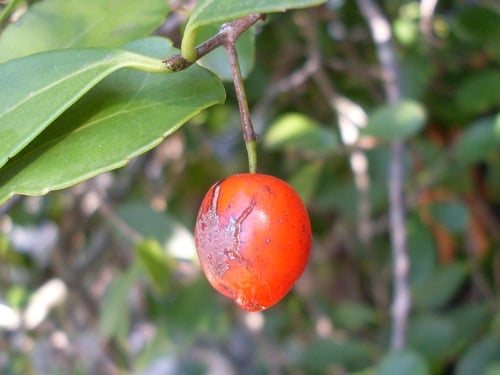
Dalgial (via Wikimedia Commons)
iNaturalist· cc-by-nc
(c) Wayne Longbottom, some rights reserved (CC BY-NC)
iNaturalist· cc-by-nc
(c) Wayne Longbottom, some rights reserved (CC BY-NC)
Summary
Source: WikipediaEuonymus hamiltonianus, known by the common names Hamilton's spindletree, Himalayan spindle, and Siebold's spindle is a species of flowering plant in the family Celastraceae. It is native to Asia, where it is distributed in Afghanistan, Russia, China, Japan, Korea, India, Nepal, Pakistan, Bhutan, Thailand, and Myanmar. This is one of the most common Euonymus species. It is cultivated in gardens and landscapes in other parts of the world.
Description
A deciduous shrub or small tree. It grows 6 m high. It spreads to 6 m wide. The leaves are oblong or sword shaped. They have short pointed tips. They flowers are white tinged with red or pink.
Edible Uses
Young leaves can be eaten after boiling. This report should be treated with caution, as many members of this genus are poisonous.
Traditional Uses
Caution:
This uses section is brief — help expand it
Medicinal Uses
None known
Known Hazards
Although no records of toxicity have been seen for this species, a number of plants in this genus are suspected of being poisonous and so some caution is advised.
Distribution
It is a temperate plant. It suits hardiness zones 4-9. It grows up to 3,000 m altitude in Pakistan.
Where It Grows
Afghanistan, Asia, Australia, Bhutan, China, Himalayas, India, Indochina, Japan, Korea, Myanmar, Nepal, Pakistan, Russia, SE Asia, Thailand,
Cultivation
Thrives in almost any soil, including chalk, it is particularly suited to dry shaded areas. Prefers a well-drained loamy soil. Plants are hardy to about -15°c. A very ornamental plant, there are a number of named varieties selected for their good fruiting and autumn colour.
Propagation
Seed is best sown as soon as it is ripe in a cold frame. Stored seed requires 3 months of cold stratification and should be sown as early in the year as possible; seed can take 18 months to germinate. When seedlings are large enough to handle, prick them out into individual pots and grow on in the greenhouse for at least their first winter. Plant out into permanent positions in late spring or early summer, after the last expected frosts. Cuttings of half-ripe wood taken at a node in July or August in a frame are very easy to root. Root cuttings can also be taken in winter.
Other Uses
The roots and stem yield gutta-percha, a non-elastic rubber used as an electrical insulator and in making plastics. The wood is heavy, hard, and close-grained, and is used for mosaic work, printing blocks, and combs.
Notes
There are about 175 Euonymus species.
References (6)
- Ambasta, S.P. (Ed.), 2000, The Useful Plants of India. CSIR India. p 212
- Cundall, P., (ed.), 2004, Gardening Australia: flora: the gardener's bible. ABC Books. p 581
- Etherington, K., & Imwold, D., (Eds), 2001, Botanica's Trees & Shrubs. The illustrated A-Z of over 8500 trees and shrubs. Random House, Australia. p 314
- Plants for a Future database, The Field, Penpol, Lostwithiel, Cornwall, PL22 0NG, UK. http://www.scs.leeds.ac.uk/pfaf/
- W. Roxburgh, Fl. ind. 2:403. 1824
Show all 6 references Hide references
- Woo, Y., et al, 2017, Antioxidant Potential of Selected Korean Edible Plant Extracts. Hindawi BioMed Research International Volume 2017, Article ID 7695606