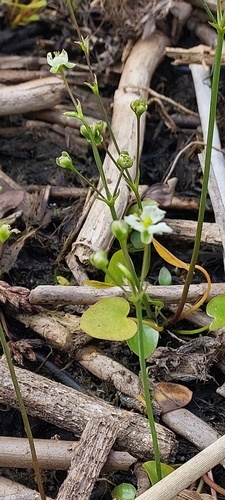
Sagittaria aginashi
Makino
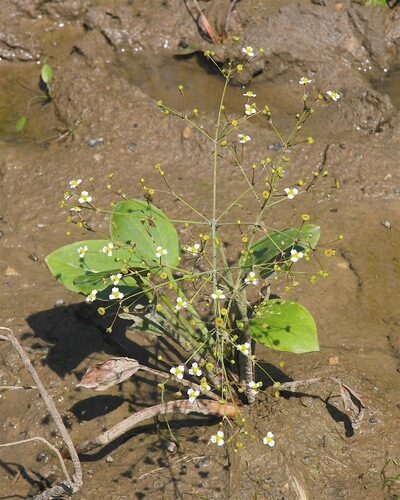
iNaturalist· cc-by-nc
(c) onidiras-iNaturalist, some rights reserved (CC BY-NC), uploaded by onidiras-iNaturalist
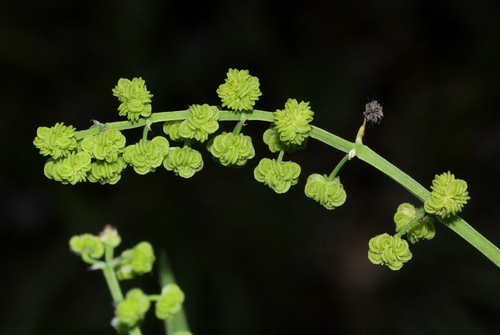
iNaturalist· cc-by-nc
(c) 登坂久雄, some rights reserved (CC BY-NC)
Summary
A perennial with monoecious flowers pollinated by insects. Grows in sandy, loamy, and clay soils from mildly acidic to basic pH. Requires full sun and thrives in wet soil or shallow water environments.
Description
A perennial with monoecious flowers pollinated by insects. Grows in sandy, loamy, and clay soils from mildly acidic to basic pH. Requires full sun and thrives in wet soil or shallow water environments.
Edible Uses
The leaves and young plant are edible when cooked.
Medicinal Uses
None known
Distribution
It is a temperate plant.
Where It Grows
Asia, China, Japan, Korea, Nepal,
Cultivation
We have very little information on this species and do not know if it will be hardy in Britain, though judging by its native range it should succeed outdoors in many parts of the country. This plant does not appear in The Flora of China, and so its stated distribution needs to be questioned. The following notes are based on the general needs of the genus. A pond or bog garden plant, it requires a moist or wet loamy soil in a sunny position. It can also be grown in shallow, still or slowly flowing water. The flowers of species in this genus are either polygamous or monoecious. They are produced in whorls of three with a male flower at the top and two hermaphrodite or female flowers at the bottom.
Propagation
Sow seed as soon as it is ripe in a pot standing in about 5cm of water. Prick seedlings into individual pots when large enough to handle, gradually increasing the water depth as plants grow until it reaches about 5cm above the top of the pot. Plant out in late spring or early summer of the following year. Tubers can be divided in spring or autumn — a straightforward process. Runners can be potted up at any point during the growing season.
Other Uses
None known Special Uses
Notes
There are 32 Sagittaria species. There are 14 species in tropical America. They grow in water.
References (3)
- Dangol, D. R. et al, 2017, Wild Edible Plants in Nepal. Proceedings of 2nd National Workshop on CUAOGR, 2017.
- Gautam, R. S., et al, 2022, Ethnobotanical Review of Wild Edible Plants of Nepal. Journal of Natural History Museum Volume 32, 2021-22 p 100
- Plants for a Future database, The Field, Penpol, Lostwithiel, Cornwall, PL22 0NG, UK. http://www.scs.leeds.ac.uk/pfaf/