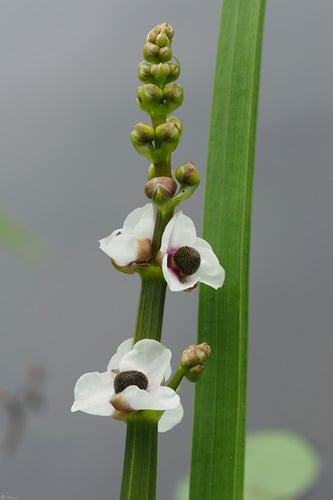
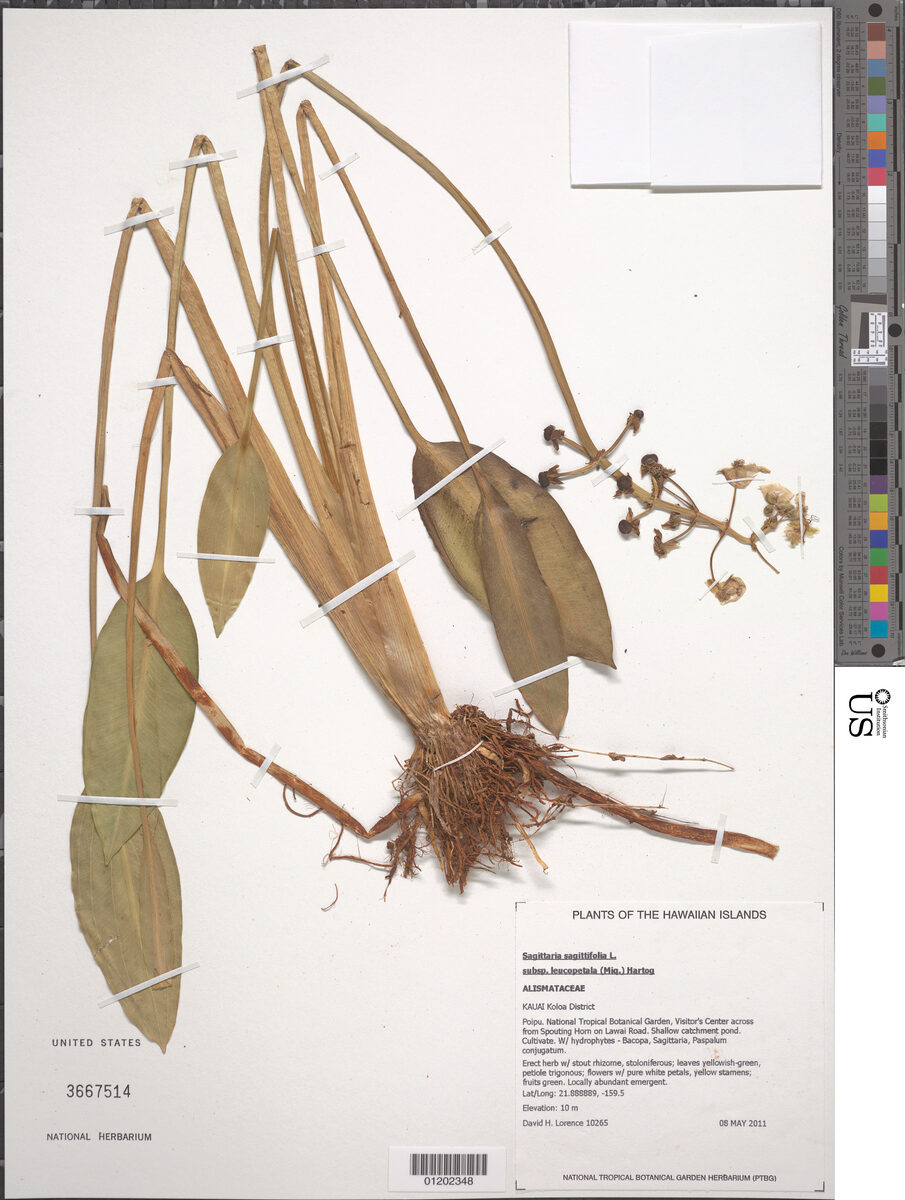
Limnophyton obtusifolium
(L.) Miq.
Blunt arrowhead
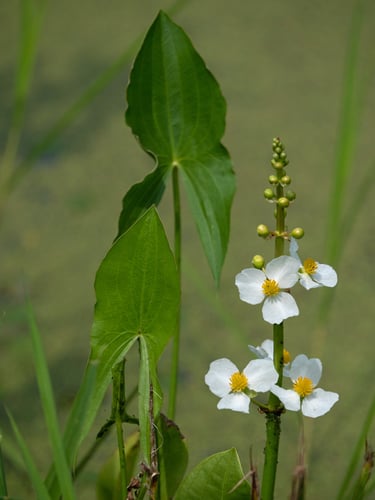
iNaturalist· cc-by-nc-sa
(c) Marco Schmidt, some rights reserved (CC BY-NC-SA)
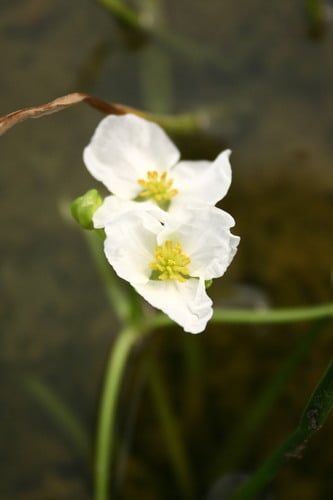
iNaturalist· cc-by-nc
(c) magdastlucia, some rights reserved (CC BY-NC), uploaded by magdastlucia
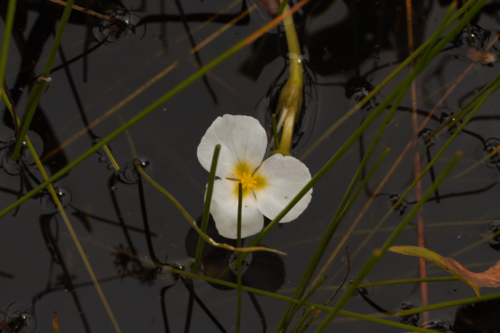
iNaturalist· cc-by-nc
(c) magdastlucia, some rights reserved (CC BY-NC), uploaded by magdastlucia
Description
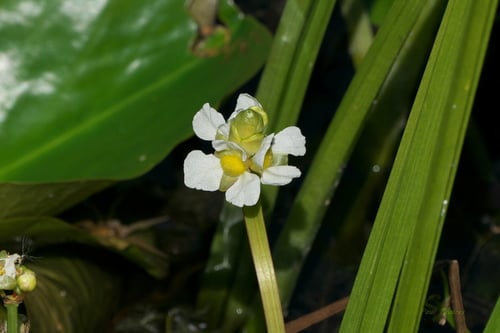
A herb. It can keep growing from year to year or grow each year from seed. It grows 60-90 cm tall. The leaves are broadly oval and 15-30 cm long. The base is arrowhead shaped. It has spreading triangle shaped lobes. The leaf stalk is 30-80 cm long. The flowering stalks are also 30-80 cm long. There are 5-10 flowers in a ring. They are 1 cm across. They have 3 white petals.
Edible Uses
The plant is burnt as a source of edible salt and edible ashes.
Traditional Uses
The plant is burnt as a source of edible salt.
This uses section is brief — help expand it
Distribution
It is a subtropical plant. It grows in rivers. It grows from sea level to 700 m above sea level in Ethiopia.
Where It Grows
Africa, Asia, Botswana, Burkina Faso, East Africa, Eswatini, Ethiopia, Guinea, Guinée, Guinea-Bissau, India, Madagascar, Malaysia, Mozambique, Myanmar, SE Asia, South Africa, Southern Africa, Swaziland, West Africa,
Synonyms
Also Known As
Tuytuy
References (6)
- Awas, T., 1997, A Study on the Ecology and Ethnobotany of Non-cultivated Food Plants and Wild Relatives of Cultivated crops in Gambella Region, Southwestern Ethiopia. Addis Ababa University. p 76
- Dalziel, J. M., 1937, The Useful plants of west tropical Africa. Crown Agents for the Colonies London.
- Lulekal, E., et al, 2011, Wild edible plants in Ethiopia: a review on their potential to combat food insecurity. Afrika Focus - Vol. 24, No 2. pp 71-121
- Peters, C. R., O'Brien, E. M., and Drummond, R.B., 1992, Edible Wild plants of Sub-saharan Africa. Kew. p 8
- Swaziland's Flora Database http://www.sntc.org.sz/flora
Show all 6 references Hide references
- World Checklist of Useful Plant Species 2020. Royal Botanic Gardens, Kew