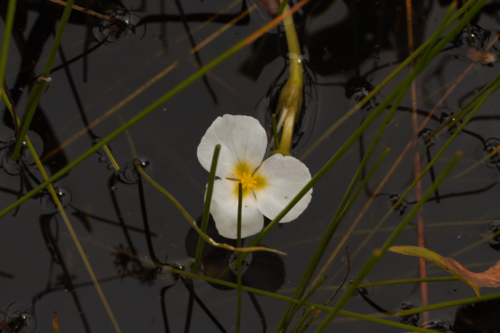
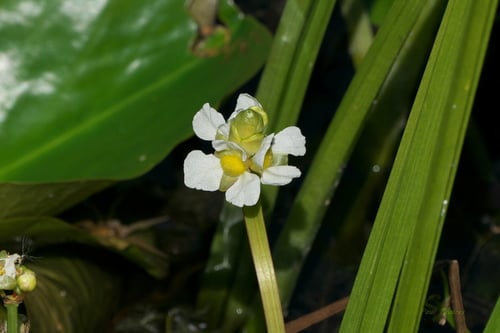
Limnocharis flava - (L.) Buchenau
(L.) Buchenau
Sawah Lettuce, Sawah Flowering Rush
gbif· cc-by-nc
hajo
gbif· cc-by
Thorsten Hackbarth
gbif· cc-by-nc
katiuska19
Description
Limnocharis flava is an evergreen Perennial growing to 0.6 m (2ft) by 0.6 m (2ft in) at a fast rate. See above for USDA hardiness. It is hardy to UK zone 10. The plant is self-fertile. It is noted for attracting wildlife. Suitable for: light (sandy), medium (loamy) and heavy (clay) soils. Suitable pH: mildly acid and neutral soils and can grow in very acid soils. It cannot grow in the shade. It prefers moist or wet soil and can grow in water.
Edible Uses
Leaves, leaf stems, flower stalks and young inflorescences are eaten cooked. They can be steamed like endive or spinach, added to soups or mixed with other vegetables. The young leaves and tops of the plant are boiled or cooked in mixed soups. The vegetable contains relatively high levels of Calcium, Iron and vitamin A, which are nutrients that are frequently insufficient in the diets of women in low-income countries.
Distribution
Southern S. America - Argentina, Paraguay, north through Central America to Mexico.
Where It Grows
NORTHERN AMERICA: Mexico, Sinaloa, Sonora, Tamaulipas, Campeche, Chiapas, Guerrero, Nayarit, Oaxaca, Veracruz de Ignacio de la Llave, SOUTHERN AMERICA: Cuba, Dominican Republic, Grenada, Haiti, Costa Rica, Nicaragua, Panama, Venezuela, Brazil, Bolivia, Colombia, Ecuador, Peru, Argentina, Paraguay,
Cultivation
Grows best in shallow, neutral to slightly acidic water. If allowed to grow unchecked, the plant may become a invasive environmental weed of streams and wetlands. It has become a serious weed in rice fields, irrigation canals and Southeast Asian wetlands. Clumps of the weed provide a congenial breeding site for disease vectors, including mosquitoes, which encourages the spread of diseases such as Japan fever and dengue fever. Plants are reproduced mainly by seeds - these are dispersed via the production of fruitlets, which are buoyant and carried by water to new localities, dispersing seeds along the way. Fruiting occurs throughout the year, with a single fruit producing about 1,000 seeds and a single plant producing about 1,000 fruits yearly. Bloom Color: Bright Yellow White/Near White. Spacing: 18-24 in. (45-60 cm). It is usually harvested in summer and autumn when the leaves are young and tender. Sawah Lettuce generally flowers in late summer and grows relatively quickly, with a short time to maturity, typically within a few weeks to a couple of months, depending on environmental conditions. Sawah Lettuce is self-fertile.
Propagation
Seed - seed must be kept damp or it loses viability. Sow in a constantly damp medium at 20c, cover with silver sand and immerse in 1cm of water once the seedlings have germinated. Division
Other Uses
Green manure. Agroforestry Uses: The plants are sometimes used for green manure. Sawah Lettuce can be used in wetland management and aquaculture systems. It can also help improve water quality by filtering nutrients and providing habitat for aquatic life.
Synonyms
Also Known As
Sawah Lettuce, Sawah Flowering Rush, Bak kanjong, Bengok, Berek, Bon cheen, Etjeng, Genjur, Jinjir, Keo neo, Ne thao, Phak kanjong, Phak pai, Sawah-flower rush, Sawah-lettuce, Talapat Rusee, Trakiet paong, Velvetleaf, Yellow burhead