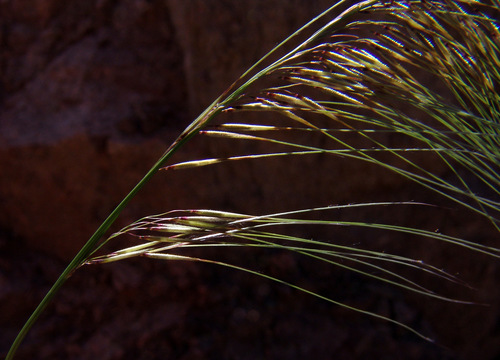
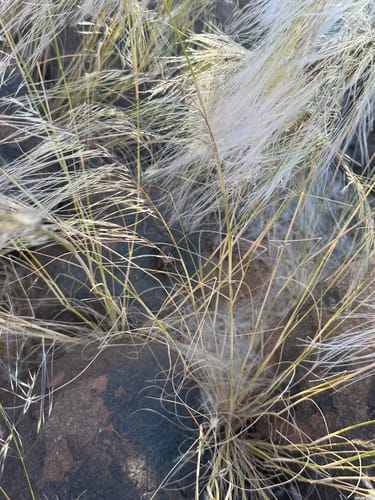
Puccinellia distans
(Jacq.) Parl.
Weeping alkaligrass
iNaturalist· cc-by-nc
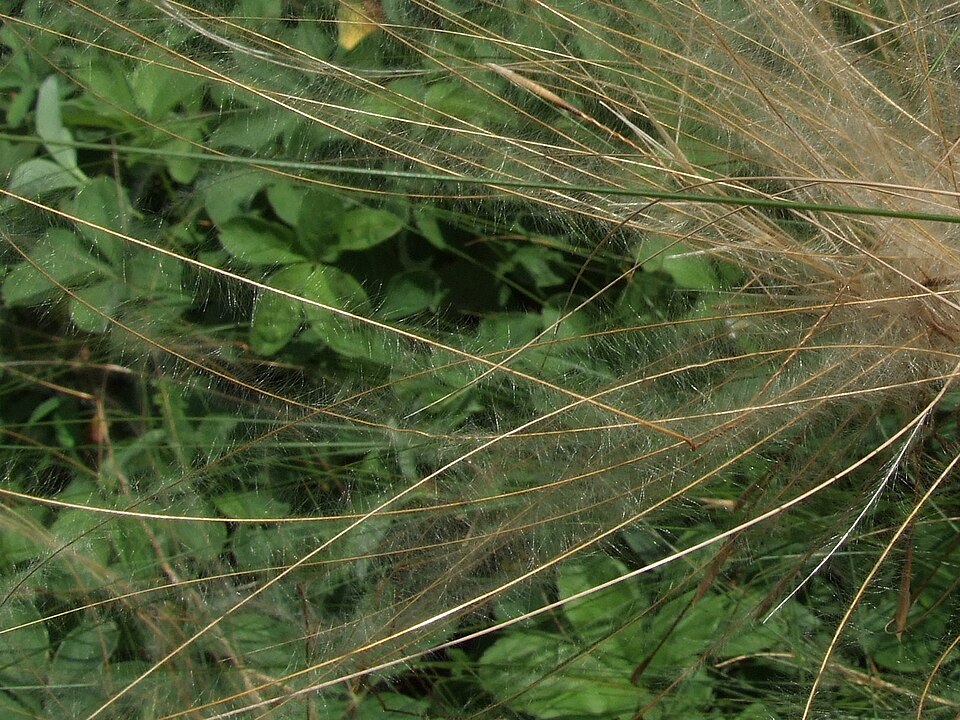
(c) François Rousseu, some rights reserved (CC BY-NC), uploaded by François Rousseu
iNaturalist· cc-by-nc
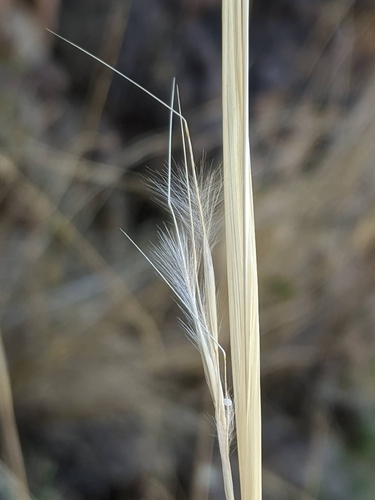
(c) Věra Kafková, some rights reserved (CC BY-NC), uploaded by Věra Kafková
iNaturalist· cc-by-nc
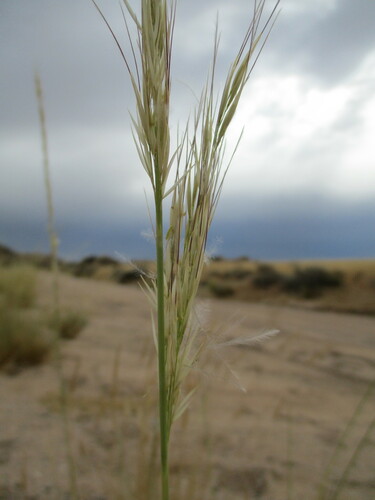
(c) Biopix, some rights reserved (CC BY-NC)
Summary
Source: WikipediaPuccinellia distans is a species of grass known by the common names weeping alkaligrass and European alkali grass. It is native to Europe and it is present in most of North America, where it is perhaps an introduced species. It grows in moist habitat, usually in areas with saline soils, such as the edges of salted roads. It is a perennial herb producing hollow stems up to 40 to 60 centimeters in maximum height. The inflorescence is a spreading array of branches, the lower ones reflexed. The branches bear several rough-haired spikelets containing flowers.
Description
A grass. It keeps growing from year to year. It forms tufts. It grows 20-40 cm tall. The stem are 1-2 mm wide. The leaf blade is 2-10 cm long by 1-2 mm wide. The flower is an open panicle.
Edible Uses
The seeds are edible when cooked. No detailed preparation instructions are given, but they can likely be used as pinole, ground into a powder to thicken soups, or blended with cereal flours for use in bread and cakes.
Medicinal Uses
No medicinal uses are known.
Distribution
It is a temperate plant. It grows in salty, moist grassy places beween 100-2,000 m in north China.
Where It Grows
Africa, Asia, Australia, Central Asia, China, Europe, Japan, Kazakhstan, Korea, Kyrgyzstan, Luxembourg, Mongolia, NW Africa, North America, Pakistan, Russia, Tajikistan, Tasmania, Turkmenistan, USA, Uzbekistan,
Propagation
Surface sow seed in pots in spring and do not allow to dry out. Once large enough to handle, prick seedlings into individual pots and plant out during summer. Division in spring is also suitable.
Other Uses
No other uses are known.
Synonyms
References (2)
- Moerman, D. F., 2010, Native American Ethnobotany. Timber Press. p 454
- Tasmanian Vascular Plant Census 2017