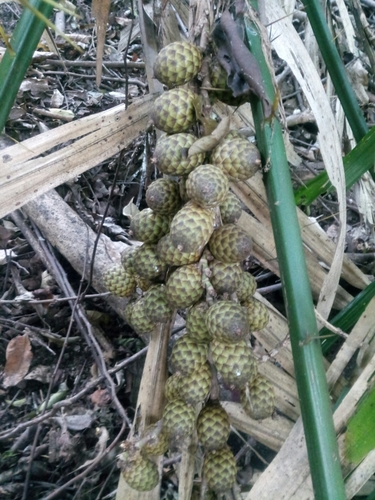
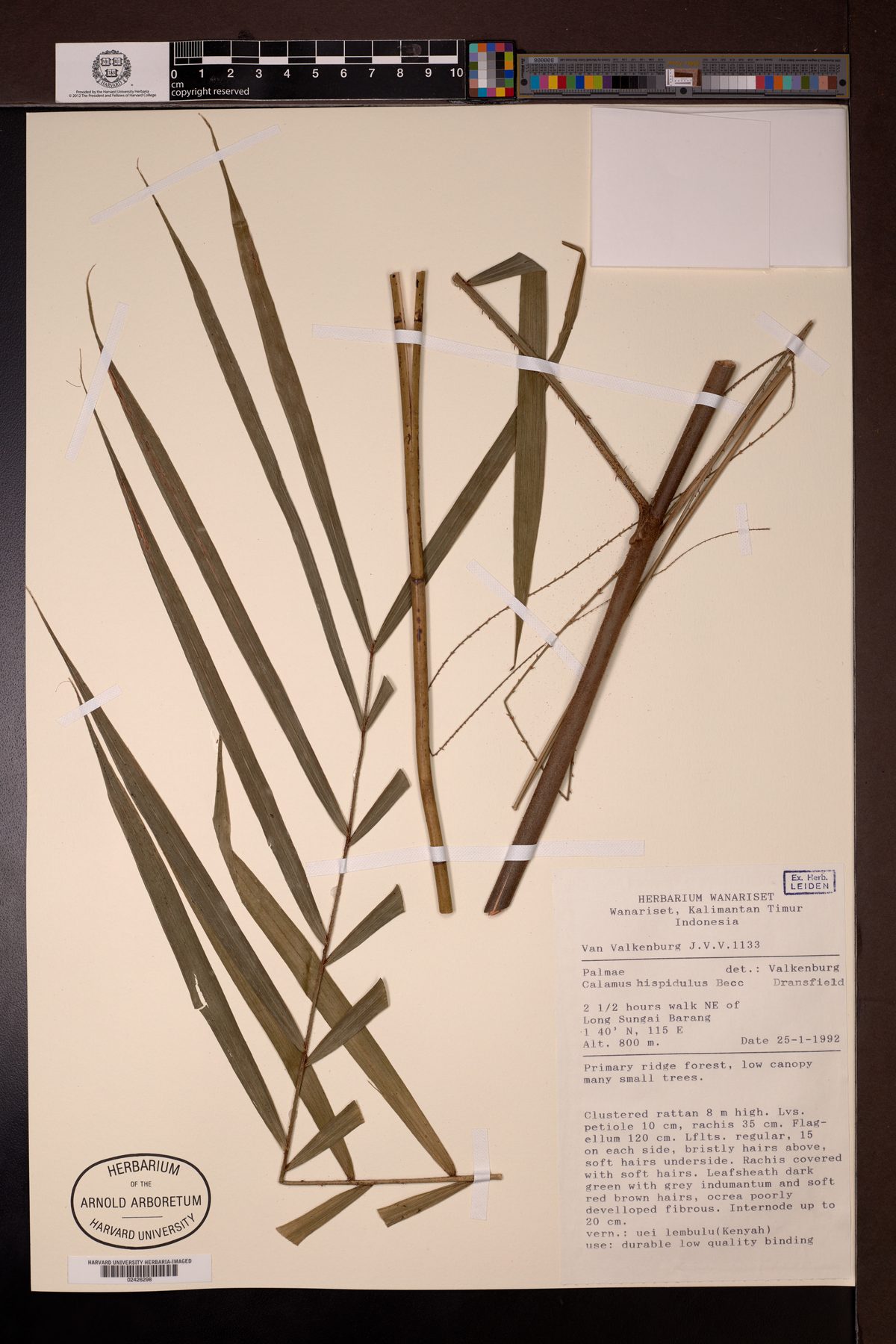
Sabal palmetto
(Walter) Lodd. ex Schult. & Schult.f.
Caribbean Cabbage palm
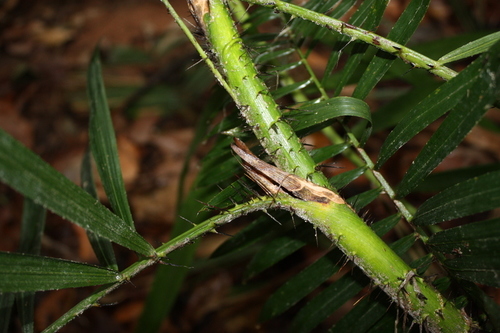
iNaturalist· cc-by-nc
(c) camilleclark, some rights reserved (CC BY-NC)
iNaturalist· cc-by-nc
(c) Scott Zona, some rights reserved (CC BY-NC)
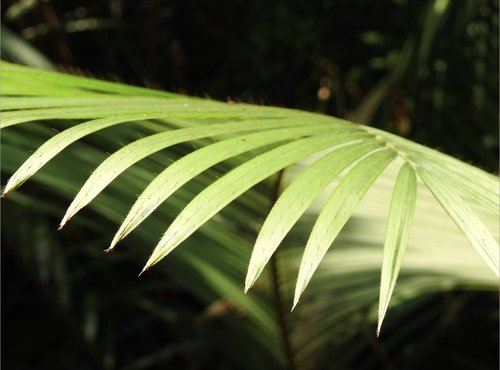
iNaturalist· cc-by-sa
(c) Douglas Goldman, some rights reserved (CC BY-SA), uploaded by Douglas Goldman
Summary
Source: WikipediaSabal palmetto (, SAY-bəl), also known as cabbage palm, cabbage palmetto, sabal palm, palmetto palm, blue palmetto, Carolina palmetto, common palmetto, and swamp cabbage, is one of 15 species of palmetto palm. It is native to the Southeast United States, the Yucatán Peninsula in Mexico, and the West Indies.
Description
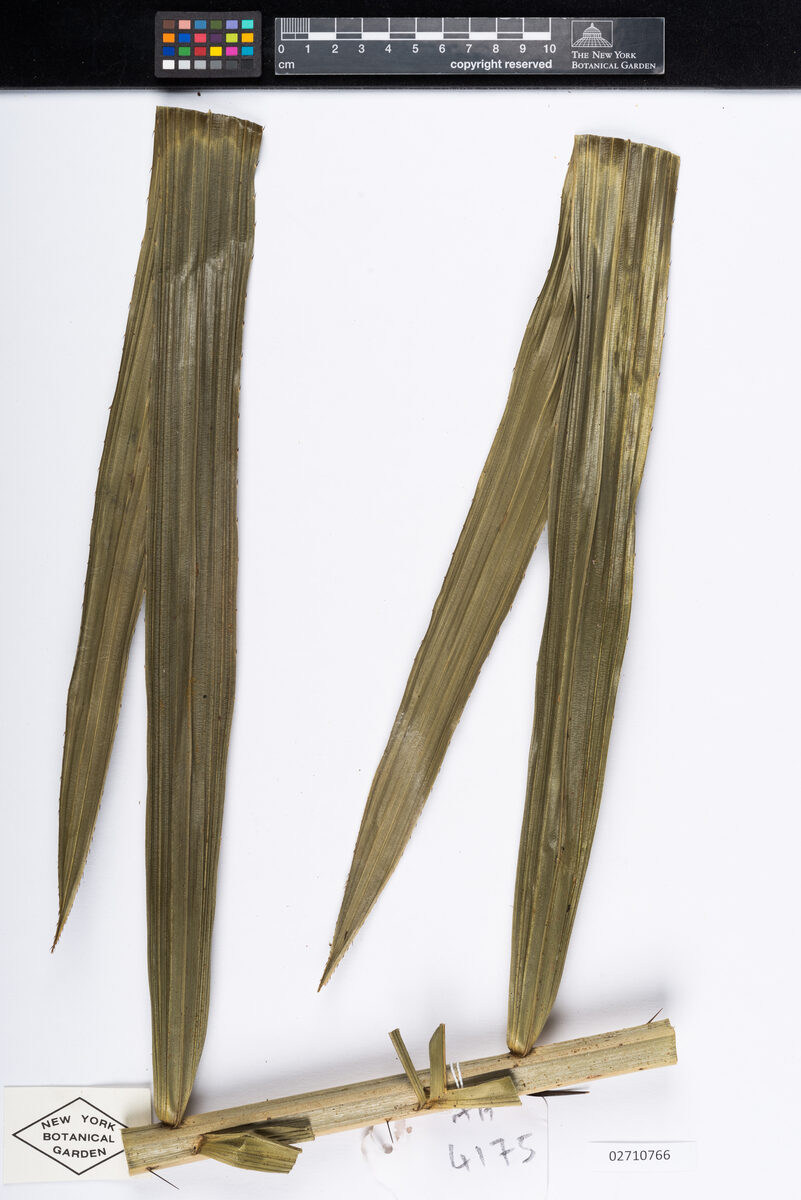
A fan palm. The trunk is 15-20 m tall and 35 cm across. The leaves form a round crown. The leaf stalk extends into the leaf blade. The leaf stalk is 1-1.5 m long. The leaves are blue-green. The leaf segments are joined for about 1/3 of their length. The tip is strongly notched. The flowering stalk is about as long as the leaves. It is branched. The flowers are white to cream. The fruit are small and round and black when ripe. They are 8-14 mm across. They are edible.
Edible Uses
The fruit can be eaten raw or cooked — small dry berries up to 12mm across with a thin, sweet flesh. Nourishing but considered an acquired taste. Young leaf buds are an excellent food, cooked and eaten as a vegetable. The sap is sweet.
Traditional Uses
The growing point or cabbage can be eaten, raw or cooked. The pulp of the fruit is eaten. It is also made into syrup and dried and made into bread. The pith of the upper trunk is chewed and also made into a pie or boiled with raisins and syrup as a pudding. The ashes are used as a salt substitute.
Medicinal Uses
The berries or seeds have been used to treat grass sickness, low fever, headaches, and weight loss.
Distribution
A tropical plant. It grows in the tropics and subtropics. It will grow in coastal sand dunes and tidal flats and in seasonally flooded land. It does best in fertile and well watered conditions. It grows to 34°C North. It suits plant hardiness zones 8-12. Mt Cootha Botanical Gardens.
Where It Grows
Africa, Asia, Australia, Bahamas, Caribbean, Central America, Cuba, East Africa, Hawaii, India, Indonesia, Myanmar, North America, Pacific, SE Asia, Singapore, Slovenia, Suriname, Tasmania, USA*, West Indies, Zimbabwe,
Cultivation
The plant is grown from seed. The seed germinate easily given heat and humidity.
Propagation
Sow seed as soon as it is ripe in a warm greenhouse at no less than 24°C — stored seed germinates very slowly. Soaking seed in warm water for 24 hours before sowing may reduce germination time. Plants develop a long tap-root before producing a shoot; fresh seed typically germinates in 3–4 months at 25°C. Once large enough to handle, prick seedlings into individual pots and grow under glass for at least their first two winters. Plant out in late spring or early summer after the last expected frosts, and consider providing cold protection through at least their first winter outdoors.
Other Uses
An excellent fibre comes from the leaf stalks — the finest quality from young stalks still in the bud, with coarser material from older leaves or the bases of old leaf stalks around the bud. Fibres reach up to 50cm long and are harvested commercially to make brushes, particularly those that must stay stiff in hot water or caustic solutions. Pieces of the spongy stem bark serve as a scrubbing brush substitute. Leaves are woven into coarse hats, mats, and baskets. The roots contain around 10% tannin, which has been commercially harvested in the past, though not in quantities sufficient for profitable extraction. The wood is light and soft — trunks are used as wharf piles, polished cross-sections have served as small table tops, and the wood is widely made into canes.
Production
It is easy to grow. Plants flower and fruit when young.
Notes
There are 16 Sabal species.
Synonyms
Also Known As
Cabbage Palmetto, Guana cana, Palem sabal kol, Palma cana
References (33)
- Ambasta S.P. (Ed.), 2000, The Useful Plants of India. CSIR India. p 536
- Balick, M.J. and Beck, H.T., (Ed.), 1990, Useful palms of the World. A Synoptic Bibliography. Colombia p 584
- Beckstrom-Sternberg, Stephen M., and James A. Duke. "The Foodplant Database." http://probe.nalusda.gov:8300/cgi-bin/browse/foodplantdb.(ACEDB version 4.0 - data version July 1994) (As Inodes palmetto)
- Blomberry, A. & Rodd, T., 1982, Palms. An informative practical guide. Angus & Robertson. p 164, 426,
- Bodkin, F., 1991, Encyclopedia Botanica. Cornstalk publishing, p 899
Show all 33 references Hide references
- Brickell, C. (Ed.), 1999, The Royal Horticultural Society A-Z Encyclopedia of Garden Plants. Convent Garden Books. p 920
- Cundall, P., (ed.), 2004, Gardening Australia: flora: the gardener's bible. ABC Books. p 1292
- Facciola, S., 1998, Cornucopia 2: a Source Book of Edible Plants. Kampong Publications, p 31
- Gibbons, M., 1993, Palms. Compact study Guide and Identifier. Sandstone. p 71
- Gibbons, M., 2003, A pocket guide to Palms. Chartwell Books. p 194
- Grandtner, M. M., 2008, World Dictionary of Trees. Wood and Forest Science Department. Laval University, Quebec, Qc Canada. (Internet database http://www.wdt.qc.ca)
- Haynes, J., & McLaughlin, J., 2000, Edible palms and Their Uses. University of Florida Fact sheet MCDE-00-50-1 p 12
- Hedrick, U.P., 1919, (Ed.), Sturtevant's edible plants of the world. p 586
- Henderson, A., Galeano, G and Bernal, R., 1995, Field Guide to the Palms of the Americas. Princeton. p 67
- Hibbert, M., 2002, The Aussie Plant Finder 2002, Florilegium. p 282
- http://en.hortipedia.com
- http://www.botanic-gardens-ljubljana.com/en/plants
- Jones, D.L., 1994, Palms throughout the World. Smithtonian Institution, Washington. p 54, 57
- Kermath, B. M., et al, 2014, Food Plants in the Americas: A survey of the domesticated, cultivated and wild plants used for Human food in North, Central and South America and the Caribbean. On line draft. p 771
- Krishen P., 2006, Trees of Delhi, A Field Guide. DK Books. p 320
- Little, E.L., 1980, National Audubon Society Field Guide to North American Trees. Alfred A. Knopf. p 314
- Llamas, K.A., 2003, Tropical Flowering Plants. Timber Press. p 117
- Marinelli, J. (Ed), 2004, Plant. DK. p 378
- Martin, F.W. & Ruberte, R.M., 1979, Edible Leaves of the Tropics. Antillian College Press, Mayaguez, Puerto Rico. p 211
- Menninger, E.A., 1977, Edible Nuts of the World. Horticultural Books. Florida p 141
- Moerman, D. F., 2010, Native American Ethnobotany. Timber Press. p 499
- Plants for a Future database, The Field, Penpol, Lostwithiel, Cornwall, PL22 0NG, UK. http://www.scs.leeds.ac.uk/pfaf/
- Riffle, R.L. & Craft, P., 2003, An Encyclopedia of Cultivated Palms. Timber Press. p 447
- Saunders, C.F., 1948, Edible and Useful Wild Plants. Dover. New York. p 138
- Schuler, S., (Ed.), 1977, Simon & Schuster's Guide to Trees. Simon & Schuster. No. 65
- Sukarya, D. G., (Ed.) 2013, 3,500 Plant Species of the Botanic Gardens of Indonesia. LIPI p 816
- Syst. veg. 7(2):1487. 1830
- Wong, M., 2006, Edible Plants for Hawai'i Landscapes. College of Tropical Agriculture and Human Resources. Univ. of Hawai'i