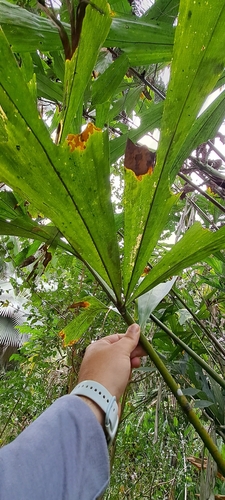
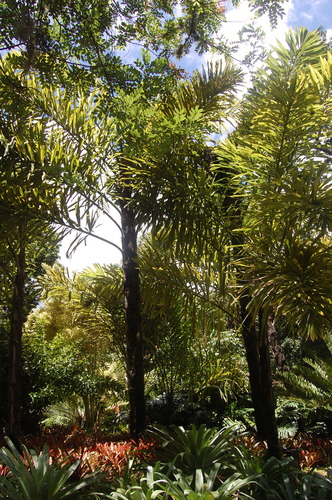
Balaka longirostris
Becc.
Mbalaka niuniu
iNaturalist· cc-by-nc
(c) Scott Zona, some rights reserved (CC BY-NC)
iNaturalist· cc-by-sa
(c) Sturm, some rights reserved (CC BY-SA)
Summary
Source: WikipediaBalaka longirostris is a species of flowering plant in the family Arecaceae. It is found only in Fiji.
Description
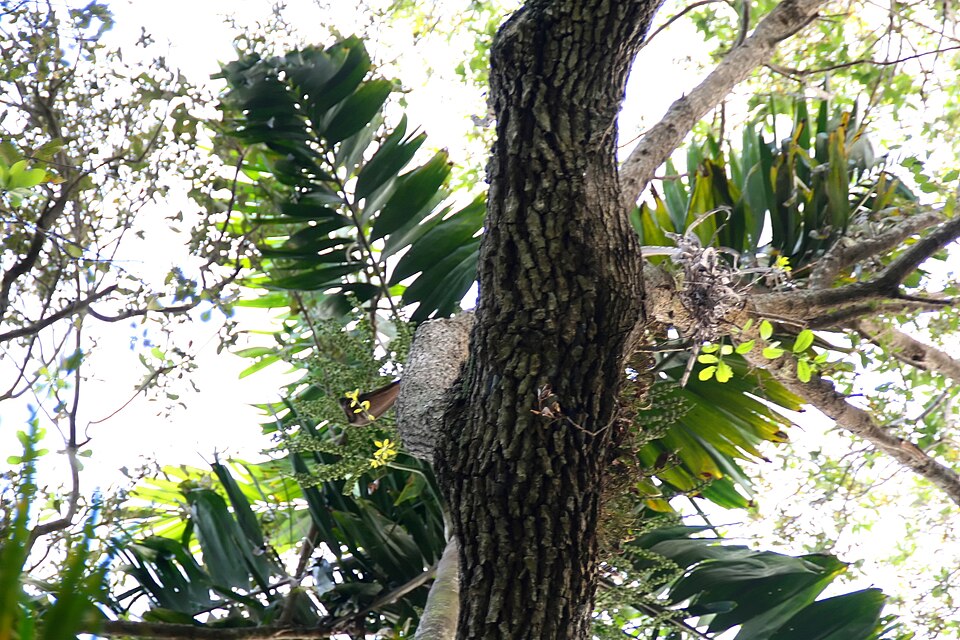
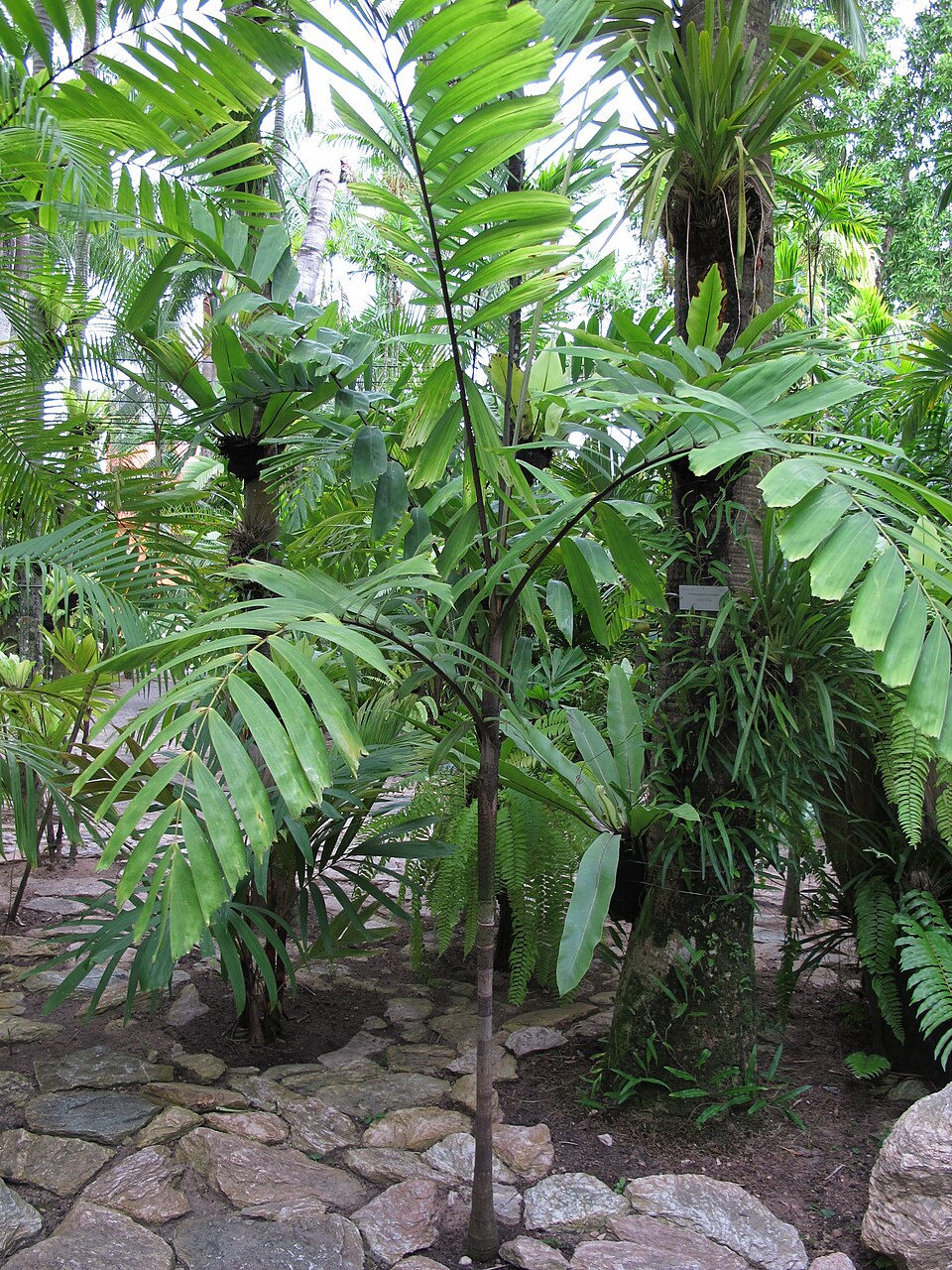
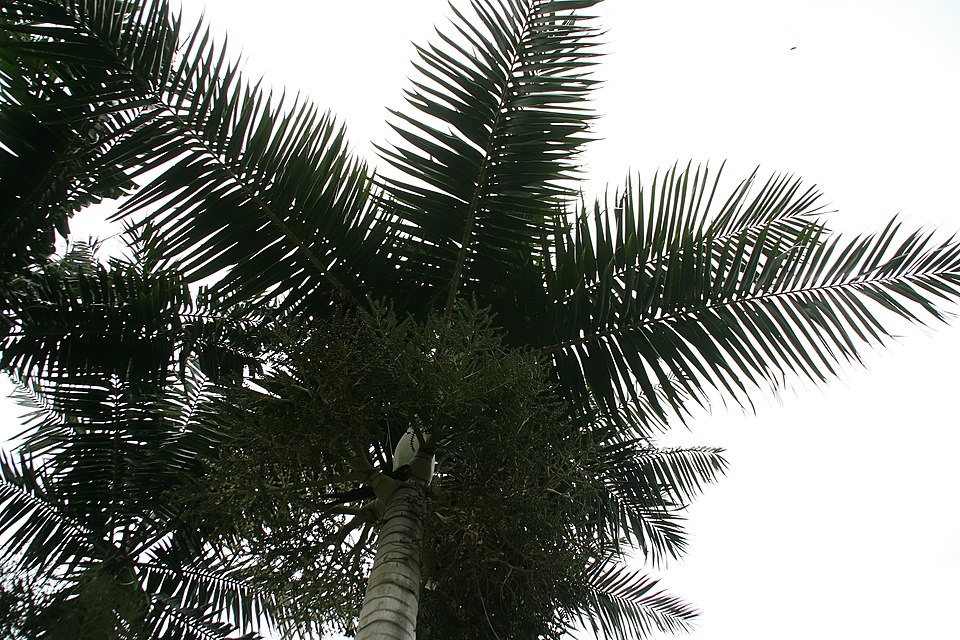
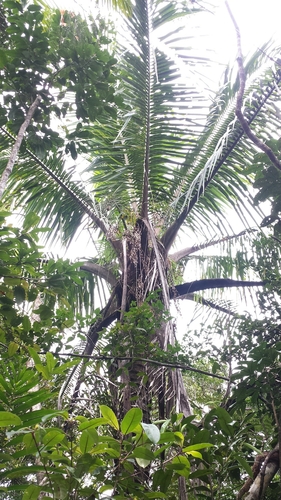
A slender solitary palm. It grows to 7 m high and is 5 cm across. The leaves are 1-2 m long. The leaf stalk is 0.5-26 cm. The leaflets are 7-14 on each side. The leaflets are wedge shaped. The ends of the leaflets are strongly lobed and with teeth along the edge. The flowering stalk is branched and is 5-22.5 cm long. The fruit is pear shaped and orange-red. It is 3.2-3.8 cm long and 1.1-1.6 cm wide.
Edible Uses
The kernel of the fruit is edible.
Traditional Uses
The kernel of the fruit is edible.
This uses section is brief — help expand it
Distribution
A tropical plant. It grows in Fiji from sea level to 1,000 m altitude. It occurs in the rainforests. It grows in the mountains in moist places. It needs a shady, warm position in well drained acid soil. It cannot grow on high pH soils.
Where It Grows
Fiji, Pacific,
Cultivation
Plants can be grown from seed. Fresh seed germinate easily. They take 4-6 weeks to germinate. Seed should not be allowed to dry out.
Notes
There are 7 Balaka species.
Synonyms
References (7)
- Dowe, J.L., 1989, Palms of the South-West Pacific. Palm and Cycad Society of Australia. p 78
- Haynes, J., & McLaughlin, J., 2000, Edible palms and Their Uses. University of Florida Fact sheet MCDE-00-50-1 p 3
- Johnson, D.V., 1998, Tropical palms. Non-wood Forest products 10. FAO Rome. p 79
- Jones, D.L., 1994, Palms throughout the World. Smithtonian Institution, Washington. p 140
- Riffle, R.L. & Craft, P., 2003, An Encyclopedia of Cultivated Palms. Timber Press. p 269
Show all 7 references Hide references
- Smith, A.C., 1979, Flora Vitiensis Nova: A New flora of Fiji, Hawai Botanical Gardens, USA Vol 1 p 422
- Watling, D., 2005, Palms of the Fiji Islands. Environmental Consultants (Fiji) Ltd. p 162