Arachis villosulicarpa
Hoehne
Amemdoim bravo, Wi-ki-rin-gui
iNaturalist· cc-by-nc
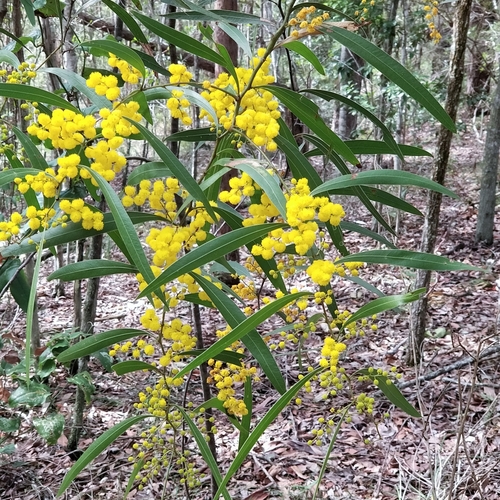
(c) kasiisibees, some rights reserved (CC BY-NC), uploaded by kasiisibees
gbif· cc0
President and Fellows of Harvard College
gbif· cc0
President and Fellows of Harvard College
Summary
Source: WikipediaArachis villosulicarpa is a perennial peanut species, which is cultivated by indigenous people in Mato Grosso, a state of Brazil. Its wild progenitor is thought to be Arachis pietrarellii. Although it is related to the common peanut, Arachis hypogaea, it was separately domesticated: A. villosulicarpa is diploid, whereas A. hypogaea is tetraploid. It is one of several species that might be used as gene source for plant breeding to improve the important cultivated peanut Arachis hypogaea.
Description
A perennial herb and cultivated peanut species in the Fabaceae family, growing continually year after year. It is a tropical plant.
This description is brief — help expand it
Edible Uses
The seeds are eaten.
Distribution
A tropical plant.
Where It Grows
Brazil, South America,
Other Information
It is a cultivated food plant.
Notes
There are about 75 Arachis species. It is a diploid plant.
References (6)
- Arq. Bot. Estado Sao Paulo 2:16. 1944
- Gagliardi, R. F. et al. 2000. In vitro plant regeneration from seed explants of wild groundnut species (Genus Arachis, Section Extranervosae). Biodivers. & Conserv. 9:943–951
- USDA, ARS, National Genetic Resources Program. Germplasm Resources Information Network - (GRIN). [Online Database] National Germplasm Resources Laboratory, Beltsville, Maryland. Available: www.ars-grin.gov/cgi-bin/npgs/html/econ.pl (10 April 2000)
- Wickens, G.E., 1995, Edible Nuts. FAO Non-wood forest products. FAO, Rome. p 142
- Wiersema, J. H. & Leon, B., 2013, World Economic Plants. A Standard Reference CRC Press. 2nd Ed. p 63
Show all 6 references Hide references
- World Checklist of Useful Plant Species 2020. Royal Botanic Gardens, Kew