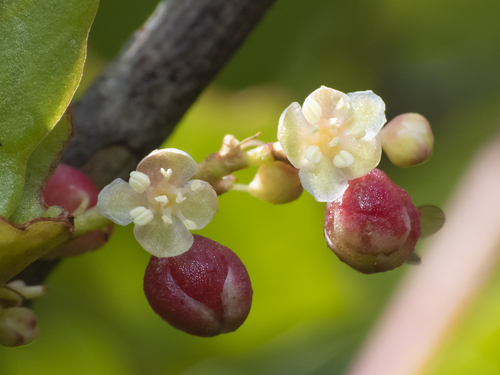
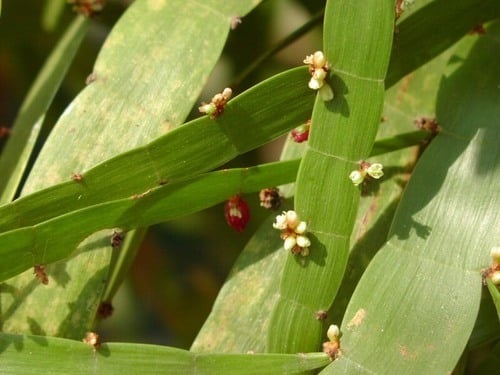
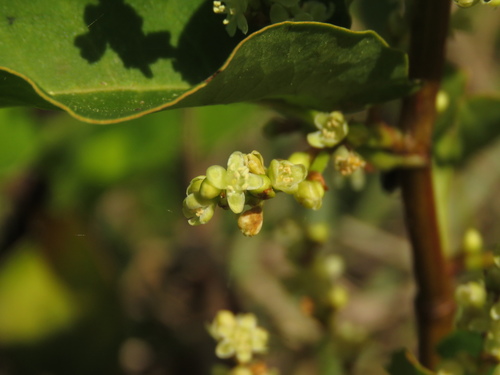
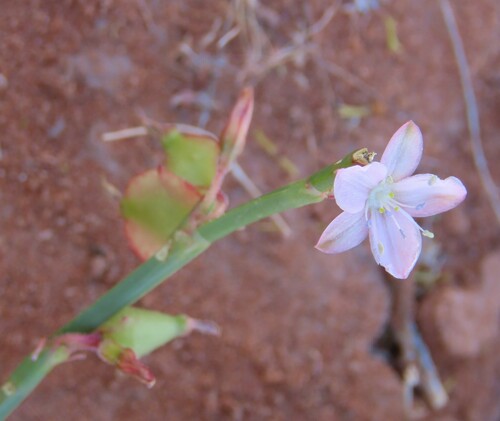
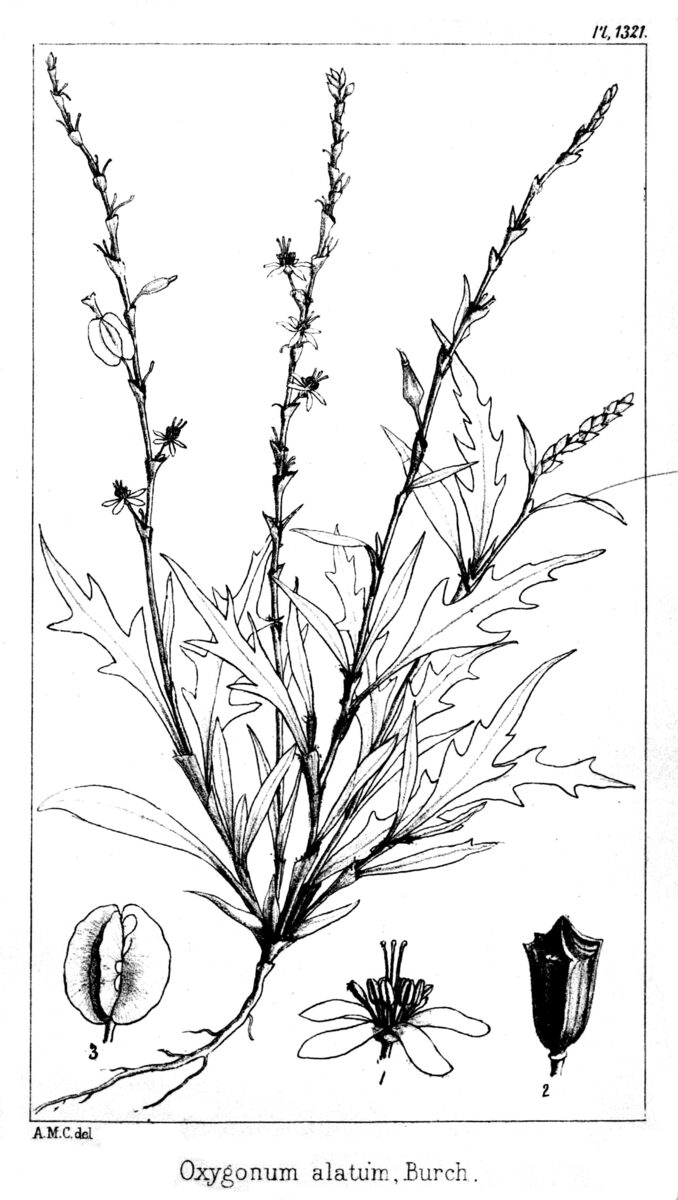
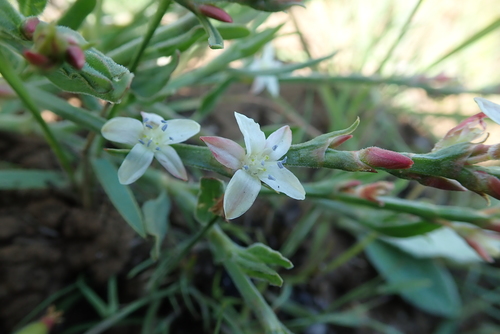
Rumex hydrolapathum
Huds.
Great water dock, Wild rhubarb
iNaturalist· pd
AnRo0002, no known copyright restrictions (public domain)
iNaturalist· cc-by-nc
(c) Matthias Buck, some rights reserved (CC BY-NC)
iNaturalist· cc-by-nc
(c) Matthias Buck, some rights reserved (CC BY-NC)
Summary
Source: WikipediaRumex hydrolapathum, the great water dock, water dock, or giant water dock, is a species of perennial herbaceous plants in the genus Rumex native to fens and freshwater banks of Europe and Western Asia. It is the tallest species in the genus, with flowering stems attaining a height of up to 2 m (6 ft 7 in). It is one of the small number of decaploid organisms, containing two hundred individual chromosomes.
Description
A robust plant which keeps growing from year to year. It grows 1.2-2 m high. In shallow water it produces aerating roots. The leaves are narrow and dark green. They are spear shaped and 1 m long. The flowers are in a brownish-pink spike. They are on stalks 2 m long.
Edible Uses
Young leaves are edible when cooked. The seed can be eaten raw or cooked, and may be ground into a flour, though it is small and rather fiddly to harvest.
Traditional Uses
The starch of the root is used as a famine food for extending bread flour, after removal of toxic elements. The leaves are roasted and used in pies.
This uses section is brief — help expand it
Medicinal Uses
The root is antiscorbutic and strongly astringent. It is harvested in early spring and dried for later use. Green leaves are considered an excellent topical treatment for ulcers of the eyes.
Known Hazards
Plants can contain quite high levels of oxalic acid, which is what gives the leaves of many members of this genus an acid-lemon flavour. Perfectly alright in small quantities, the leaves should not be eaten in large amounts since the oxalic acid can lock-up other nutrients in the food, especially calcium, thus causing mineral deficiencies. The oxalic acid content will be reduced if the plant is cooked. People with a tendency to rheumatism, arthritis, gout, kidney stones or hyperacidity should take especial caution if including this plant in their diet since it can aggravate their condition.
Distribution
It is a temperate plant. It grows in wet places. It can grow in shallow water.
Where It Grows
Asia, Australia, Britain, China, Europe, France, Slovenia, Turkey, Türkiye,
Cultivation
Requires a moist or wet soil, also succeeding in shallow water. Avoids acid conditions in the wild. A very important food plant for the caterpillars of many species of butterfly.
Propagation
Sow seed in spring in situ. Can also be propagated by division in spring.
Other Uses
The roots contain tannin — plants grown on dry land yield 6–8%, while those grown in water yield 12.4–21.6%. The dried and powdered root makes a good tooth cleaner. Roots yield dark green to brown and dark grey dyes without the need for a mordant.
Notes
There are about 200 Rumex species.
Synonyms
Also Known As
Eksi ot, Konjska kislica
References (14)
- Fl. angl. ed. 2, 1:154. 1778
- Gunes, S. et al, 2018, Survey of wild food plants for human consumption in Karaisali (Adana-Turkey). Indian Journal of Traditional Knowledge. Vol. 17(2), April 2018, pp 290-298
- Hammer, K. & Spahillari, M., 1999, Crops of European origin. in Report of a networking group on minor crops. IPGRI p 46
- Hedrick, U.P., 1919, (Ed.), Sturtevant's edible plants of the world. p 583
- Hibbert, M., 2002, The Aussie Plant Finder 2002, Florilegium. p 282
Show all 14 references Hide references
- http://www.botanic-gardens-ljubljana.com/en/plants
- Kiple, K.F. & Ornelas, K.C., (eds), 2000, The Cambridge World History of Food. CUP p 1854
- Lim, T. K., 2015, Edible Medicinal and Non Medicinal Plants. Volume 9, Modified Stems, Roots, Bulbs. Springer p 50
- PARMENTIER, (As Lapathum aquaticum)
- Plants for a Future database, The Field, Penpol, Lostwithiel, Cornwall, PL22 0NG, UK. http://www.scs.leeds.ac.uk/pfaf/
- Romanowski, N., 2007, Edible Water Gardens. Hyland House. p 113
- Ryan, S., 2008, Dicksonia. Rare Plants Manual. Hyland House. p 110
- Slocum, P.D. & Robinson, P., 1999, Water Gardening. Water Lilies and Lotuses. Timber Press. p 134
- World Checklist of Useful Plant Species 2020. Royal Botanic Gardens, Kew