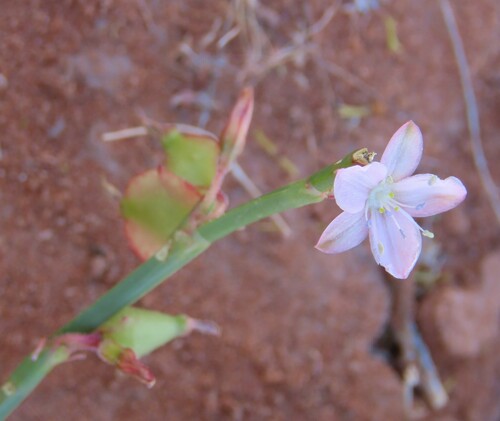
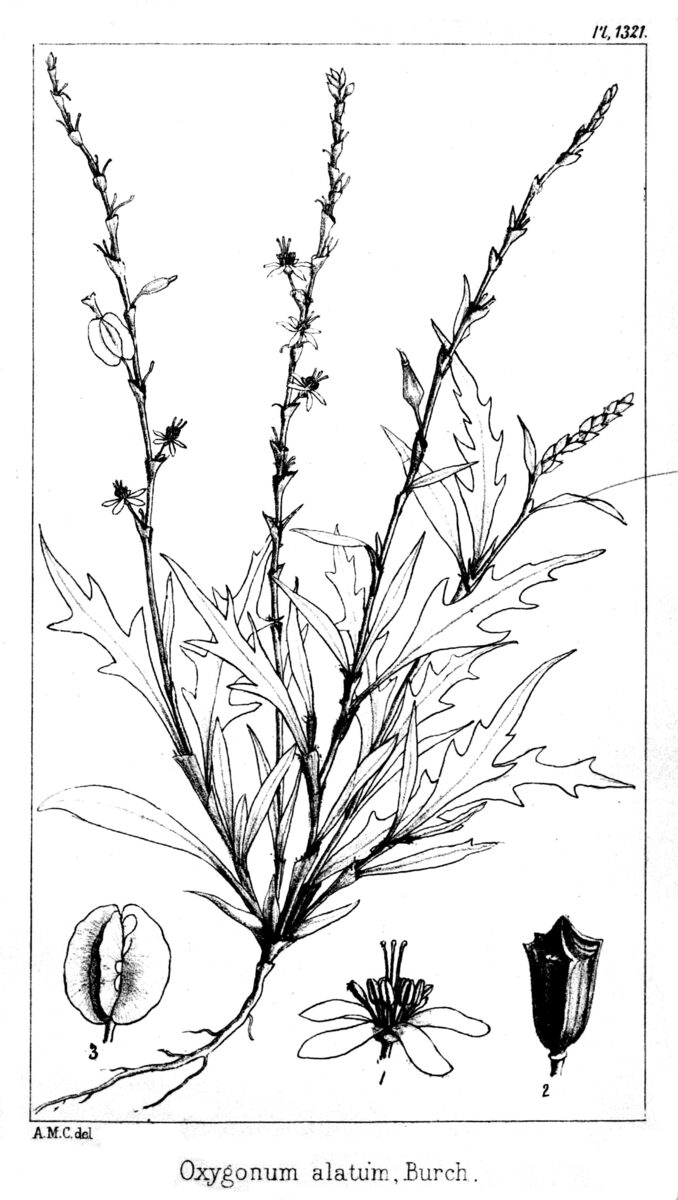
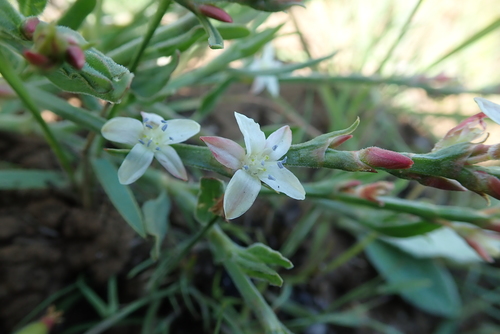
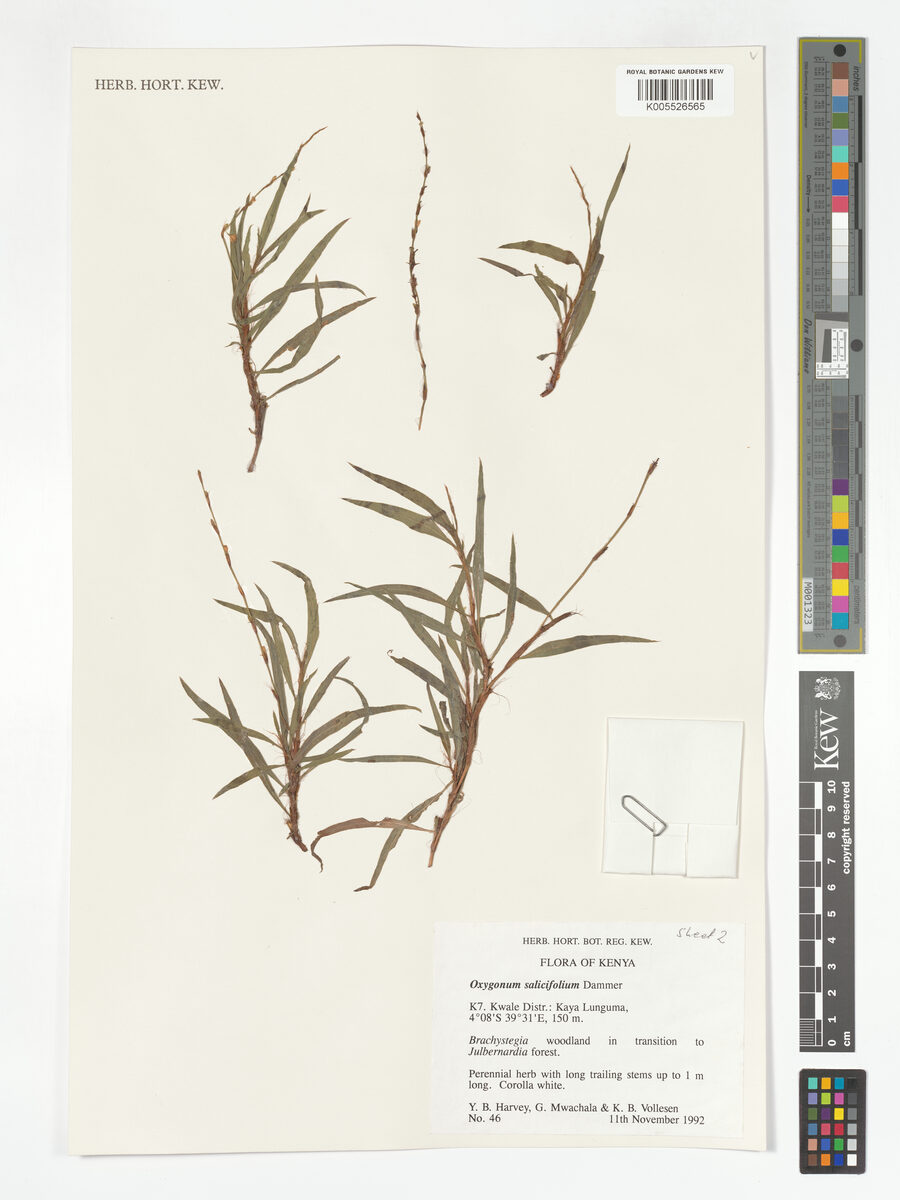
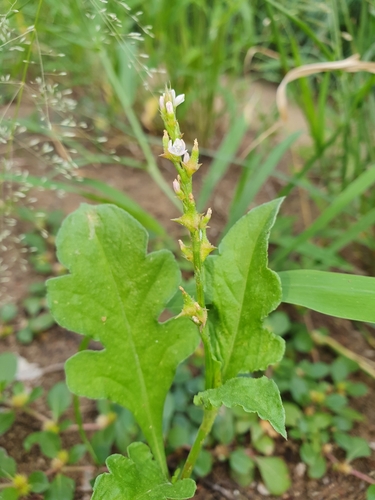
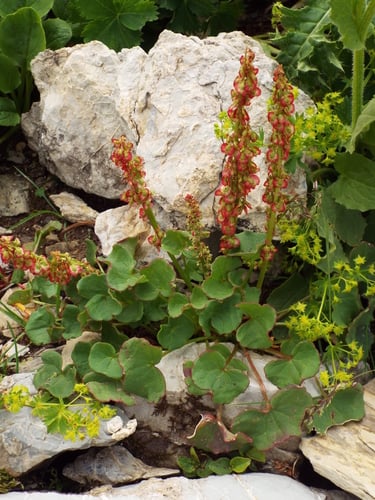
Muehlenbeckia hastulata
(Sm.) Johnst.
Quineo, Wirevine
iNaturalist· cc-by-nc-nd
(c) Claudio Maureira, some rights reserved (CC BY-NC-ND), uploaded by Claudio Maureira
iNaturalist· cc-by-nc
(c) toparatum, some rights reserved (CC BY-NC)
iNaturalist· cc-by
(c) Matt Berger, some rights reserved (CC BY), uploaded by Matt Berger
Summary
Source: WikipediaMuehlenbeckia hastulata is a species of flowering plant in the family Polygonaceae. It is native to South America. It is a rapidly growing climbing plant and is common in Chile.
Description
A climber. It grows 5 m long. The leaves are 1-4 cm long by 1-3 cm wide. They are a flattened round shape and heart shaped at the base. The flowers are green.
Edible Uses
The fruit are eaten raw, while the leaves and seeds are cooked and eaten.
Traditional Uses
The fruit are eaten raw. The leaves and seeds are cooked and eaten.
This uses section is brief — help expand it
Distribution
It grows in Subantarctic forest and Patagonian steppe near streams and rivers. It will grow in a range of different environments. It can grow in hot or cold places and in dry and wet areas. In Chile it grows between sea level and 2,500 m altitude. It grows in humid areas with constant rainfall. It suits hardiness zone 7. It can tolerate frosts and snow.
Where It Grows
Argentina*, Bolivia, Chile*, Peru, South America,
Production
It grows very fast.
Synonyms
Also Known As
Kullo, Mollaca, Molleca, Queneu, Quilo, Voqui negro, Zarparilla, Zarzaparrilla
References (15)
- A. L. P. P. de Candolle, Prodr. 14:148. 1856 (As Muehlenbeckia chilensis)
- Barreau, A., et al, 2016, How Can We Teach Our Children if We Cannot Access the Forest? Generational Change in Mapuche Knowledge of Wild Edible Plants in Andean Temperate Ecosystems of Chile. Journal of Ethnobiology 36(2): 412–432
- Chamorro, M. F., & Ladio, A., 2020, Native and exotic plants with edible fleshy fruits utilized in Patagonia and their role as sources of local functional foods. BMC Complementary Medicine and Therapies. 20:155
- Cordero, S. E., Abello, L. A., & Galvez, F. L., 2017, Plantas silvestres comestibles y medicinales de Chile y otras partes del mundo. CORMA p 89
- Daly, A. B., 20014, Narrating changing foodways: wild edible plant knowledge and traditional food systems in Mapuche lands of the Andean Temperate Forests, Chile. Masters Thesis Vancouver. p 45
Show all 15 references Hide references
- Fouqué, A.. 1972, Espèces fruitières d'Amérique tropicale. Institut français de recherches fruitierès outre-mer (As Muehlenbeckia chilensis)
- Kermath, B. M., et al, 2014, Food Plants in the Americas: A survey of the domesticated, cultivated and wild plants used for Human food in North, Central and South America and the Caribbean. On line draft. p 554
- Ladio, A. H. & Lozada, M., 2000, Edible Plant Use in a Mapuche Community of North-western Patagonia, Human Ecology. Vol. 28, No. 1. pp. 53-71
- Ladio, A. H., 2001, The Maintenance of Wild Edible Plant Gatherings in a Mapuche Community of Patagonia. Economic Botany, Vol. 55, No. 2, pp. 243-254
- Ladio, A. H. and Lozada, M., 2003, Comparison of wild edible plant diversity and foraging strategies in two aboriginal communities of northwestern Patagonia. Biodiversity and Conservation 12: 937–951
- Ladio, A., Lozada, M. & M. Weigandt, 2007, Comparison of traditional wild plant knowledge between aboriginal communities inhabiting arid and forest environments in Patagonia, Argentina. Journal of Arid Environments 69 (2007) 695–715
- Leon-Lobos, P., et al, 2022, Patterns of Traditional and Modern Uses of Wild Edible Native Plants of Chile: Challenges and Future Perspectives. Plants (Basel) v 11 (6) Table S1
- Plants for a Future database, The Field, Penpol, Lostwithiel, Cornwall, PL22 0NG, UK. http://www.scs.leeds.ac.uk/pfaf/ (As Muehlenbeckia chilensis)
- Rapoport, E. H. & Ladio, A. H., 1999, Plantas comestibles. Bosque Volume 20 No. 2. ISSN 0314-8799
- www.chileflora.com