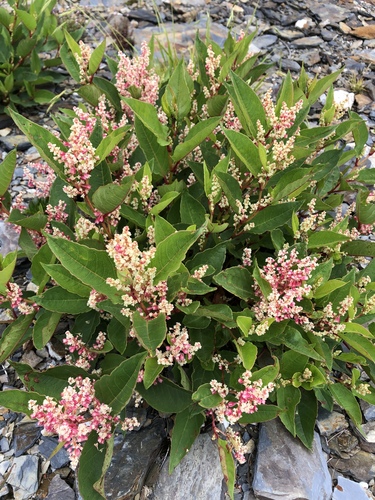
Oxygonum atriplicifolium
(Meisn.) Martelli
wikimedia· pd
A.M.C. (via Wikimedia Commons)
Description
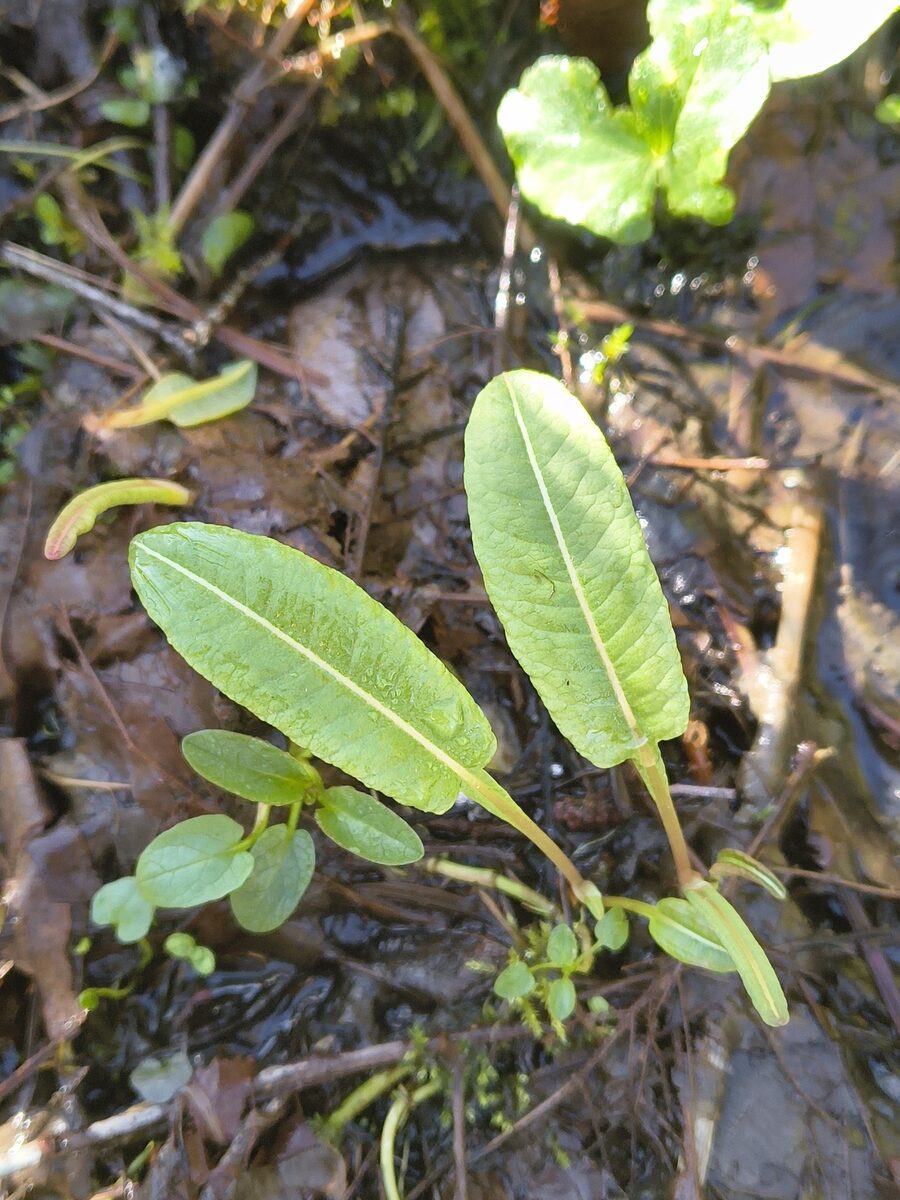
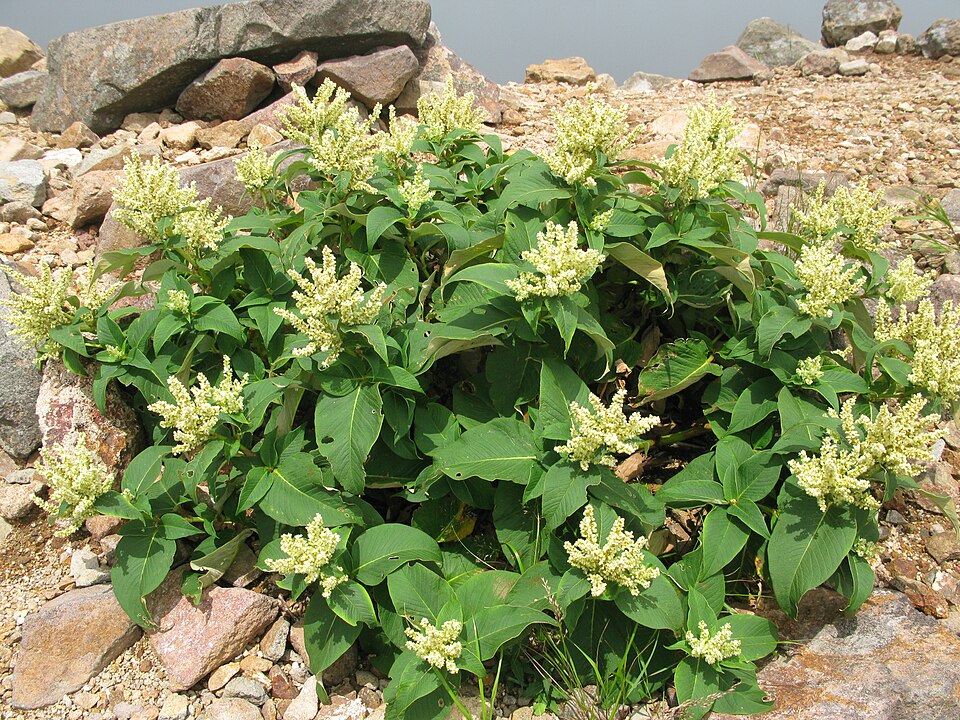
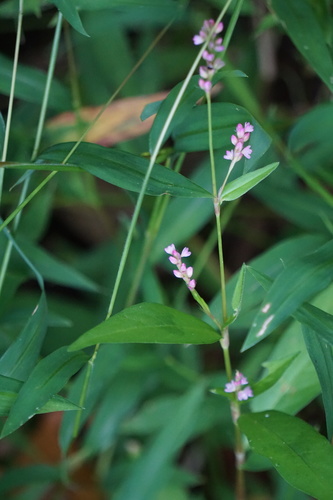
A herb. The stems are slender and are finely hairy along one side. There are many branches. The stems can be 1 m long. The leaves are wedge shaped at the base. The leaves are 25 cm long and 15 cm wide. The leaves are oval and entire. The flowers are white or greenish. The fruit have 3 spreading spines.
Edible Uses
The leaves and stems are cooked with potash to make a slimy vegetable, though the plant has low palatability. It serves as a minor vegetable of some local importance.
Traditional Uses
The leaves are cooked with potashes. It is a slimy vegetable.
This uses section is brief — help expand it
Medicinal Uses
The leaf juice is swallowed as a cure for coughs. The macerated leaves are used as a dressing for abscesses and wounds.
Distribution
A tropical plant. It grows under hedges and in waste places. It grows from sea level to 2,000 m above sea level.
Where It Grows
Africa, Angola, Central Africa, East Africa, Egypt, Eritrea, Ethiopia, Madagascar, Malawi, Mozambique, North Africa, Somalia, Southern Africa, Tanzania, Uganda, Zambia,
Cultivation
The three-spined fruits stick to the feet and fur of passing animals and thus get spread from area to area. The plants are polygamous - the flowers can be either bisexual or unisexual.
Other Information
It is a minor vegetable of some local importance. It has low palatability.
Notes
There are about 11 Oxygonum species.
Synonyms
Also Known As
Ebabai, Lokibok
References (9)
- Fowler, D. G., 2007, Zambian Plants: Their Vernacular Names and Uses. Kew. p 83
- Goode, P., 1989, Edible Plants of Uganda. FAO p 30
- Grivetti, L. E., 1980, Agricultural development: present and potential role of edible wild plants. Part 2: Sub-Saharan Africa, Report to the Department of State Agency for International Development. p 49
- Grubben, G. J. H. and Denton, O. A. (eds), 2004, Plant Resources of Tropical Africa 2. Vegetables. PROTA, Wageningen, Netherlands. p 406
- Martin, F.W. & Ruberte, R.M., 1979, Edible Leaves of the Tropics. Antillian College Press, Mayaguez, Puerto Rico. p 213
Show all 9 references Hide references
- Peters, C. R., O'Brien, E. M., and Drummond, R.B., 1992, Edible Wild plants of Sub-saharan Africa. Kew. p 162
- Tanaka, 1980,
- Thiselton-Dywer, W.T., (Ed.), 1913, Flora of Tropical Africa. Vol VI-section 1. Reeve, p 101
- World Checklist of Useful Plant Species 2020. Royal Botanic Gardens, Kew