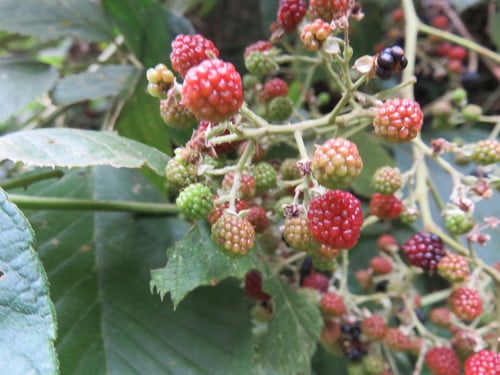
Rubus x loganobaccus
Boysenberry, Loganberry
iNaturalist· cc-by-nc
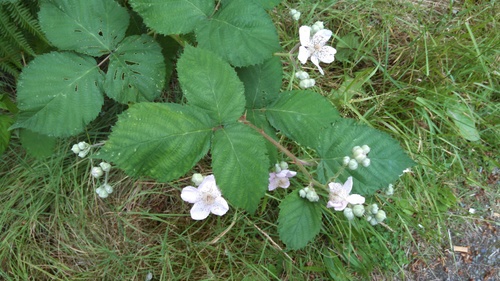
(c) stevethesnakeguy, some rights reserved (CC BY-NC)
iNaturalist· cc-by-nc
(c) David Earl, some rights reserved (CC BY-NC)
iNaturalist· cc-by-nc
(c) naturenatasha, some rights reserved (CC BY-NC)
Description
A vigorous trailing bramble. This is a cross between a raspberry and probably a dewberry. The vine looses its leaves during the year. Plants are self fertile. The fruit is a berry. It is long and red but matures to a purple-black. The berry is larger than a Youngberry and has a dull colour because of fine hairs on the surface.
Edible Uses
The fruit can be eaten fresh, used for jam, cakes, pies, tarts and other desserts, or processed into juice.
Traditional Uses
The fruit can be eaten fresh. They can also be used for jam, cakes, pies and tarts and other desserts. They are also used for juice.
This uses section is brief — help expand it
Distribution
It is a temperate plant. It prefers fertile, well drained soil. It does best in full sunlight. They need cool conditions and moist soil. It suits plant hardiness zones 5-10.
Where It Grows
Australia, Tasmania,
Cultivation
The canes should be tied onto a trellis. Each year the old canes and removed and new canes tied up. Tips can be rooted in late summer and autumn. Occasionally the roots can be divided.
Notes
There are about 250 Rubus species.
Dangerous Lookalikes
This plant can be confused with the following toxic species. Always verify identification carefully before consuming any wild plant.
Red Baneberry
Actaea rubra
Walter Siegmund (talk)
Boysenberry
Rubus x loganobaccus
(c) stevethesnakeguy, some rights reserved (CC BY-NC)
Red Baneberry: Short herbaceous plant (no thorns), berries on thick red stems, each berry has a single seed, compound sharply-toothed leaves.
Boysenberry: Thorny woody canes (brambles), aggregate berry made of many drupelets, berries pull easily from receptacle.
Nutrition
| Part | Moisture | kJ | kcal | Protein | Vit A | Vit C | Iron | Zinc |
|---|---|---|---|---|---|---|---|---|
| Fruit | 76.3 | 368 | 88 | 1 | 4 | 6.2 | 0.43 | 0.2 |
Synonyms
References (5)
- Cheifetz, A., (ed), 1999, 500 popular vegetables, herbs, fruits and nuts for Australian Gardeners. Random House p 250
- John, L., & Stevenson, V., 1979, The Complete Book of Fruit. Angus & Robertson p 179
- Glowinski, L., 1999, The Complete Book of Fruit Growing in Australia. Lothian. p 146
- Kermath, B. M., et al, 2014, Food Plants in the Americas: A survey of the domesticated, cultivated and wild plants used for Human food in North, Central and South America and the Caribbean. On line draft. p 762
- van Wyk, B., 2005, Food Plants of the World. An illustrated guide. Timber press. p 330