Amelanchier lamarckii
F. G. Schroed.
Apple serviceberry, Lamarck serviceberry
iNaturalist· cc-by-nc
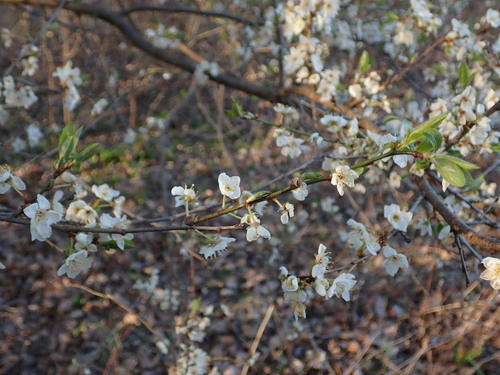
(c) rf222, some rights reserved (CC BY-NC)
iNaturalist· cc-by-sa
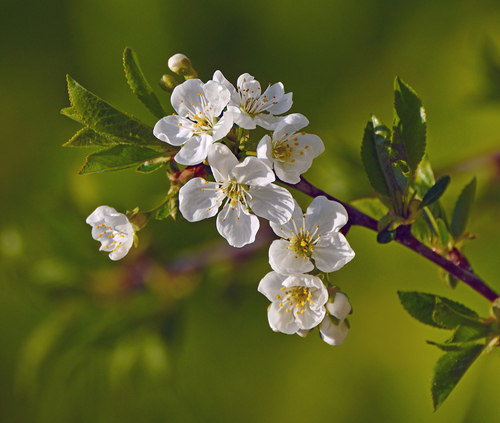
(c) Andreas Rockstein, some rights reserved (CC BY-SA)
iNaturalist· cc-by-sa
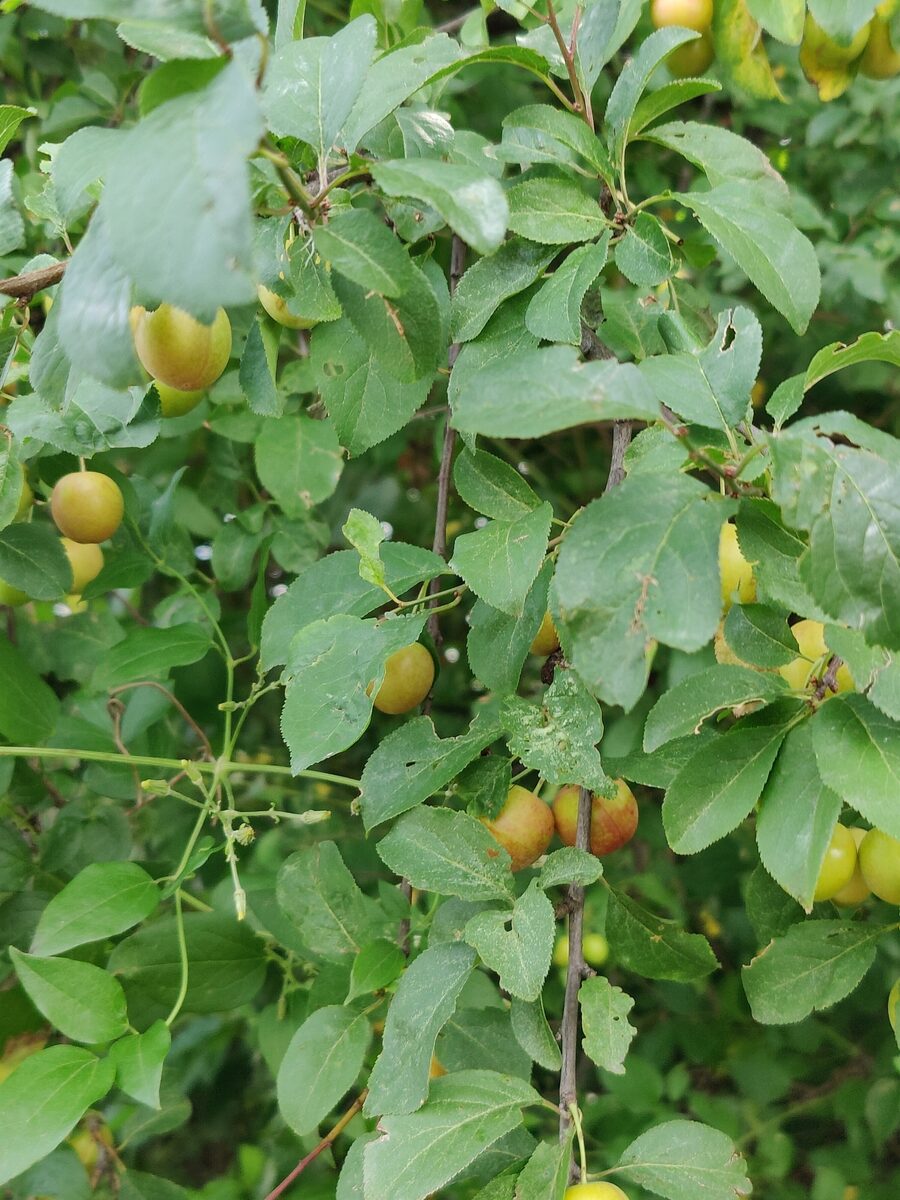
(c) Andreas Rockstein, some rights reserved (CC BY-SA)
Summary
Source: WikipediaA deciduous shrub growing to 6m tall and 4m wide. Hardy to UK zone 4 and not frost tender. Flowers in April with seeds maturing June to July. Hermaphroditic and self-fertile, pollinated by bees. Adapts to light sandy, medium loamy, and heavy clay soils. Grows in semi-shade or full sun with a preference for moist soil.
Description
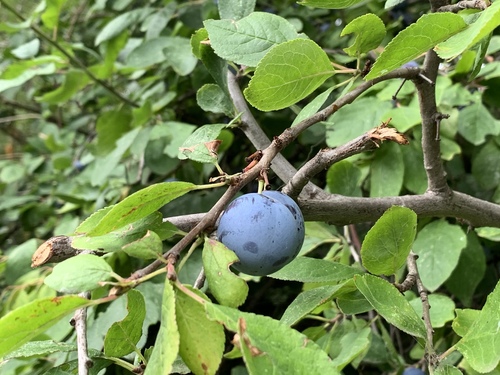
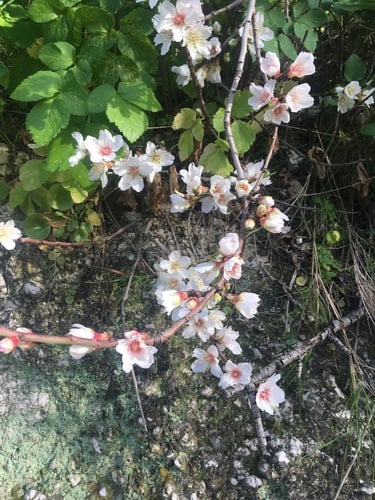
A deciduous shrub. It grows to 6-12 m high and 4 m across. The bark is grey and smooth and develops narrow cracks. The leaves are broad. They are 7.5 cm long by 4 cm wide. Young leaves are copper red and silky. The leaves turn red or orange in autumn. The flowers are white and have 5 petals. They occur in drooping clusters. The fruit are purple-black and berry-like. The fruit are 10 mm across. The fruit are edible. This species does not produce suckers.
Edible Uses
The fruit is edible raw or cooked — sweet and succulent with an apple-like flavour, and considered one of the best in the genus, pleasurable to eat in quantity. It can also be dried for later use. The fruit grows up to 10mm in diameter and is rich in iron and copper.
Traditional Uses
The fruit are eaten raw or cooked. The berries can be used with pies, cakes, jams and jellies.
This uses section is brief — help expand it
Medicinal Uses
None known
Distribution
It is a temperate plant. It is native to Europe. It is naturalised in South England on sandy heaths and damp acid woods. It is hardy to cold to -25°C. It suits hardiness zones 4-9.
Where It Grows
Australia, Britain, Canada, Europe, North America, USA,
Cultivation
Prefers a rich loamy soil in a sunny position or semi-shade but thrives in any soil that is not too dry or water-logged. Grows well in heavy clay soils. Prefers an acid or neutral soil. Hardy to about -25°c. This species does not produce suckers. All members of this genus have edible fruits and, whilst this is dry and uninteresting in some species, in many others it is sweet and juicy. Many of the species have potential for use in the garden as edible ornamentals. The main draw-back to this genus is that birds adore the fruit and will often completely strip a tree before it is fully ripe. This species is worthy of special attention because of the quality of its fruit. It was formerly cultivated for these fruits and there are some named varieties. The fruit is freely produced in Britain. Considerable confusion has existed between this species and A. arborea, A. canadensis and A. laevis, see for the latest (1991) classification. Some botanists consider this species to be a natural hybrid A. canadensis x A. laevis. Hybridizes freely with other members of this genus. Grafting onto seedlings of A. lamarckii or Sorbus aucuparia is sometimes practised in order to avoid the potential problem of hybridizing.
Propagation
Seed is best harvested green — when fully formed but before the seed coat has hardened — and sown immediately in pots outdoors or in a cold frame. Stored seed obtained early enough in autumn can be given 4 weeks of warm stratification before being left out over winter, and should germinate in spring. Otherwise seed can be very slow to germinate, taking 18 months or more. When seedlings are large enough to handle, prick them out into individual pots and grow on in a sheltered outdoor position, planting out once they reach 20cm or more. Where seed is plentiful, sow thinly in an outdoor seedbed and grow on for two years before planting out into permanent positions during winter. Layering in spring takes 18 months. Suckers can be divided in late winter, but must have been growing for 2 years to have formed roots. They can be planted straight into permanent positions if needed.
Other Uses
None known
Notes
There are about 25-30 Amelanchier species.
Synonyms
References (16)
- Brickell, C. (Ed.), 1999, The Royal Horticultural Society A-Z Encyclopedia of Garden Plants. Convent Garden Books. p 107
- Coombes, A.J., 2000, Trees. Dorling Kindersley Handbooks. p 239
- Cundall, P., (ed.), 2004, Gardening Australia: flora: the gardener's bible. ABC Books. p 146
- Etherington, K., & Imwold, D., (Eds), 2001, Botanica's Trees & Shrubs. The illustrated A-Z of over 8500 trees and shrubs. Random House, Australia. p 92
- http://en.hortipedia.com
Show all 16 references Hide references
- Irving, M., 2009, The Forager Handbook, A Guide to the Edible Plants of Britain. Ebury Press p 262
- Jackes, D. A., Edible Forest Gardens
- Joyce, D., 1998, The Garden Plant Selector. Ryland, Peters and Small. p 123
- Kremer, B.P., 1995, Shrubs in the Wild and in Gardens. Barrons. p 93
- Lamberton, K (Ed.), 2004, The Australian gardening encyclodepia. Murdoch Books, NSW Australia. p 163
- Lyle, S., 2006, Discovering fruit and nuts. Land Links. p 57
- Plants for a Future database, The Field, Penpol, Lostwithiel, Cornwall, PL22 0NG, UK. http://www.scs.leeds.ac.uk/pfaf/
- Russell, T., Cutler, C., & Walters, M., 2005, The Illustrated Encyclopedia of Trees of the Americas. Lorenz Books. p 159
- Taxon 17:633. 1968
- Wiersema, J. H. & Leon, B., 2013, World Economic Plants. A Standard Reference CRC Press. 2nd Ed. p 46
- Young, J., (Ed.), 2001, Botanica's Pocket Trees and Shrubs. Random House. p 89