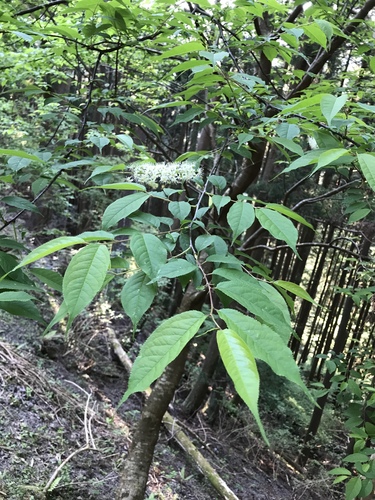
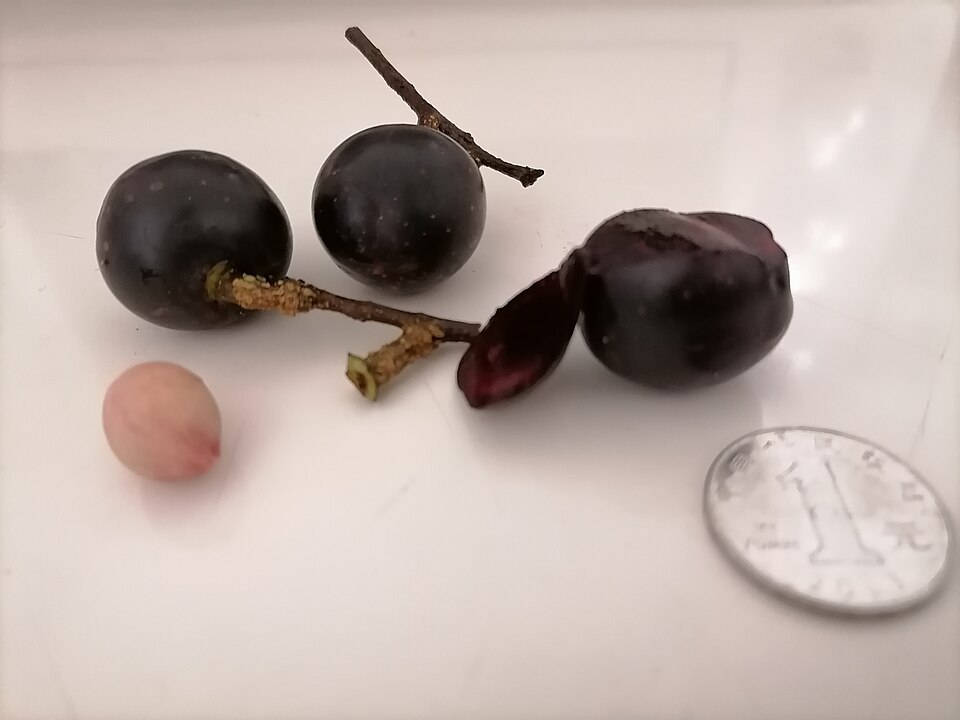
Amelanchier laevis
Wiegand
Apple serviceberry
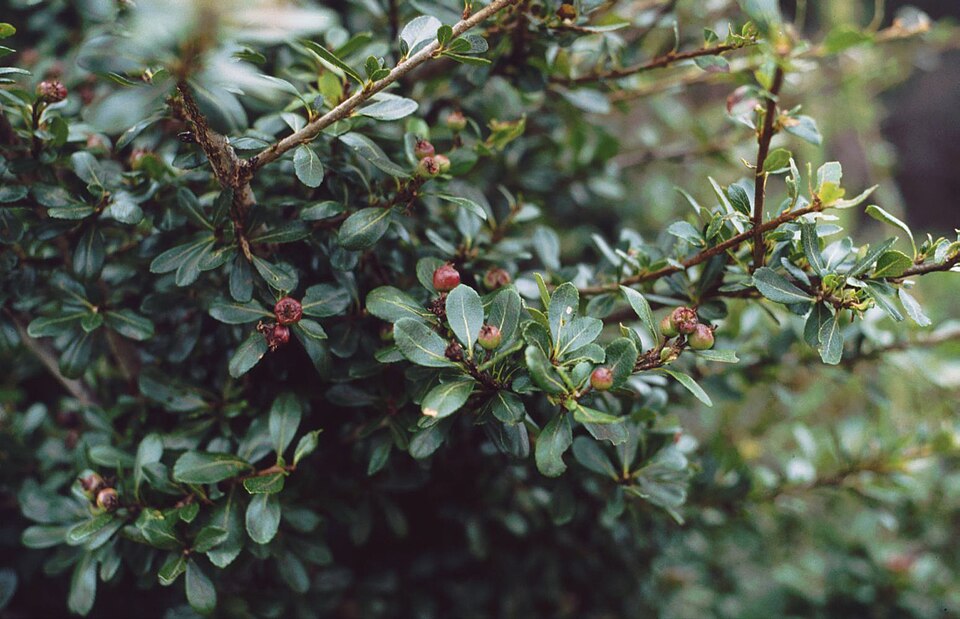
iNaturalist· cc-by-nc
(c) Joe Walewski, some rights reserved (CC BY-NC), uploaded by Joe Walewski
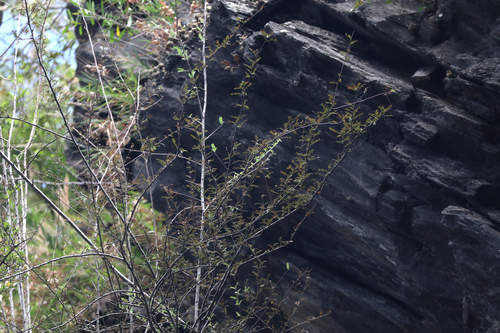
iNaturalist· cc-by-nc
(c) Joe Walewski, some rights reserved (CC BY-NC), uploaded by Joe Walewski
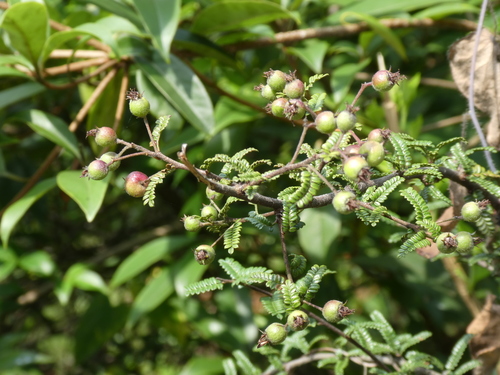
iNaturalist· cc0
no rights reserved, uploaded by Étienne Lacroix-Carignan
Summary
Source: WikipediaAmelanchier laevis, the smooth shadbush, smooth serviceberry or Allegheny serviceberry, is a North American species of tree in the rose family Rosaceae, growing up to 9 metres (30 ft) tall. It is native to eastern Canada and the eastern United States, from Newfoundland west to Ontario, Minnesota, and Iowa, south as far as Georgia and Alabama.
Description
A deciduous shrub reaching 9m tall and 6m wide at medium growth rate. Hardy to UK zone 4 and not frost tender. Flowers appear April to May, with seeds ripening June to July. Hermaphroditic and self-fertile, pollinated by bees. Tolerates light sandy, medium loamy, and heavy clay soils, including very acidic conditions. Grows in semi-shade or full sun and prefers moist soil.
Edible Uses
The fruit is edible raw or cooked — succulent and sweet, and considered one of the finest in the genus, good enough to eat in quantity. It can also be dried for winter use and grows up to 18mm in diameter. The fruit is rich in iron and copper.
Traditional Uses
The fruit are made into jam or wine.
This uses section is brief — help expand it
Medicinal Uses
An infusion of the bark was used by expectant mothers.
Distribution
It is a temperate plant.
Where It Grows
North America, USA,
Cultivation
Prefers a rich loamy soil in a sunny position or semi-shade but thrives in any soil that is not too dry or water-logged. Grows well in heavy clay soils. Found in the wild on light acidic soils. All members of this genus have edible fruits and, whilst this is dry and uninteresting in some species, in many others it is sweet and juicy. Many of the species have potential for use in the garden as edible ornamentals, this species is worthy of especial attention because of the quality of its fruit. The main draw-back to this genus is that birds adore the fruit and will often completely strip a tree before it is fully ripe. Trees come into bearing in about 12 years from seed. Considerable confusion has existed between this species and A. arborea, A. canadensis and A. lamarckii, see for the latest (1991) classification. It hybridizes with A. sanguinea, A. huronensis, A. wiegandii, A. stolonifera, A. canadensis, A. arborea and A. bartramiana. Grafting onto seedlings of A. lamarckii or Sorbus aucuparia is sometimes practised in order to avoid the potential problem of hybridizing.
Propagation
Seed is best harvested green — when fully formed but before the seed coat has hardened — and sown immediately in pots outdoors or in a cold frame. Stored seed obtained early enough in autumn can be given 4 weeks of warm stratification before being left out over winter, and should germinate in spring. Otherwise seed can be very slow to germinate, taking 18 months or more. When seedlings are large enough to handle, prick them out into individual pots and grow on in a sheltered outdoor position, planting out once they reach 20cm or more. Where seed is plentiful, sow thinly in an outdoor seedbed and grow on for two years before planting out into permanent positions during winter. Layering in spring takes 18 months. Suckers can be divided in late winter, but must have been growing for 2 years to have formed roots. They can be planted straight into permanent positions if needed.
Other Uses
The wood is heavy, exceedingly hard, strong, and close-grained. It has been used for tool handles and similar purposes.
Synonyms
Also Known As
Allegheny shadblow
References (3)
- Fisk, J. R. & Hoover, E., 2015, Wild Fruits of Minnesota. A Filed Guide. University of Minnesota p 8
- Kermath, B. M., et al, 2014, Food Plants in the Americas: A survey of the domesticated, cultivated and wild plants used for Human food in North, Central and South America and the Caribbean. On line draft. p 56
- Reis, S. V. and Lipp, F. L., 1982, New Plant Sources for Drugs and Foods from the New York Botanical Garden herbarium. Harvard. p 96