Rubus parvifolius
L.
Pink flowered native raspberry
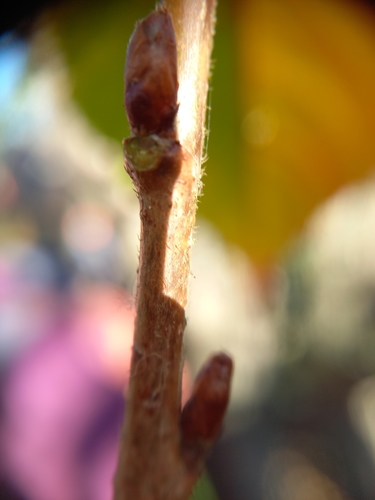
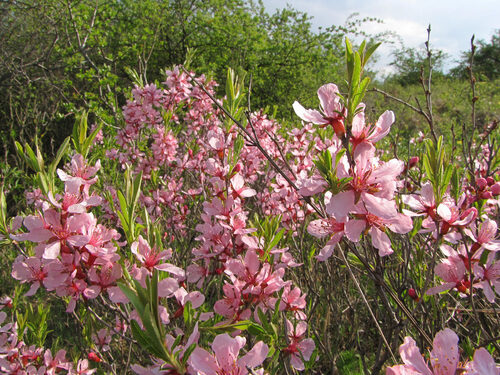
iNaturalist· cc-by-nc
(c) jen_w1, some rights reserved (CC BY-NC)
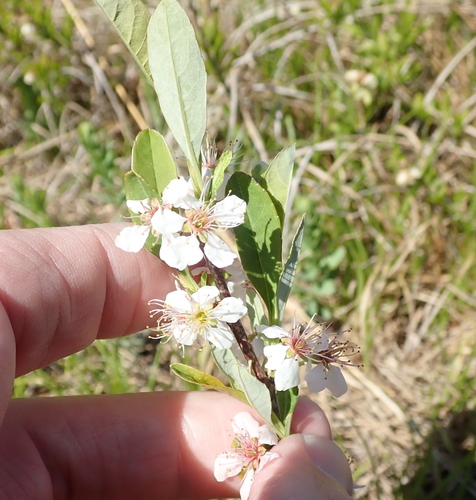
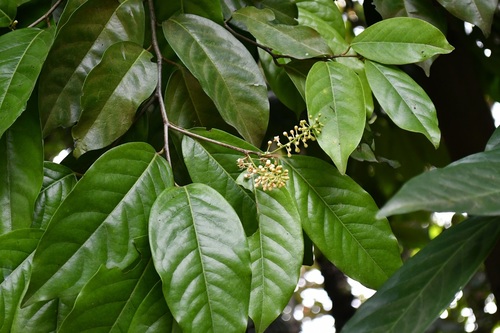
iNaturalist· cc-by-nc
(c) 彭啟賢, some rights reserved (CC BY-NC), uploaded by 彭啟賢
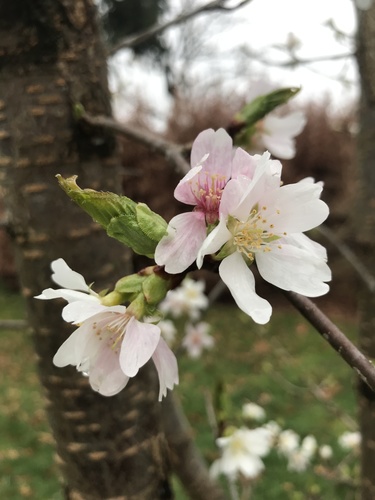
iNaturalist· cc-by-nc
(c) Penny Wang, some rights reserved (CC BY-NC), uploaded by Penny Wang
Summary
Source: WikipediaRubus parvifolius, called Japanese bramble, or Australian raspberry in the United States or native raspberry in Australia is a species of plant in the rose family. It is a scrambling shrub native to eastern Asia (China, Japan, Korea, Vietnam) and Australia. It has also become naturalized in a few scattered locations in the United States. Rubus parvifolius is a shrub up to 2 meters tall with arching branches armed with curved prickles. Young stems are finely pubescent, becoming hairless with age. The leaves are pinnate with 3 to 5 toothed leaflets. Flowers are numerous, in clumps at the end of stems, and have red or pink petals. The red fruit is 1 cm wide.
Description
An evergreen shrub. It is weakly climbing or trailing. It grows to 60 cm high and spreads to 1-3 m across. The stem is trailing and prickly The leaves have 3 leaflets. The leaflets are 2-6 cm long. The leaves have teeth around the edge. These have a silvery under-surface. The flowers are small and pink. The fruit are red. They have a few, large, pointed grains.
Edible Uses
The fruit is juicy with a good flavour and can be eaten raw or cooked in pies and preserves. The fruit is small, though individual druplets are quite large. The young plant can be used as a tea substitute.
Traditional Uses
The fruit are eaten raw. They are also made into jam and pies or brewed into wine.
This uses section is brief — help expand it
Medicinal Uses
The leaves and root are both astringent. A decoction of either the leaves or the root is used to treat skin diseases and as a stimulant to blood circulation.
Distribution
It is a subtropical to temperate plant. It will grow on most soils. It is drought and frost resistant. In Sichuan and Yunnan.
Where It Grows
Asia, Australia*, Britain, China, Europe, Indochina, Himalayas, Indochina, Japan, Korea, Malaysia, Pacific, Papua New Guinea, PNG, SE Asia, Taiwan, Tasmania*, Tibet, Vietnam,
Cultivation
Easily grown in a good well-drained loamy soil in sun or semi-shade. Cultivated for its edible fruit in Asia, there are some named varieties. This species is a raspberry with biennial stems, it produces a number of new stems each year from the perennial rootstock, these stems fruit in their second year and then die. This species appears to hybridise in the wild with R. hillii. Plants in this genus are notably susceptible to honey fungus.
Propagation
Seed requires stratification and is best sown in early autumn in a cold frame. Stored seed needs one month of stratification at about 3°C and should be sown as early as possible in the year. Prick out seedlings when large enough to handle, grow on in a cold frame, and plant out into permanent positions in late spring of the following year. Cuttings of half-ripe wood can be taken in July/August in a frame. Tip layer in July and plant out in autumn. Division can be done in early spring or just before leaf-fall in autumn.
Other Uses
A purple to dull blue dye is obtained from the fruit. The stems and roots are a source of tannin.
Other Information
The fruit are especially eaten by children.
Notes
There are about 250 Rubus species.
Dangerous Lookalikes
This plant can be confused with the following toxic species. Always verify identification carefully before consuming any wild plant.
Red Baneberry
Actaea rubra
Walter Siegmund (talk)
Pink flowered native raspberry
Rubus parvifolius
(c) jen_w1, some rights reserved (CC BY-NC)
Red Baneberry: Short herbaceous plant (no thorns), berries on thick red stems, each berry has a single seed, compound sharply-toothed leaves.
Pink flowered native raspberry: Thorny woody canes (brambles), aggregate berry made of many drupelets, berries pull easily from receptacle.
Synonyms
Also Known As
A gui luo a bei, Barring-gootch, Eepaeep, Japanese raspberry, Mungsukttalgi, Native Bramble, Ngay la-nho, Rose-leaved raspberry, Thimbleberry, Trailing raspberry, Tu-lui, Ya wen
References (46)
- Bodkin, F., 1991, Encyclopedia Botanica. Cornstalk publishing, p 893
- Bonney, N., 2012, Edible Wild Native Plants for Southern Australia. p 58
- Cameron, M., (Ed.) 1981, A Guide to Flowers & Plants of Tasmania. Reed p 78
- Caton, J.M. & Hardwick, R. J., 2016, Field Guide to Useful Native Plants from Temperate Australia. Harbour Publishing House. p 318
- Chen, B. & Qiu, Z., Consumer's Attitudes towards Edible Wild Plants, Ishikawa Prefecture, Japan. p 24 www.hindawi.com/journals/ijfr/aip/872413.pdf
Show all 46 references Hide references
- Cheng, Z., et al, 2022, Ethnobotanical study on wild edible plants used by Dulong people in northwestern Yunnan, China. Journal of Ethnobiology and Ethnomedicine (2022) 18:3
- Cherikoff V. & Isaacs, J., The Bush Food Handbook. How to gather, grow, process and cook Australian Wild Foods. Ti Tree Press, Australia p 196
- Clarke, P. A., 2013, The Aboriginal Ethnobotany of the Adelaide Region, South Australia. Transactions of the Royal Society of South Australia. (2013), 137(1): 97-126
- Cribb, A.B. & J.W., 1976, Wild Food in Australia, Fontana. p 54
- Curtis, W.M., 1956, The Students Flora of Tasmania Vol 1 p 168
- Dashorst, G.R.M., and Jessop, J.P., 1998, Plants of the Adelaide Plains & Hills. Botanic Gardens of Adelaide and State Herbarium. p 76
- De Angelis, D., 2005, Aboriginal Plant Use of the Greater Melbourne Area. La Trobe University Environment Collective
- Facciola, S., 1998, Cornucopia 2: a Source Book of Edible Plants. Kampong Publications, p 209
- Flora of China. www.eFloras.org
- Gott, B & Conran, J., 1991, Victorian Koorie Plants. PO Box 666 Hamilton, Victoria 3300, Australia. p 35
- Hardwick, R.J., 2000, Nature's Larder. A Field Guide to the Native Food Plants of the NSW South Coast. Homosapien Books. p 99
- Hastings Advance Community College, 2017, Uses for Native Plants of the Mornington Peninsula. 86pp. p 66
- Hedrick, U.P., 1919, (Ed.), Sturtevant's edible plants of the world. p 579
- Hibbert, M., 2002, The Aussie Plant Finder 2002, Florilegium. p 282
- Hu, Shiu-ying, 2005, Food Plants of China. The Chinese University Press. p 459
- Hwang, H., et al, 2013, A Study on the Flora of 15 Islands in the Western Sea of Jeollanamdo Province, Korea. Journal of Asia-Pacific Biodiversity Vol. 6, No. 2 281-310
- Hwang, HS, et al, 2014, Distribution characteristics of plant in the Ungseokbong Mountain, Gyeongsangnam-do, Korea. Journal of Asia-Pacific Biodiversity. 7(2014) e164-e178
- Jones, D.L. & Gray, B., 1977, Australian Climbing Plants. Reed. p 141
- Kermath, B. M., et al, 2014, Food Plants in the Americas: A survey of the domesticated, cultivated and wild plants used for Human food in North, Central and South America and the Caribbean. On line draft. p 763
- Lazarides, M. & Hince, B., 1993, Handbook of Economic Plants of Australia, CSIRO. p 207
- Low, T., 1991, Wild Food Plants of Australia. Australian Nature FieldGuide, Angus & Robertson. p 127
- Low, T., 1992, Bush Tucker. Australia’s Wild Food Harvest. Angus & Robertson. p 41
- Luo, B., et al, 2019, Wild edible plants collected by Hani from terraced rice paddy agroecosystem in Honghe Prefecture, Yunnan, China. Journal of Ethnobiology and Ethnomedicine 15:56
- Melzer, R. & Plumb, J., 2011, Plants of Capricornia. Belgamba, Rockhampton. p 292
- Nash, D., 2004, Aboriginal Plant Use in south-eastern Australia. Australian National Botanic Gardens. p 11
- Pemberton, R. W. & Lee, N. S., 1996, Wild Food Plants in South Korea: Market Presence, New Crops, and Exports to the United States. Economic Botany, Vol. 50, No. 1, pp. 57-70
- Pham-Hoang Ho, 1999, An Illustrated Flora of Vietnam. Nha Xuat Ban Tre. p 787
- Plants for a Future database, The Field, Penpol, Lostwithiel, Cornwall, PL22 0NG, UK. http://www.scs.leeds.ac.uk/pfaf/
- Recher, P, 2001, Fruit Spirit Botanical Gardens Plant Index. www.nrg.com.au/~recher/ seedlist.html p 3
- Sp. pl. 2:1197. 1753
- Tanaka,
- Tasmanian Herbarium Vascular Plants list p 51
- Ulian, T., et al, 2020, Unlocking plant resources to support food security and promote sustainable agriculture. Plants, People, Planet. 2020;2:421–445.
- USDA, ARS, National Genetic Resources Program. Germplasm Resources Information Network - (GRIN). [Online Database] National Germplasm Resources Laboratory, Beltsville, Maryland. Available: www.ars-grin.gov/cgi-bin/npgs/html/econ.pl (10 April 2000)
- Wang, J. et al, 2013, A Study on the Utilization of Wild Plants for Food in Liangshan Yi Autonomous Prefecture. Plant Diversity and Resources. 35(4): 416-471
- Weckerle, C. S., et al, 2006, Plant Knowledge of the Shuhi in the Hengduan Mountains, Southwest China. Economic Botany 60(1):2-23
- Whiting, J. et al, 2004, Tasmania's Natural Flora. Tasmania's Natural Flora Editorial Committee PO Box 194, Ulverstone, Tasmania, Australia 7315 p 293
- Wiersema, J. H. & Leon, B., 2013, World Economic Plants. A Standard Reference CRC Press. 2nd Ed. p 599
- Williams, D., 2017, Ainu Ethnobiology. Contributions in Ethnobiology. Society of Ethnobiology. p 140
- www.ceres.org.au/bushfoodcatalogue
- Zola, N., & Gott, B., 1992, Koorie Plants Koorie People. Koorie Heritage Trust. p 49