Rubus hirsutus
Thunb.
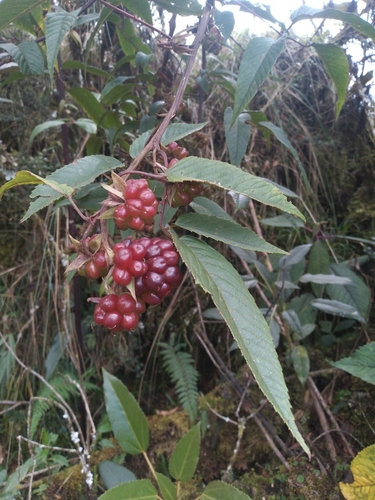
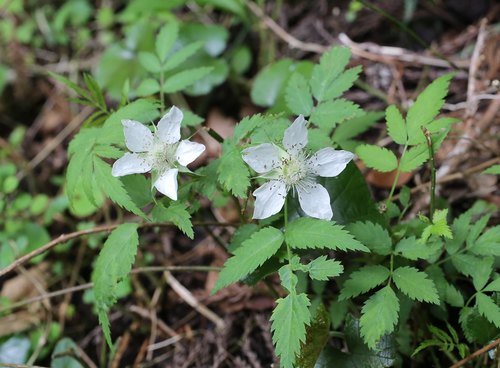
iNaturalist· cc-by-sa
(c) harum.koh, some rights reserved (CC BY-SA), uploaded by harum.koh
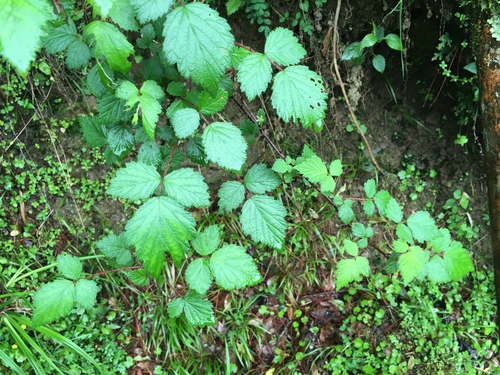
iNaturalist· cc-by-sa
(c) harum.koh, some rights reserved (CC BY-SA), uploaded by harum.koh
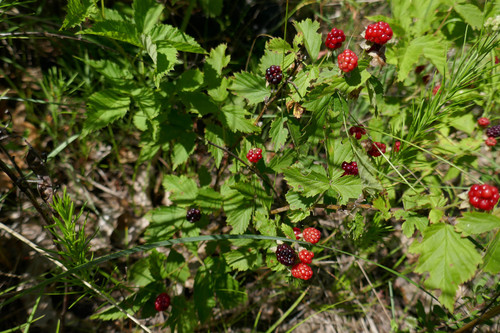
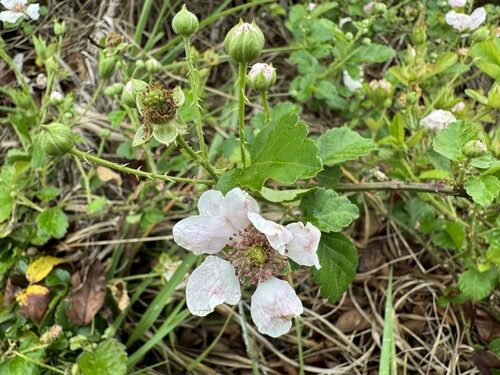
iNaturalist· cc-by-sa
(c) Douglas Goldman, some rights reserved (CC BY-SA), uploaded by Douglas Goldman
Summary
Source: WikipediaRubus hirsutus, the hirsute raspberry, is a species of flowering plant in the family Rosaceae, native to southern China, Taiwan, the Korean Peninsula, and Japan. It is sister to Rubus chingii.
Description
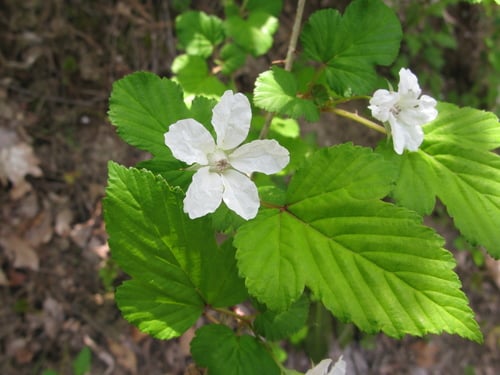
A shrub. It grows 1-2 m tall. The branches are reddish-brown with soft hairs. There are a few curved prickles. The leaves have leaflets along the stalk and one at the end. Flowers usually occur singly and are 3-4 cm across. The petals are white. The fruit are aggregate and 1-2 cm across.
Edible Uses
The fruit, ranging from 1–2cm in diameter, can be eaten raw or cooked and is used in pies, preserves, and similar preparations.
Traditional Uses
The fruit are eaten raw and used for brewing. They are also used for juices.
This uses section is brief — help expand it
Medicinal Uses
Juice from the bruised leaves is applied in the treatment of ophthalmia. The fruit is used to promote fertility and strengthen virility.
Distribution
It is a subtropical plant. It grows on forested slopes between 900-3,200 m above sea level. In Yunnan.
Where It Grows
Asia, China, Japan, Korea, Taiwan, Turkey, Türkiye,
Cultivation
We have very little information on this species and do not know if it will be hardy in Britain, though judging by its native range it should succeed outdoors in many parts of the country. The following notes are based on the general needs of the genus. Easily grown in a good well-drained loamy soil in sun or semi-shade. There is a potential confusion over the name of this species. There is a R. hirsutus with a different author (Wirte.) listed in as growing in woods in Britain. Clearly, one of these two species is wrongly named. Plants in this genus are notably susceptible to honey fungus.
Propagation
Seed requires stratification and is best sown in early autumn in a cold frame. Stored seed needs one month stratification at about 3°C and should be sown as early as possible in the year. Prick out seedlings when large enough to handle and grow on in a cold frame, then plant out into permanent positions in late spring of the following year. Cuttings of half-ripe wood can be taken in July/August in a frame. Tip layer in July and plant out in autumn. Divide in early spring or just before leaf-fall in autumn.
Other Uses
A purple to dull blue dye is obtained from the fruit.
Production
In China plants flower in April and fruit in May to June.
Other Information
It is cultivated.
Notes
There are about 250 Rubus species.
Dangerous Lookalikes
This plant can be confused with the following toxic species. Always verify identification carefully before consuming any wild plant.
Red Baneberry
Actaea rubra
Walter Siegmund (talk)
Rubus hirsutus
Rubus hirsutus
(c) harum.koh, some rights reserved (CC BY-SA), uploaded by harum.koh
Red Baneberry: Short herbaceous plant (no thorns), berries on thick red stems, each berry has a single seed, compound sharply-toothed leaves.
Rubus hirsutus: Thorny woody canes (brambles), aggregate berry made of many drupelets, berries pull easily from receptacle.
Synonyms
Also Known As
Jangttalgi, Kusa-ichigo, Meongseokttalgi, P'Eng Lei
References (7)
- Chen, B. & Qiu, Z., Consumer's Attitudes towards Edible Wild Plants, Ishikawa Prefecture, Japan. p 24 www.hindawi.com/journals/ijfr/aip/872413.pdf
- Dissertatione de Rubo 7. 1813
- Flora of China @ efloras.org Volume 9
- Hwang, H., et al, 2013, A Study on the Flora of 15 Islands in the Western Sea of Jeollanamdo Province, Korea. Journal of Asia-Pacific Biodiversity Vol. 6, No. 2 281-310
- Mansfield's Encyclopedia of Agricultural and Horticultural Crops
Show all 7 references Hide references
- Plants for a Future database, The Field, Penpol, Lostwithiel, Cornwall, PL22 0NG, UK. http://www.scs.leeds.ac.uk/pfaf/
- Song, M., et al, 2013, Traditional knowledge of wild edible plants in Jeju Island, Korea. Indian Journal of Traditional Knowledge. 12(2) pp 177-194