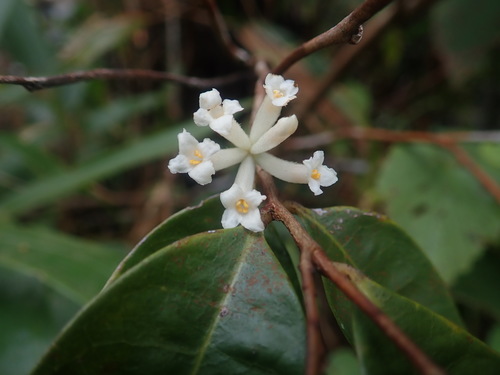
Aquilaria malaccensis
Lam.
Aloes Wood, Malacca eagle-wood, Agarwood tree
iNaturalist· cc-by-nc
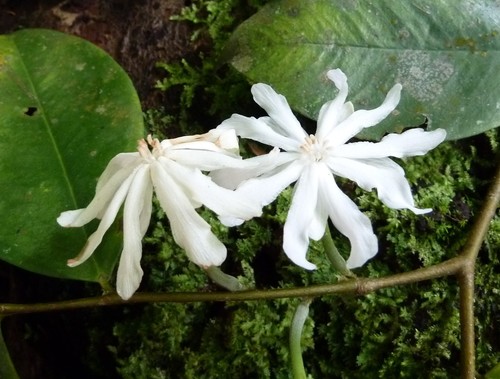
(c) usebcm, some rights reserved (CC BY-NC), uploaded by usebcm
iNaturalist· cc-by
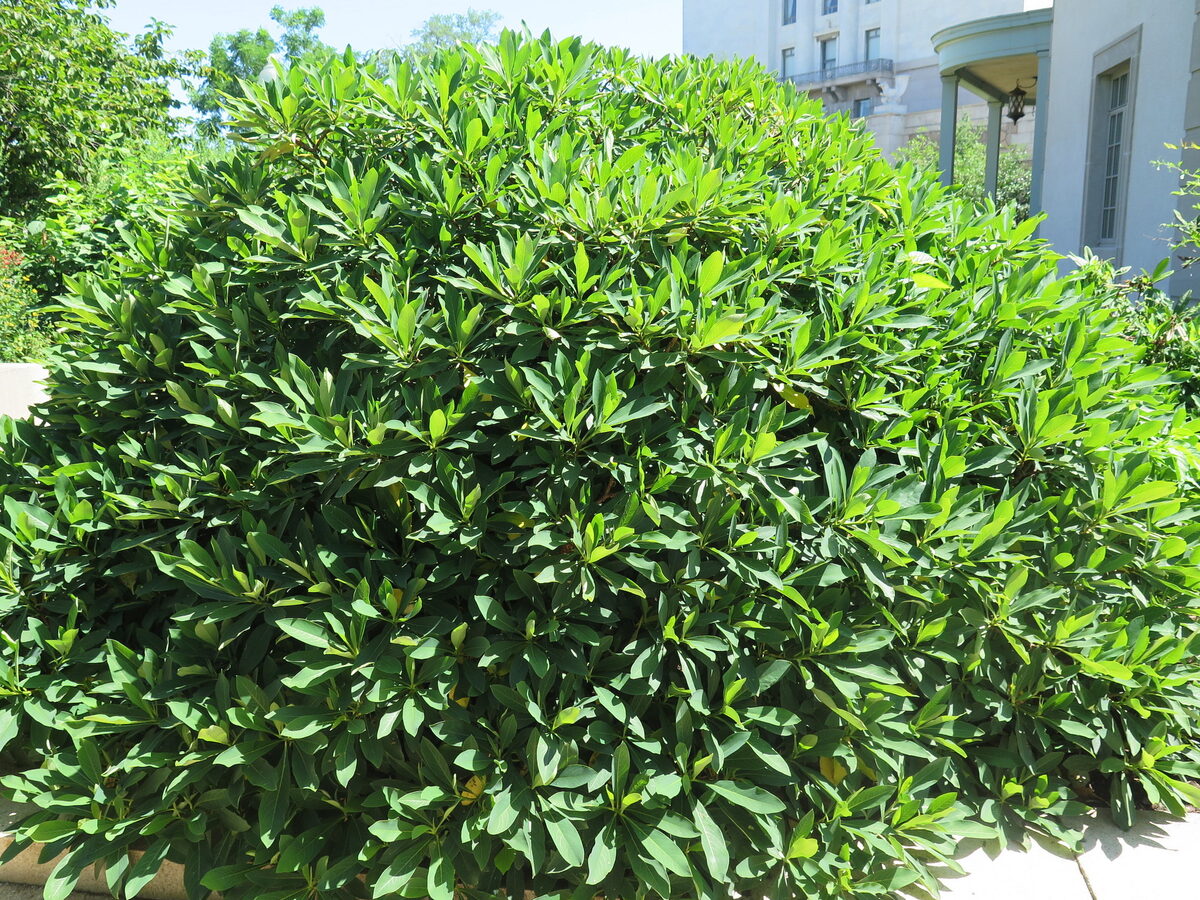
(c) Siddarth Machado, some rights reserved (CC BY), uploaded by Siddarth Machado
iNaturalist· cc-by
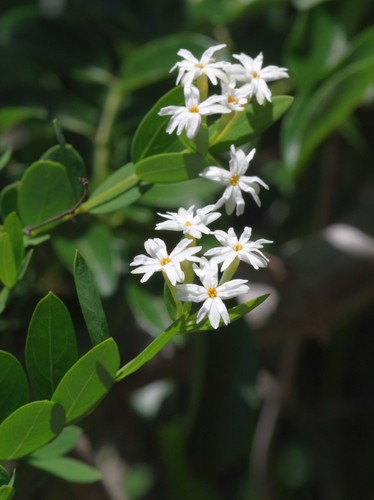
(c) Siddarth Machado, some rights reserved (CC BY), uploaded by Siddarth Machado
Summary
Source: WikipediaAquilaria malaccensis (Hindi: अगर, agaru; Assamese: সাঁচিগছ, sānci; Arabic: عود هندي, transl. Indian oud) or agar is a species of lign-aloe tree in the family Thymelaeaceae. It is found in Bangladesh, Bhutan, India, Indonesia, Laos, Malaysia, Myanmar, the Philippines, Singapore, also Thailand. It is threatened by habitat loss. The World List of Threatened Trees (Oldfield et al., 1998) listed Iran as one of the countries with a population of A. malaccensis. The exploratory 2002 CITES review confirmed that Iran has no record of the species. As a result, Iran is no longer considered as habitat for or producer of agarwood.
Description
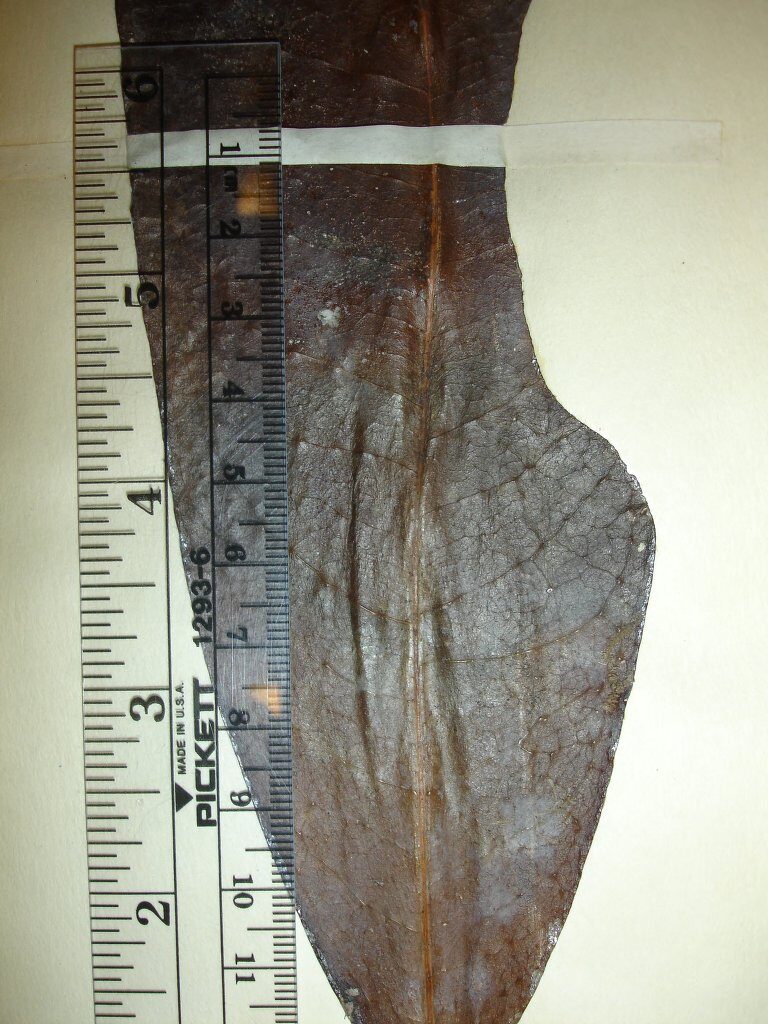
A small tree. It grows up to 40 m high. It spreads 3-12 m wide. The trunk is pale and thin and smooth. Young shoots are silky. The leaves are alternate and leathery. They are 5-9 cm long and sword shaped. They are pointed and the veins are parallel and faint. The flowers are in white topped clusters. The fruit are 2-4 cm long and egg shaped. They are velvety. The seed are oval and covered with red hairs.
Edible Uses
Edible Parts: Inner bark Seed Edible Uses: Condiment Edible portion: Seeds, Bark, Spice. The resin is used to flavour curries in Malaysia.
Traditional Uses
It is used to flavour curries.
This uses section is brief — help expand it
Medicinal Uses
Antiasthmatic Antidiarrhoeal Antirheumatic Aphrodisiac Astringent Cancer Carminative Febrifuge Sedative Stimulant Tonic Agar wood is an astringent, stimulant, tonic herb that relieves spasms, especially of the digestive and respiratory systems, and lowers fevers. In Western, Chinese and Indian medicines the incense is used against cancer, especially of the thyroid gland. In China it is applied as a sedative against abdominal complaints, asthma, colic and diarrhoea, and as an aphrodisiac and carminative. The grated wood enters into various preparations used especially during and after childbirth, and to treat rheumatism, smallpox and abdominal pains. Decoctions of the wood are said to have anti-microbial properties, e.g. Against Mycobacterium tuberculosis and Shigella flexneri.
Known Hazards
Aquilaria malaccensis is the major source of agarwood, a resinous heartwood, used for perfume and incense. The resin is produced by the tree in response to infection by a parasitic ascomycetous mould, Phaeoacremonium parasitica, a dematiaceous (dark-walled) fungus.
Distribution
A tropical plant. It grows in tropical and subtropical locations. It needs a temperature above 15-18°C. It grows in primary forest up to 270 m above sea level.
Where It Grows
Africa, Asia, Bangladesh, India, Indonesia, Malaysia, Mediterranean, Morocco, Myanmar, North Africa, Philippines, SE Asia, Singapore,
Cultivation
Grows best in undulating terrain in the moister lowland tropics, being found at elevations of 200 - 700 metres. It prefers an annual rainfall of 1,500 - 6,500 mm, a mean annual maximum temperature of 22 - 28c and a mean annual minimum temperature of 14 - 21c. Prefers heavy soils developed from gneiss and other metamorphic rocks, but it also grows well on sandy loams developed from sandstone. The extremely high prices paid for high quality agar wood and for the essential oil and the indiscriminate felling of both diseased and healthy trees threaten natural stands of Aquilaria including Aquilaria malaccensis to extinction. Research into possibilities of artificial induction and stimulation of agar wood formation is therefore urgently required and may offer high economic returns, especially as trials indicate that management of plantations presents no great difficulties. Unless such methods are developed, Aquilaria malaccensis may soon be extinct. Plantations have been established, mainly for experimental purposes, to test methods for the induction of agar wood formation. Three closely related species of Aquilaria are considered to be the major sources of agar wood and are distinguished by the length of their calyx lobes:- Aquilaria crassna, which comes from Indo-China, has lobes 12 - 15mm long. Aquilaria malaccensis, from India, and Malaysia has lobes 2 - 3mm long. Aquilaria sinensis, from China, has lobes 8mm long. A number of other species are less important sources of agar wood, including some minor Aquilaria spp., Enkleia malaccensis and the timbers Gonystylus bancanus and G. macrophyllus. Trees are generally quite slow growing. They have been recorded as reaching a height of nearly 5 metres and a diameter of 30 cm 8 years after planting, whilst 67 year old plantation trees in Malaysia had reached an average height of 27 metres and a diameter of 38 cm. Mature trees aged around 80 years may reach a height of 25 - 30 metres and a diameter at breast height of 55 - 70 cm. Flowering and fruiting may start at an age of 7 - 9 years. Good seed years occur infrequently and a medium sized tree may then produce 1.5 kg seed. The best agarwood yields are from trees of 50 years age or more but resin is produced as early as 20 years. Agar wood formation is a pathological process taking place in the stem or main branches where an injury has occurred. Fungi are involved in the process, but the process itself is not yet fully understood. Damage by boring insects is often associated with the infection. It is believed that the tree is first attacked by a pathogenic fungus, which causes it to weaken. Infection by a second fungus causes the formation of agar wood, but it is unclear whether it is a product of the fungus or the tree. The fungus implicated in the formation of agar wood in this species is Cytosphaera mangiferae, while Melanotus flavolives is assumed to play a similar role in Aquilaria sinensis. This species forms an association with endotrophic mycorrhizal fungi.
Propagation
Seed should be sown immediately, as it remains viable for only about 1 month. It is sown in nursery beds, about 5 mm deep in a mixture of soil, sand and manure and kept under light shade. Germination starts after 10 - 12 days and is normally complete after 1 month. Seed sown immediately after collection has about 65% germination, falling to 45% after 1 week and only 5% after 3 weeks in storage. The seedlings are very prone to insect attack. Seedlings are pricked out into containers 40 - 45 days after germination when they are 3 - 5 cm tall, and are kept under shade. They are ready for transplanting when 30 - 35 cm tall and 10 - 12 months old. Transplanting bare-rooted seedlings has been tried successfully in some areas. Fruit harvested for seed should be collected when mature but still green. A medium- sized tree produces about 2,000 seeds per year, but seed production may fluctuate greatly between years. The fruits are dried in the shade for about 2 days, they then burst and release the seed.
Other Uses
Containers Cosmetic Fibre Incense Repellent Resin String Weaving Wood Other uses rating: Medium (3/5). Other Uses: Agar wood is the rare and famous, resin-containing heartwood that is produced mainly from old and diseased trees of several members of this genus. In trade a distinction between the wood from these species is rarely made. The fragrance produced by the burning agar wood has been highly valued for thousands of years, and its use as incense for ceremonial purposes in Buddhism, Confucianism and Hinduism is widespread throughout eastern and southern Asia. In Thailand, it is put into funeral pyres, while in Japan, the incense is used in tea ceremonies. Wood only partly saturated with resin but still fragrant, and occasionally also the wood remaining after distillation, is made into sticks called 'joss-sticks' or 'agarbattis' which are burnt as incense. The incense is also used as an insect repellent. Agar-wood oil is an essential oil obtained by water and steam distillation of agarwood. It is used in luxury perfumery for application in e.g. Oriental and woody-aldehydic bases, ‘chypres’ and ‘fougères’. It produces interesting odour notes with clove oil, e.g. In carnation bases. The oil is so rare and expensive that it is only produced on request. Agar-wood oil is a yellow to dark amber, viscous liquid with a characteristic balsamic and woody odour. Its aroma has some resemblance with vetiverol or styrax and has a sweetness similar to that of sandalwood oil. Its odour is long-lasting and exhibits a good tenacity in applications. The silvery inner bark can be removed from the trunk in a single large sheet. It is highly valued for its strength and durability and is made into cloth and ropes. It is also made into writing material which was formerly only used for chronicles of important events and religious books. The timber of undiseased trees, known as ‘karas’, is soft and very light with a density of about 400 kg/m3 air dry. It is creamy white to pale yellowish-brown or greyish-brown, heartwood and sapwood not clearly differentiated. The texture is rather coarse and the wood diffuse-porous. It is suitable for making boxes, light indoor construction and veneer. The scented wood differs from the normal wood due mainly to the deposition of an aromatic resin. The resin is concentrated in the included phloem strands. Because of the resin content, the scented wood is relatively hard, brittle and heavy. Special Uses Scented Plants
Notes
There are 15 Aquilaria species. It is used in medicine.
Synonyms
Also Known As
Agar, Akyaw, Pohon gaharu malaka, Sasi
References (9)
- Ambasta S.P. (Ed.), 2000, The Useful Plants of India. CSIR India. p 48
- Brown, D., 2002, The Royal Horticultural Society encyclopedia of Herbs and their uses. DK Books. p 126
- Burkill, I.H., 1966, A Dictionary of the Economic Products of the Malay Peninsula. Ministry of Agriculture and Cooperatives, Kuala Lumpur, Malaysia. Vol 1 (A-H) p 198
- Encycl. 1:49, t. 356. 1783
- Heywood, V.H., Brummitt, R.K., Culham, A., and Seberg, O. 2007, Flowering Plant Families of the World. Royal Botanical Gardens, Kew. p 321
Show all 9 references Hide references
- Menninger, E.A., 1977, Edible Nuts of the World. Horticultural Books. Florida p 114
- Sahni, K.C., 2000, The Book of Indian Trees. Bombay Natural History Society. Oxford. p 142
- Seidemann J., 2005, World Spice Plants. Economic Usage, Botany, Taxonomy. Springer. p 48 (Also as Aquilaria agallocha)
- Sukarya, D. G., (Ed.) 2013, 3,500 Plant Species of the Botanic Gardens of Indonesia. LIPI p 132