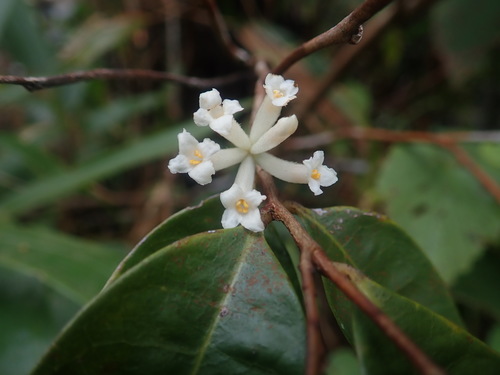
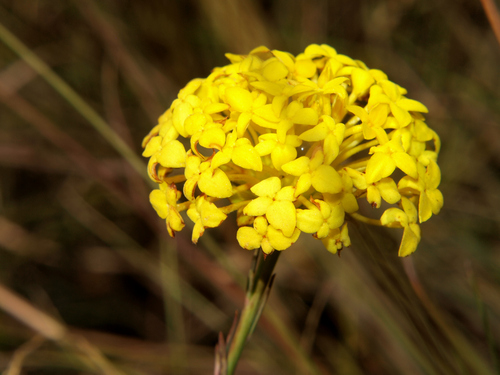
Pimelea microcephala
R. Br.
Mallee Riceflower, Shrubby Rice-flower
iNaturalist· cc-by
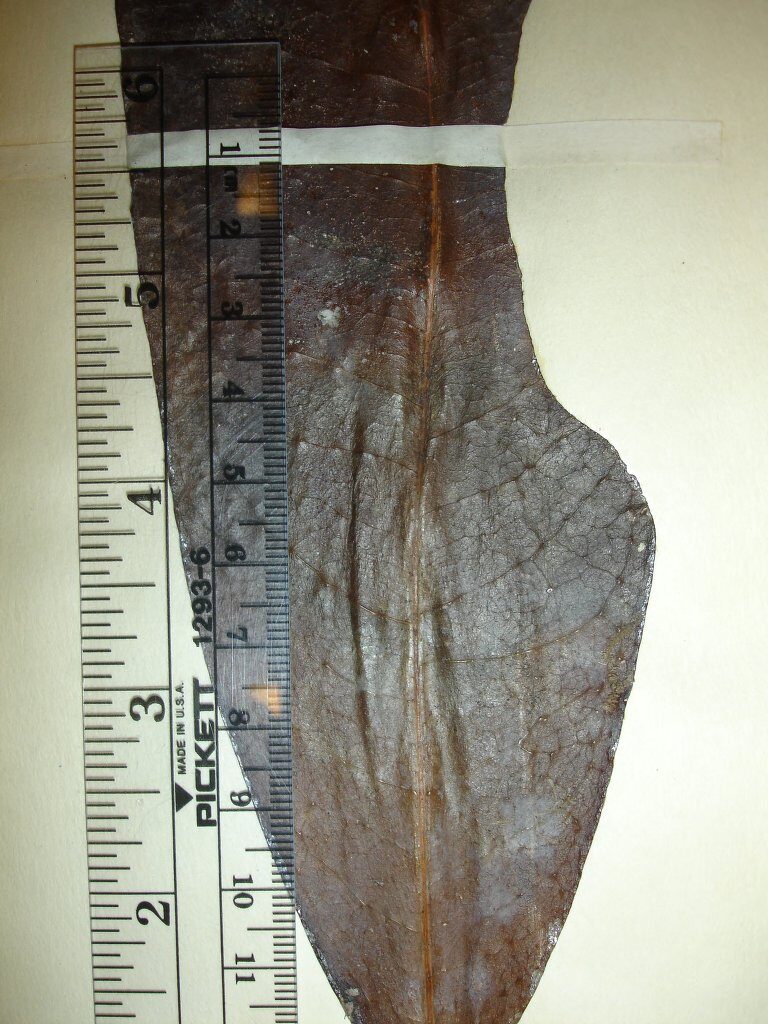
(c) Tim Hammer, some rights reserved (CC BY), uploaded by Tim Hammer
iNaturalist· cc-by-nc
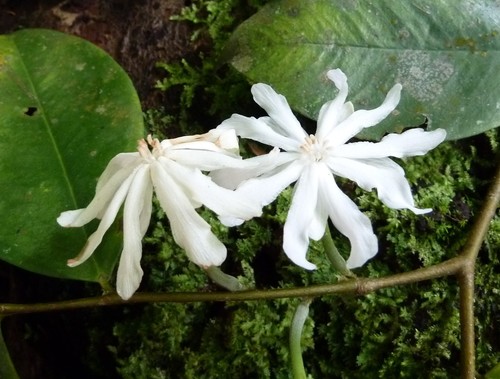
(c) Chris Lindorff, some rights reserved (CC BY-NC), uploaded by Chris Lindorff
iNaturalist· cc-by-nc
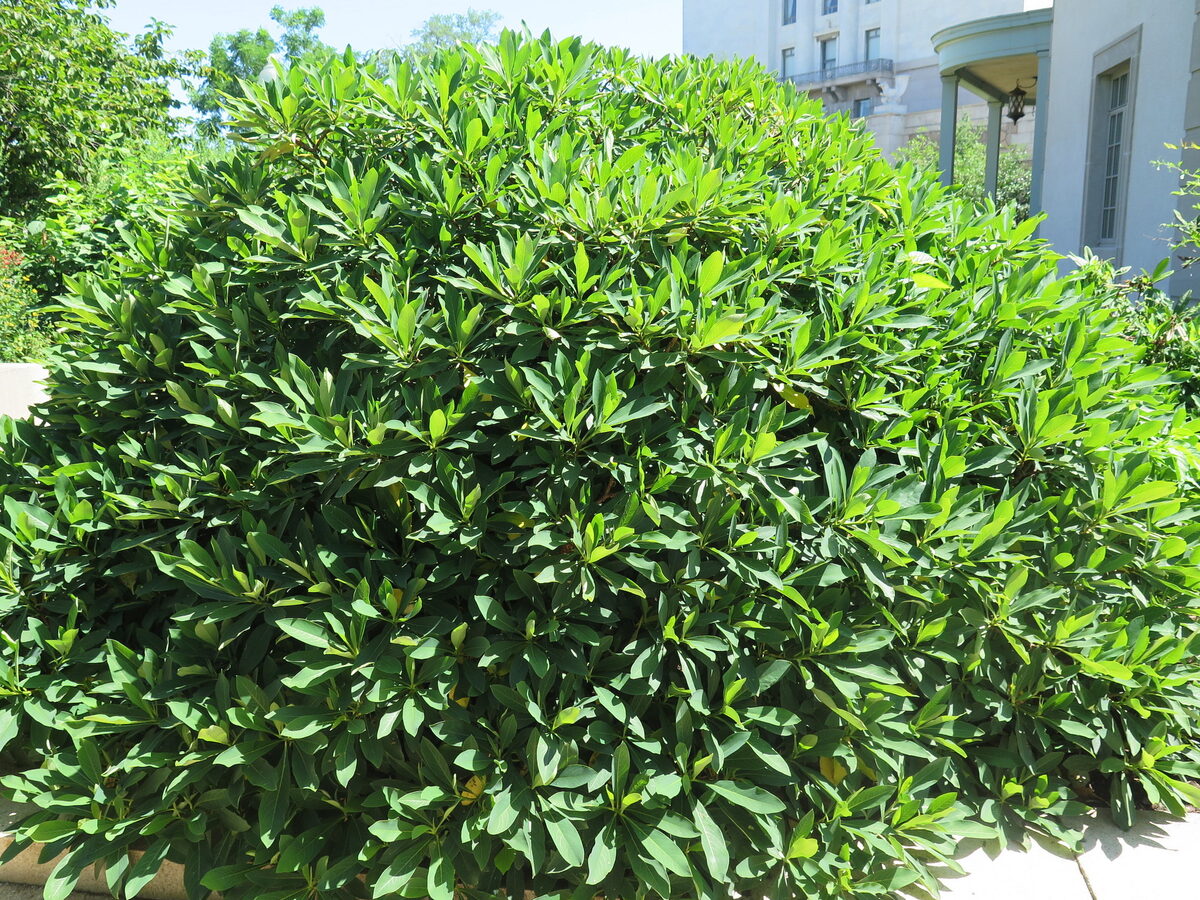
(c) Keagan Porter, some rights reserved (CC BY-NC), uploaded by Keagan Porter
Summary
Source: WikipediaPimelea microcephala, commonly known as mallee rice-flower or shrubby rice-flower is a species of flowering plant in the family Thymelaeaceae and is endemic to mainland Australia. It is an erect shrub with compact heads of male or female, white to yellow or greenish flowers on separate plants, the heads surrounded by 2 or 4 leaf-like involucral bracts.
Description
A medium sized shrub. It grows 1-4 m high and spreads 0.6-2.5 m wide. There are many spreading branches. Small branches are reddish brown. The leaves are 0.6-6 cm long by 0.1-0.7 cm wide. They are opposite and have short stalks. The flower heads are 1 cm across. The stalks are hairy. The flowers are 0.7 cm long. They are white, yellow or greenish.
Edible Uses
The fruit is edible, though there are concerns about its toxicity.
Traditional Uses
CAUTION: It is reported to have toxic properties.
This uses section is brief — help expand it
Medicinal Uses
None known
Known Hazards
See readers comments
Distribution
It suits warm temperate locations. It grows in drier regions. Plants are hardy to frost. In the Inland Botanical Gardens Mildura.
Where It Grows
Australia*,
Cultivation
We have very little information on this species and do not know if it will be hardy in Britain. The following notes are based on the general needs of the genus. Prefers a lime-free peaty well-drained loam in a sunny position. Rather slow growing. Flowers are produced on the tips of the previous seasons growth. Plants may suffer from sudden die back. Dioecious. Male and female plants must be grown if seed is required.
Propagation
Sow seed in a greenhouse as soon as it is ripe in autumn if possible, otherwise in early spring. When large enough to handle, prick seedlings into individual pots and grow on in a greenhouse for at least their first winter. Plant out into permanent positions in late spring or early summer, after the last expected frosts, and give plants some protection from cold during at least their first winter outdoors. Cuttings of half-ripe wood with a heel can be taken in July/August in a frame. Softwood cuttings 5cm long can be taken in late spring.
Other Uses
A tough fibre obtained from the stems is used as a tying material and for making cordage.
Notes
There are about 108 Pimelea species.
References (14)
- Bindon, P., 1996, Useful Bush Plants. Western Australian Museum. p 199
- Bodkin, F., 1991, Encyclopedia Botanica. Cornstalk publishing, p 797
- Clarke, P. A., 2013, The Aboriginal Ethnobotany of the Adelaide Region, South Australia. Transactions of the Royal Society of South Australia. (2013), 137(1): 97-126
- Cleland, J.B., 1957, Mankind 5(4):149-62
- Cribb, A.B. & J.W., 1976, Wild Food in Australia, Fontana. p 75
Show all 14 references Hide references
- Cronin, L., 1989, The Concise Australian Flora. Reed. p 38
- Elliot, W.R., & Jones, D.L., 1997, Encyclopedia of Australian Plants suitable for cultivation. Vol 7. Lothian. p 319
- Hunter, J., 2012, Vegetation and Floristics of Gilwarny and Wingadee Nature Reserves. A Report to the New South Wales National Parks and Wildlife Service p 121
- Hunter, J., 2015, Vegetation and flora of Naree and Yantabulla. A Draft Report to the Bush Heritage Australia
- Hunter, J.T., 2017, Is there a relationship between contemporary high Aboriginal plant resource locations and mapped vegetation communities? Cunninghamia 17:27-34. The Royal Botanic Garden Sydney. ISSN 2200 - 405X
- Lazarides, M. & Hince, B., 1993, Handbook of Economic Plants of Australia, CSIRO. p 190
- Morley, B.D., & Toelken, H.R., (Eds), 1983, Flowering Plants in Australia. Rigby. p 136
- Paczkowska, G . & Chapman, A.R., 2000, The Western Australian Flora. A Descriptive Calatogue. Western Australian Herbarium. p 559
- Prodr. 361. 1810