Rubus laciniatus
Willd.
Cut-leaved blackberry, Cut-leaf bramble
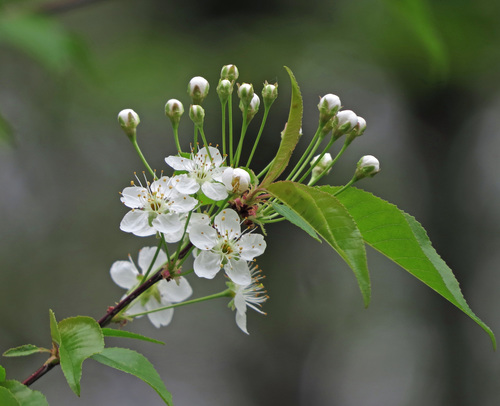
iNaturalist· cc-by-nc
(c) Harry Hill, some rights reserved (CC BY-NC), uploaded by Harry Hill
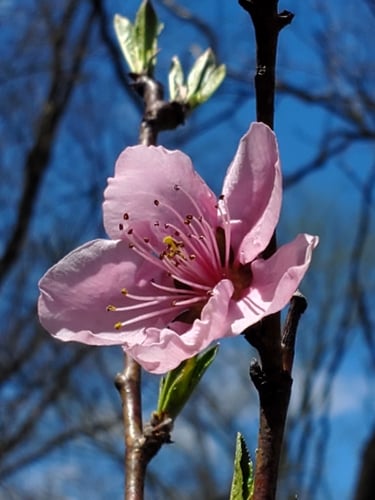
iNaturalist· cc0
no rights reserved, uploaded by Tom Erler
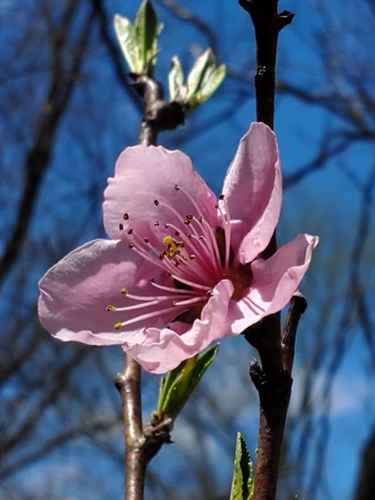
iNaturalist· cc-by-nc
(c) Bill Apostle Stefanidis, some rights reserved (CC BY-NC), uploaded by Bill Apostle Stefanidis
Summary
Source: WikipediaRubus laciniatus, the cutleaf evergreen blackberry or evergreen blackberry, is a Eurasian species of Rubus. It is an introduced species elsewhere, often being considered invasive.
Description
A prickly trailing plant. It keeps growing from year to year. The leaflets are smaller than Rubus fruticosus and are almost triangle shaped. The leaflet at the end is usually the largest and is deeply lobed. There are teeth around these lobes. The fruit are black when ripe. Thornless kinds have been produced.
Edible Uses
The fruit can be eaten raw or cooked. It is large, sweet, and juicy with a fine flavour, and about 20mm in diameter.
Traditional Uses
The fruit are eaten raw. They are also used for jellies, jams and pies.
This uses section is brief — help expand it
Medicinal Uses
None known
Distribution
It is a temperate plant. Tasmania Herbarium.
Where It Grows
Australia, Britain, Europe, North America, Tasmania, USA,
Cultivation
Easily grown in a good well-drained loamy soil in sun or semi-shade. This species is a blackberry with biennial stems, it produces a number of new stems each year from the perennial rootstock, these stems fruit in their second year and then die. The plant produces apomictic flowers, these produce fruit and viable seed without fertilization, each seedling is a genetic copy of the parent. Sometimes cultivated for its edible fruit, it is a very vigorous and productive plant. There is at least one named variety. 'Oregon Cutleaf Thornless' is high yielding with good flavoured fruits and no prickles on the stems, thus making it easier to harvest. Plants in this genus are notably susceptible to honey fungus.
Propagation
Seed requires stratification and is best sown in early autumn in a cold frame. Stored seed requires one month stratification at about 3°c and should be sown as early as possible in the year. Prick out seedlings when large enough to handle and grow on in a cold frame, then plant out into permanent positions in late spring of the following year. Cuttings of half-ripe wood can be taken in July/August in a frame. Tip layering can be done in July, with plants set out in autumn. Division is possible in early spring or just before leaf-fall in autumn.
Other Uses
A purple to dull blue dye is obtained from the fruit.
Notes
There are about 250 Rubus species.
Dangerous Lookalikes
This plant can be confused with the following toxic species. Always verify identification carefully before consuming any wild plant.
Red Baneberry
Actaea rubra
Walter Siegmund (talk)
Cut-leaved blackberry
Rubus laciniatus
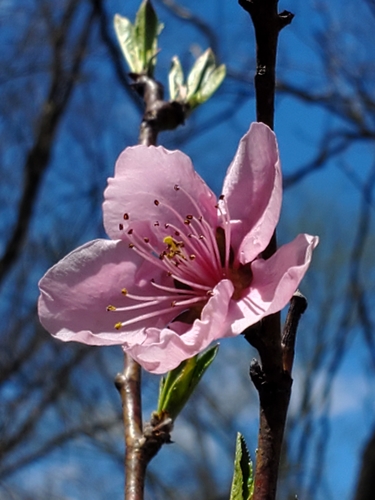
(c) Harry Hill, some rights reserved (CC BY-NC), uploaded by Harry Hill
Red Baneberry: Short herbaceous plant (no thorns), berries on thick red stems, each berry has a single seed, compound sharply-toothed leaves.
Cut-leaved blackberry: Thorny woody canes (brambles), aggregate berry made of many drupelets, berries pull easily from receptacle.
Synonyms
Also Known As
Evergreen blackberry, Laciniate bramble, Parsley-leaf bramble, Oregon evergreen blackberry
References (16)
- Curtis, W.M., 1956, The Students Flora of Tasmania Vol 1 p 169
- Dashorst, G.R.M., and Jessop, J.P., 1998, Plants of the Adelaide Plains & Hills. Botanic Gardens of Adelaide and State Herbarium. p 76
- Facciola, S., 1998, Cornucopia 2: a Source Book of Edible Plants. Kampong Publications, p 209
- Hedrick, U.P., 1919, (Ed.), Sturtevant's edible plants of the world. p 577
- Hort. berol. 2: t. 82. 1806
Show all 16 references Hide references
- Jennings, D.L., 1979, Raspberries and blackberries, in Simmonds, N.W., (ed), Crop Plant Evolution. Longmans. London. p 253
- Kermath, B. M., et al, 2014, Food Plants in the Americas: A survey of the domesticated, cultivated and wild plants used for Human food in North, Central and South America and the Caribbean. On line draft. p 762
- Lamp, C & Collet F., 1989, Field Guide to Weeds in Australia. Inkata Press. p 243
- Lazarides, M. & Hince, B., 1993, Handbook of Economic Plants of Australia, CSIRO. p 207
- Moerman, D. F., 2010, Native American Ethnobotany. Timber Press. p 489
- Plants for a Future database, The Field, Penpol, Lostwithiel, Cornwall, PL22 0NG, UK. http://www.scs.leeds.ac.uk/pfaf/
- Tasmanian Herbarium Vascular Plants list p 51
- Turner, N., et al, 2011, "Up on the Mountain": Ethnobotanical Important of Montane Sites in Pacific Coastal North America. Journal of Ethnobiology 31(1): 4-43
- USDA, ARS, National Genetic Resources Program. Germplasm Resources Information Network - (GRIN). [Online Database] National Germplasm Resources Laboratory, Beltsville, Maryland. Available: www.ars-grin.gov/cgi-bin/npgs/html/econ.pl (10 April 2000)
- van Wyk, B., 2005, Food Plants of the World. An illustrated guide. Timber press. p 328
- Wiersema, J. H. & Leon, B., 2013, World Economic Plants. A Standard Reference CRC Press. 2nd Ed. p 598