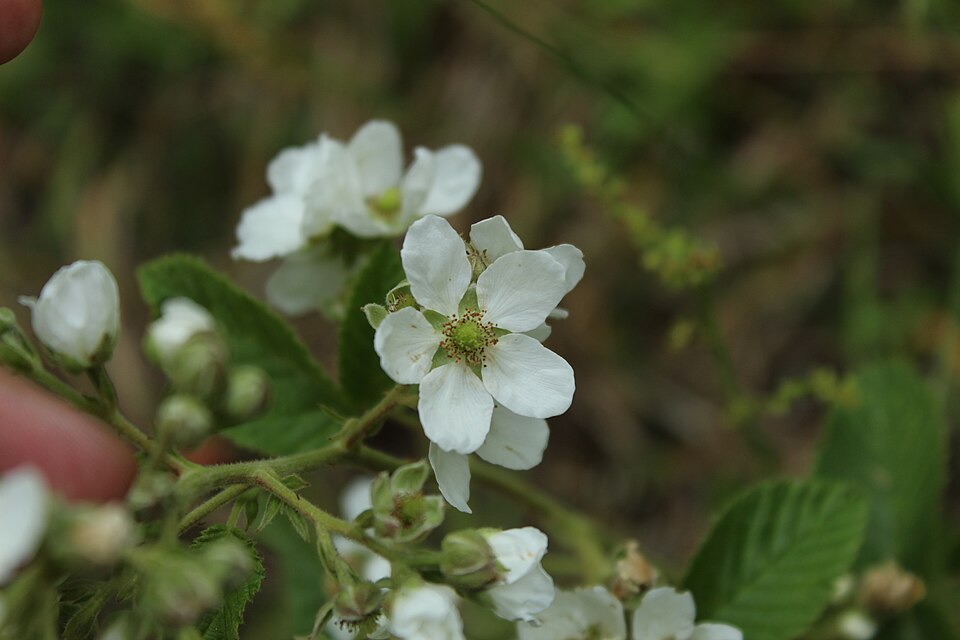
Filipendula vulgaris
Moench.
Dropwort
iNaturalist· cc-by-nc-sa
(c) Roberto Sindaco, some rights reserved (CC BY-NC-SA), uploaded by Roberto Sindaco
iNaturalist· cc-by-nc
(c) _foxg, some rights reserved (CC BY-NC)
iNaturalist· cc-by-nc
(c) peggwhite, some rights reserved (CC BY-NC)
Summary
Source: WikipediaFilipendula vulgaris, commonly known as dropwort or fern-leaf dropwort, is a perennial herbaceous plant in the family Rosaceae, closely related to meadowsweet (Filipendula ulmaria). It is found in Europe, western Siberia, Asia Minor, the Caucusus and North Africa. It prefers dry pastures, mostly on lime rich soils. The leaves and roots are a source of methyl salicylate (oil of wintergreen).
Description
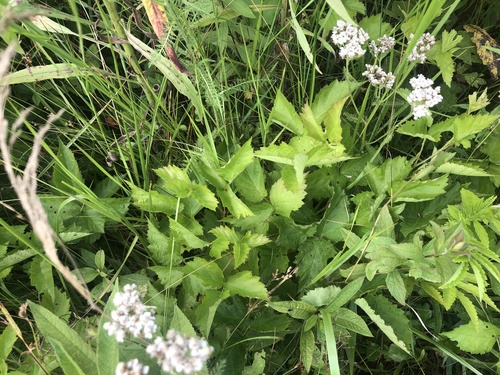
It grows 60-90 cm high. It spreads 45 cm wide. It forms clumps. It has tubers. The leaves are fine and feeathery or carrot like. The flowers are white and in crowded heads.
Edible Uses
Young leaves can be eaten raw or cooked and make a useful addition to salads and soups. The root is edible raw or cooked, though it is rather bitter and astringent; it is best roasted. It is considered a famine food, used only in times of scarcity.
Traditional Uses
The young leaves are used in soups and salads. The tubers are roasted and eaten in times of food shortage. They are added to bread.
This uses section is brief — help expand it
Medicinal Uses
The root is anthelmintic and lithontripic. It is used in the treatment of epilepsy, kidney and bladder stones, genital discharges, and intestinal worms.
Distribution
It is a temperate plant. It suits hardiness zones 3-9.
Where It Grows
Asia, Australia, Britain, Canada, Estonia, Europe, Finland, France, Germany, Hungary, Italy, Luxembourg, Mediterranean, North America, Romania, Russia, Scandinavia, Slovenia, Spain, Sweden,
Cultivation
Prefers a well-drained moisture retentive soil. Dislikes shade. Tolerates dry soils. Grows well on calcareous soils. The flowers are sweetly scented and are very attractive to bees. Members of this genus are rarely if ever troubled by browsing deer.
Propagation
Sow seed in autumn in a cold frame, or in spring at a germination temperature of 10–13°C. Prick seedlings into individual pots once large enough to handle and plant out in summer if sufficiently established, otherwise overwinter in a cold frame and plant out in late spring. Divide in autumn or winter — larger clumps can go directly into permanent positions, while smaller ones are better potted on in a cold frame until rooting well, then planted out in spring.
Other Uses
Plants can be used as ground cover when planted approximately 45cm apart in each direction. The cultivar 'Flore Pleno', with sweetly scented double flowers, has been recommended for this purpose.
Notes
There are about 10 Filipendula species.
Synonyms
Also Known As
Angerpist, Banyavirag, Koloncos legyezofu, Navadni oslad, Viinarohi
References (17)
- Bodkin, F., 1991, Encyclopedia Botanica. Cornstalk publishing, p 475
- Bremness, L., 1994, Herbs. Collins Eyewitness Handbooks. Harper Collins. p 170
- Brickell, C. (Ed.), 1999, The Royal Horticultural Society A-Z Encyclopedia of Garden Plants. Convent Garden Books. p 440
- Cerne, M., 1992, Wild Plants from Slovenia used as Vegetables. Acta Horticulturae 318
- Cundall, P., (ed.), 2004, Gardening Australia: flora: the gardener's bible. ABC Books. p 605
Show all 17 references Hide references
- Denes, A., et al, 2012, Wild plants used for food by Hungarian ethnic groups living in the Carpathian Basin. Acta Societatis Botanicorum Poloniae 81 (4): 381-396
- Facciola, S., 1998, Cornucopia 2: a Source Book of Edible Plants. Kampong Publications, p 198
- Hibbert, M., 2002, The Aussie Plant Finder 2002, Florilegium. p 102
- Jack, M., Wild Foods and Medicines of Forest Garden Transylvania. http://www.forestgardentransylvania.org/ p10
- Kalle, R. & Soukand, R., 2012, Historical ethnobotanical review of wild edible plants of Estonia (1770s-1960s) Acta Societatis Botanicorum Poloniae 81(4):271-281
- Mabey, R., 1973, Food for Free. A Guide to the edible wild plants of Britain, Collins. p 68
- Methodus 663. 1794
- Morley, B. & Everard, B., 1970, Wild Flowers of the World. Ebury press. Plate 9
- Paoletti, M.G., Dreon, A.L., and Lorenzoni, G.G., 1995, Pistic, Traditional Food from Western Friuli, NE Italy. Economic Botany 49(1) pp 26-30
- Plants for a Future database, The Field, Penpol, Lostwithiel, Cornwall, PL22 0NG, UK. http://www.scs.leeds.ac.uk/pfaf/
- Slocum, P.D. & Robinson, P., 1999, Water Gardening. Water Lilies and Lotuses. Timber Press. p 119
- Svanberg, I, 2012, The use of wild plants as food in pre-industrial Sweden. Acta Societatis Botanicorum Poloniae. 81(4): 317-327