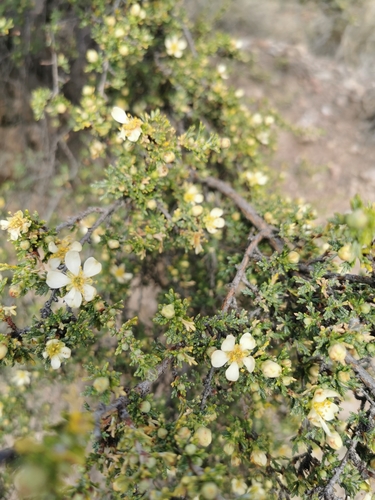
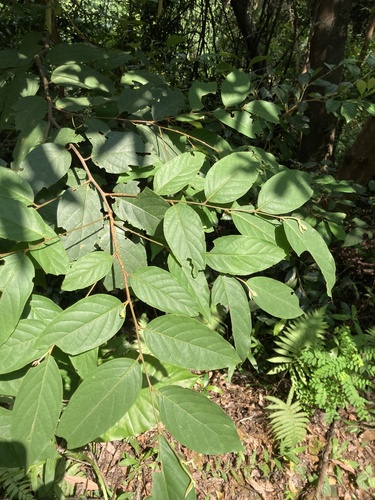
Rubus fraxinifolius
Poir.
Red raspberry
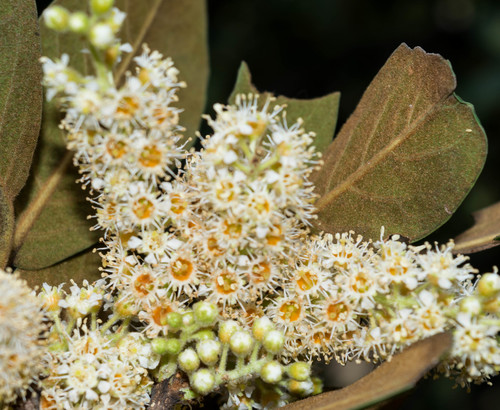
iNaturalist· cc-by-nc
(c) Eiger Leng, some rights reserved (CC BY-NC), uploaded by Eiger Leng
iNaturalist· cc-by-nc
(c) chatzutang, some rights reserved (CC BY-NC)
iNaturalist· cc-by-sa
(c) Ole Husby, some rights reserved (CC BY-SA)
Summary
Source: WikipediaRubus fraxinifolius, also known as mountain raspberry in English or rogimot in Kadazandusun, is a species of flowering and fruiting shrub in the raspberry family. It is native to tropical islands of Southeast Asia from Taiwan through the Philippines to New Guinea and the Solomon Islands in the Melanesia region.
Description
A scrambling shrub reaching 2 to 4 m high. It is armed with fair sized sharp spines. The leaves have leaflets on opposite sides of the stalk with 3 to 11 leaflets. The edges are toothed and they are pointed at the tip and slanting at the base. The flowers are white and the berries borne in clusters. The berries are bright red and fairly juicy but tasteless. The fruit are 0.8-1.4 cm across.
Edible Uses
Fruit - raw. The large, red fruits are juicy and sweetish. There are conflicting reports on the quality of the fruit, with some people saying that they are tasteless or worse, whilst they are often harvested locally and sold in the markets. The fruit is up to 25mm long and 15mm wide
Traditional Uses
The berries are eaten raw.
This uses section is brief — help expand it
Medicinal Uses
The leaves are astringent. They are used in the treatment of slimy faeces (dysentery?).
Distribution
A tropical plant. They grow in damp forests at low and medium altitudes up to 1800 m. They occur from Luzon to Mindanao in the Philippines. It grows in thickets near sea level in Taiwan.
Where It Grows
Africa, Asia, Australia, China, Indonesia, Malaysia, Pacific, Papua New Guinea, PNG, Philippines, SE Asia, Solomon Islands, Taiwan,
Cultivation
Species in this genus are generally easily grown in a good well-drained loamy soil in sun or semi-shade.
Propagation
Seed - germinates best if given a period of cold stratification prior to sowing in containers. Stored seed requires one month stratification at about 3°c and is best sown as early as possible in the growing season. Prick out the seedlings when they are large enough to handle and grow on until large enough to plant out. Cuttings of half-ripe wood in a frame. Tip layering towards the end of the growing season Division just before the plant comes into new growth or as it enters dormancy.
Other Information
The plants are common in Papua New Guinea. The fruit is mainly eaten by children.
Notes
There are about 250 Rubus species.
Dangerous Lookalikes
This plant can be confused with the following toxic species. Always verify identification carefully before consuming any wild plant.
Red Baneberry
Actaea rubra
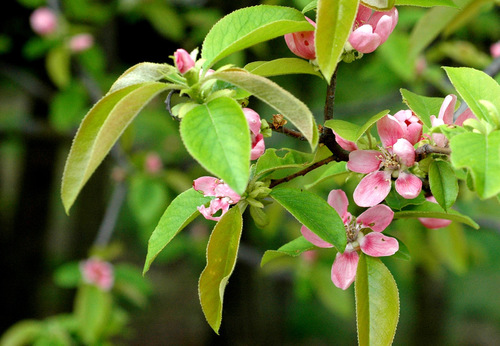
Walter Siegmund (talk)
Red raspberry
Rubus fraxinifolius
(c) Eiger Leng, some rights reserved (CC BY-NC), uploaded by Eiger Leng
Red Baneberry: Short herbaceous plant (no thorns), berries on thick red stems, each berry has a single seed, compound sharply-toothed leaves.
Red raspberry: Thorny woody canes (brambles), aggregate berry made of many drupelets, berries pull easily from receptacle.
Synonyms
Also Known As
Buyot, Doting, Lan yu qi ye xuan gou zi, Luting, Palanau, Pinit, Polnit, Rasberi aterton, Sapinit
References (19)
- Altschul, S.V.R., 1973, Drugs and Foods from Little-known Plants. Notes in Harvard University Herbaria. Harvard Univ. Press. Massachusetts. no. 1434
- Barcelo, R., 2015, Phytochemical Screening and Antioxidant Activity of Edible Wild Fruits in Benguet, Cordillera Administrative Region, Philippines. Electronic Journal of Biology, 2015, Vol.11(3): 80-89
- Bodner, C. C. and Gereau, R. E., 1988, A Contribution to Bontoc Ethnobotany. Economic Botany, 43(2): 307-369
- Brown, W.H., 1920, Wild Food Plants of the Philippines. Bureau of Forestry Bulletin No. 21 Manila. p 60
- Call, C. A., et al, 2004, Participatory Rural Appraisal in the Upland Ecosystem of Mt Malindang, Misamis Occidental, Philippines. Biodiversity Research Programme for Development in Mindanao. p 59
Show all 19 references Hide references
- Chua-Barcelo, R. T., 2014, Ethnobotanical survey of edible wild fruits in Benguet, Cordillera administrative region, the Philippines. Asian Pac. J. Trop. Biomed. 4(Suppl. 1):S525-S538
- Encycl. 6:242. 1806
- Flora of China @ efloras.org Volume 9
- French, B.R., 1986, Food Plants of Papua New Guinea, A Compendium. Asia Pacific Science Foundation p 249
- Hibbert, M., 2002, The Aussie Plant Finder 2002, Florilegium. p 282
- Lembaga Biologi Nasional, 1977, Buah-Buahan, Balai Pustaka, Jakarta. p 60
- Low, T., 1991, Wild Food Plants of Australia. Australian Nature FieldGuide, Angus & Robertson. p 66
- Lu Lingdi, Boufford, D.E., Rubus. Flora of China.
- Monsalud, M.R., Tongacan, A.L., Lopez, F.R., & Lagrimas, M.Q., 1966, Edible Wild Plants in Philippine Forests. Philippine Journal of Science. p 534
- Powell, J.M., Ethnobotany. In Paijmans, K., 1976, New Guinea Vegetation. Australian National University Press. p 111
- Sukarya, D. G., (Ed.) 2013, 3,500 Plant Species of the Botanic Gardens of Indonesia. LIPI p 707
- USDA, ARS, National Genetic Resources Program. Germplasm Resources Information Network - (GRIN). [Online Database] National Germplasm Resources Laboratory, Beltsville, Maryland. Available: www.ars-grin.gov/cgi-bin/npgs/html/econ.pl (10 April 2000)
- Wiersema, J. H. & Leon, B., 2013, World Economic Plants. A Standard Reference CRC Press. 2nd Ed. p 598
- World Checklist of Useful Plant Species 2020. Royal Botanic Gardens, Kew