Pyrus pyrifolia
(Burm. f.) Nakai
Asian pear, Chinese pear, Nashi, Sand plum, Sand pear
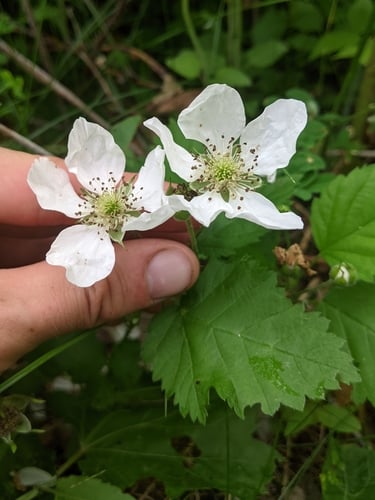
iNaturalist· cc-by-nc
(c) Michael Kielb, some rights reserved (CC BY-NC), uploaded by Michael Kielb
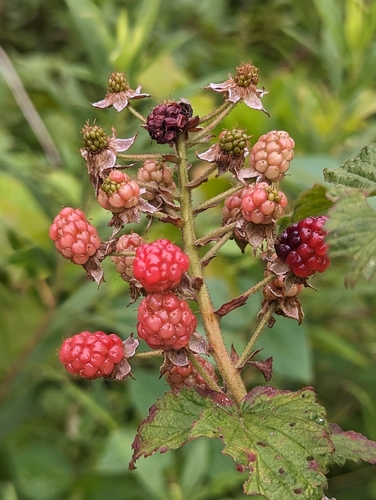
iNaturalist· cc-by-nc
(c) onidiras-iNaturalist, some rights reserved (CC BY-NC), uploaded by onidiras-iNaturalist
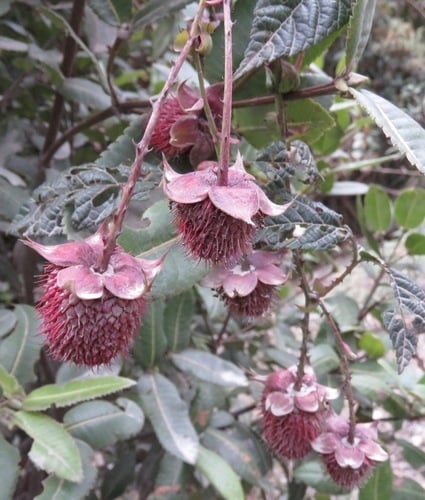
iNaturalist· cc-by-nc
(c) saracoutinho, some rights reserved (CC BY-NC), uploaded by saracoutinho
Summary
Source: WikipediaPyrus pyrifolia is a species of pear tree native to southern China and northern Indochina that has been introduced to Korea, Japan and other parts of the world. The tree's edible fruit is known by many names, including Asian pear, Persian pear, Japanese pear, Chinese pear, Korean pear, Taiwanese pear, apple pear, zodiac pear, three-halves pear, papple, naspati, bata kisbis, Fefeta grained pear and sand pear. Along with cultivars of P. × bretschneideri and Pyrus ussuriensis, the fruit is also called the nashi pear. Cultivars derived from Pyrus pyrifolia are grown throughout East Asia, and in other countries such Pakistan, Nepal, Australia, New Zealand, and America. Traditionally in East Asia the tree's flowers are a popular symbol of early spring, and it is a common sight in gardens and the countryside. The fruits are not generally baked in pies or made into jams because they have a high water content and a crisp, grainy texture, very different from the European varieties. They are commonly served raw and peeled. The fruit tends to be quite large and fragrant. When carefully wrapped, having a tendency to bruise because of its juiciness, it can last for several weeks (or more) in a cold, dry place.
Description
A medium sized tree. It grows 15 m high and spreads 9 m wide. The leaves are oblong and have teeth along the edge. The leaves turn orange and bronze in the autumn. The flowers are small and white. They appear almost the same time as the leaves. The fruit is round and the size of an apple. The skin is thin. They can be green, yellow or bronze. They have a gritty texture. Some forms have larger, softer fruit. These cultivated forms may be crosses between Pyrus pyrifolia and Pyrus ussuriensis. These are oval and yellow with a crisp texture.
Edible Uses
The fruit can be eaten raw or cooked. It is hard and gritty in texture but becomes firm, crisp, and juicy when fully ripe, at which point it is eaten out of hand or used in fruit salads, pies, or baked dishes. The fruit is reported as up to 3cm long, and up to 5cm in some accounts. Wild trees in the Himalayas average 83kg of fruit per year, with some individuals yielding up to 200kg. The fruit contains approximately 4.9% sugars, 3.2% protein, and 0.9% pectin.
Traditional Uses
The fruit are eaten raw. They are also poached, baked or coated with honey. They are canned and processed into fruit nectar and preserves.
This uses section is brief — help expand it
Medicinal Uses
The plant has antiseptic, astringent, febrifuge, nervine, and pectoral properties.
Distribution
It is a temperate plant. In Vietnam it is cultivated in the northern highlands between 1,000 and 1,500 m altitude. It needs 300-800 hours of cold below 7°C each year. They are hardy to frost. They will grow on most soils. In Hobart Botanical gardens. In XTBG Yunnan. It suits hardiness zones 4-9. In Sichuan and Yunnan. Arboretum Tasmania.
Where It Grows
Asia, Australia, Bangladesh, Brazil, Central Asia, China, India, Indochina, Indonesia, Japan, Korea, Laos, Malaysia, New Zealand, North America, Pakistan, Philippines, SE Asia, South America, Taiwan, Tajikistan,Tasmania, Thailand, USA, Vietnam,
Cultivation
Plants are grown by grafting. Plants can be grown from seed.
Propagation
Seed is best sown in a cold frame as soon as it is ripe in autumn, when it will typically germinate in mid to late winter. Stored seed requires 8–10 weeks of cold stratification at 1°C and should be sown as early in the year as possible. Temperatures above 15–20°C can induce a secondary dormancy. Prick out seedlings into individual pots once large enough to handle, and grow on in light shade in a cold frame or greenhouse through their first year. Plant out in late spring or early summer the following year.
Other Uses
None known
Production
Trees bear in 3-4 years.
Other Information
It is cultivated.
Nutrition
| Part | Moisture | kJ | kcal | Protein | Vit A | Vit C | Iron | Zinc |
|---|---|---|---|---|---|---|---|---|
| Fruit | 88.3 | 176 | 42 | 0.5 | 0 | 3.8 | 0 | 0.02 |
Synonyms
Also Known As
Desi nakh, Dolbaenamu, Korean pear, Japanese pear, Le, Nashpati, Salad pear, Oriental pear, Sha li, Pae, Pera-nashi
References (37)
- Altschul, S.V.R., 1973, Drugs and Foods from Little-known Plants. Notes in Harvard University Herbaria. Harvard Univ. Press. Massachusetts. no. 1400 (As Pyrus serotina)
- Anderson, E. F., 1993, Plants and people of the Golden Triangle. Dioscorides Press. p 219
- Awan, M. R., et al, 2011, Studies on traditional knowledge of economically important plants of Kaghan Valley, Mansehra District, Pakistan. Journal of Medicinal Plants Research Vol. 5(16), pp. 3958-3967
- Bot. Mag. (Tokyo) 40:564. 1926
- Cheifetz, A., (ed), 1999, 500 popular vegetables, herbs, fruits and nuts for Australian Gardeners. Random House p 238
Show all 37 references Hide references
- Cundall, P., (ed.), 2004, Gardening Australia: flora: the gardener's bible. ABC Books. p 1119
- Facciola, S., 1998, Cornucopia 2: a Source Book of Edible Plants. Kampong Publications, p 206
- Glowinski, L., 1999, The Complete Book of Fruit Growing in Australia. Lothian. p 29, 35
- Gouldstone, S., 1983, Growing your own Food-bearing Plants in Australia. Macmillan p 110 (As Pyrus serotina)
- Hibbert, M., 2002, The Aussie Plant Finder 2002, Florilegium. p 244
- Hu, Shiu-ying, 2005, Food Plants of China. The Chinese University Press. p 450
- Hwang, H., et al, 2013, A Study on the Flora of 15 Islands in the Western Sea of Jeollanamdo Province, Korea. Journal of Asia-Pacific Biodiversity Vol. 6, No. 2 281-310
- Hwang, HS, et al, 2014, Distribution characteristics of plant in the Ungseokbong Mountain, Gyeongsangnam-do, Korea. Journal of Asia-Pacific Biodiversity. 7(2014) e164-e178
- INFOODS:FAO/INFOODS Databases
- John, L., & Stevenson, V., 1979, The Complete Book of Fruit. Angus & Robertson p 223
- Kim, H. & Song, M., 2013, Ethnobotanical analysis for traditional knowledge of wild edible plants in North Jeolla Province (Korea). Genetic. Resour. Crop Evol. (2013) 60:1571-1585
- Kiple, K.F. & Ornelas, K.C., (eds), 2000, The Cambridge World History of Food. CUP p 1723
- Krishen P., 2006, Trees of Delhi, A Field Guide. DK Books. p 111
- Lazarides, M. & Hince, B., 1993, Handbook of Economic Plants of Australia, CSIRO. p 202
- Liu, Yi-tao, & Long, Chun-Lin, 2002, Studies on Edible Flowers Consumed by Ethnic Groups in Yunnan. Acta Botanica Yunnanica. 24(1):41-56
- Lorenzi, H., Bacher, L., Lacerda, M. & Sartori, S., 2006, Brazilian Fruits & Cultivated Exotics. Sao Paulo, Instituto Plantarum de Estuados da Flora Ltda. p 517
- Negi, P. S. & Subramani, S. P., 2015, Wild Edible Plant Genetic Resources for Sustainable Food Security and Livelihood of Kinnaur District, Himachal Pradesh, India, International Journal of Conservation Science. 6 (4): 657-668
- Parmar, C., & Kaushel, M. K., 1982, In Wild Fruits. Kalyani Publishers, New Delhi, India. p 81-83 (As Pyrus serotina)
- Pham-Hoang Ho, 1999, An Illustrated Flora of Vietnam. Nha Xuat Ban Tre. p 781
- Plants for a Future database, The Field, Penpol, Lostwithiel, Cornwall, PL22 0NG, UK. http://www.scs.leeds.ac.uk/pfaf/
- Proc. Amer. Acad. Arts 50:231. 1915 (As Pyrus serotina)
- PROSEA No. 2
- Self, M., 199, Phoenix Seeds catalogue. p 17
- Small, E., 2009, Top 100 Food Plants. The world's most important culinary crops. NRC Research Press. p 415
- Solomon, C., 2001, Encyclopedia of Asian Food. New Holland. p 246
- Tanaka,
- Tankard, G., 1990, Tropical fruit. An Australian Guide to Growing and using exotic fruit. Viking p 105
- van Wyk, B., 2005, Food Plants of the World. An illustrated guide. Timber press. p 317
- Watkins, R., 1979, Apple and Pear, in Simmonds, N.W., (ed), Crop Plant Evolution. Longmans. London. p 247 (As Pyrus serotina)
- www.efloras.org Flora of China Volume 9
- Zeven, A. C. & de West, J. M. J., 1982, Dictionary of cultivated plants and their regions of diversity. Wageningen. p 41
- Zhang, L., et al, 2016, Ethnobotanical study of traditional edible plants used by the Naxi people during droughts. Journal of Ethnobiology and Ethnomedicine. 12:39