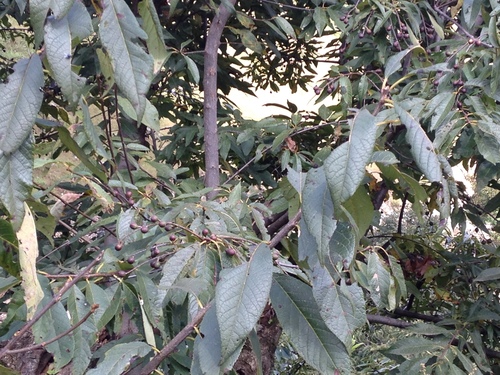
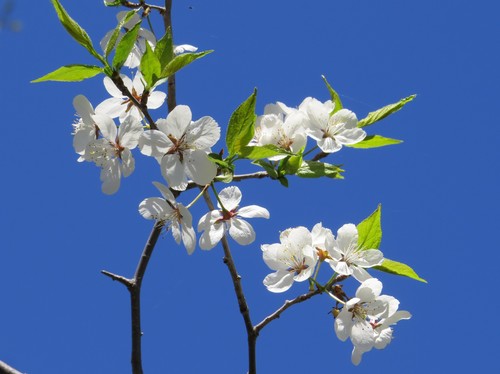
Rubus calycinoides
Hayata
Creeping raspberry, Hime-fuyu-ichigo
iNaturalist· cc-by-nc-sa
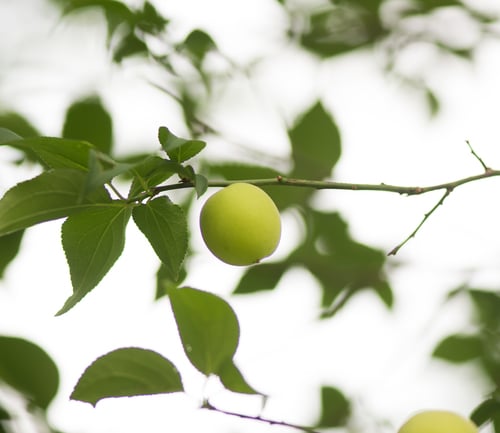
(c) Batriti Lamare, some rights reserved (CC BY-NC-SA), uploaded by Batriti Lamare
iNaturalist· cc-by-nc
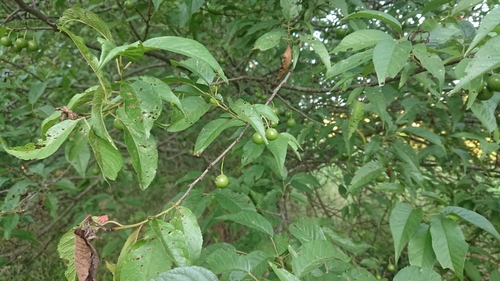
(c) cmacca, some rights reserved (CC BY-NC)
iNaturalist· cc-by-nc
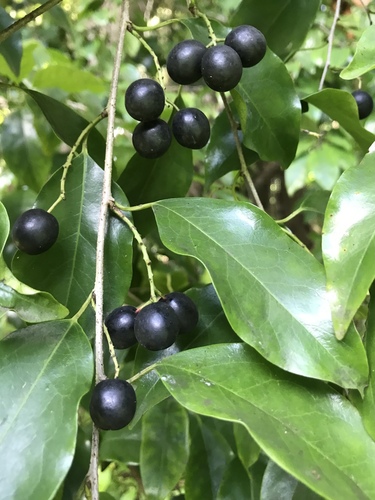
(c) Yaling Lin, some rights reserved (CC BY-NC)
Summary
Source: WikipediaRubus calycinoides is a flowering plant in the rose family (Rosaceae) native to Asia from the Himalayas to Myanmar. It was described by Otto Kunze in 1879.
Description
A creeping raspberry. It grows 15 cm high. It has creeping stems that lie along the ground. There are upright annual shoots 1-7 cm long. There can be a velvety covering and hairs and straight prickles. The leaves are simple and oval or kidney shaped. They are 1-3 cm across. They have 3 rounded lobes. They are woolly underneath. The flowers are white and 10 mm across. They occur singly. There are 2 or 3 bracts under them. The fruit is orange and 15 mm across.
Edible Uses
The fruit are eaten.
Traditional Uses
The fruit are eaten.
This uses section is brief — help expand it
Distribution
In the eastern Himalayas it grows between 1,300-2,100 m altitude.
Where It Grows
Asia, Bhutan, Canada, China, Himalayas, Nepal, North America,
Notes
There are about 250 Rubus species.
Dangerous Lookalikes
This plant can be confused with the following toxic species. Always verify identification carefully before consuming any wild plant.
Red Baneberry
Actaea rubra
Walter Siegmund (talk)
Creeping raspberry
Rubus calycinoides
(c) Batriti Lamare, some rights reserved (CC BY-NC-SA), uploaded by Batriti Lamare
Red Baneberry: Short herbaceous plant (no thorns), berries on thick red stems, each berry has a single seed, compound sharply-toothed leaves.
Creeping raspberry: Thorny woody canes (brambles), aggregate berry made of many drupelets, berries pull easily from receptacle.
Synonyms
References (7)
- Facciola, S., 1998, Cornucopia 2: a Source Book of Edible Plants. Kampong Publications, p 208
- www.Efloras.org Annotated checklist of the Flowering Plants of Nepal.
- Hibbert, M., 2002, The Aussie Plant Finder 2002, Florilegium. p 282
- Hu, Shiu-ying, 2005, Food Plants of China. The Chinese University Press. p 455
- Icon. pl. formos. 3:88. 1913 Hayata (non Kuntze 1879) - an illegitimate later homonym (ICBN Art. 53) that is unavailable for use
Show all 7 references Hide references
- Plants for a Future database, The Field, Penpol, Lostwithiel, Cornwall, PL22 0NG, UK. http://www.scs.leeds.ac.uk/pfaf/
- Tanaka,