Amelanchier alnifolia semiintegrifolia - (Hook.)Hitchc
(Hook.)Hitchc
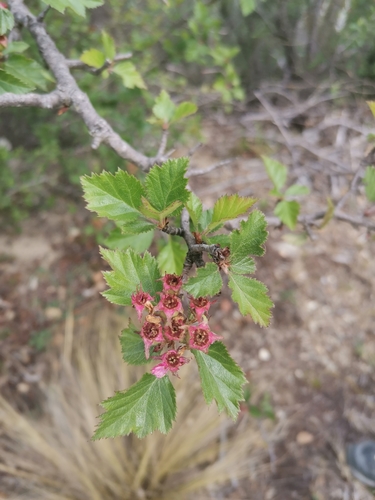
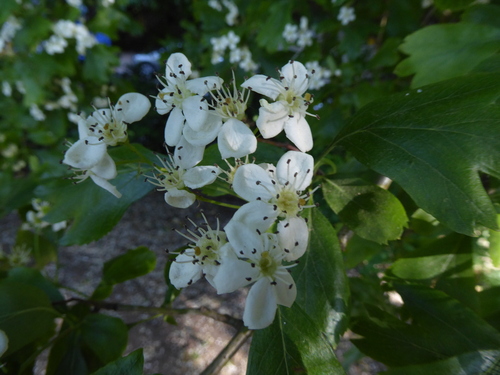
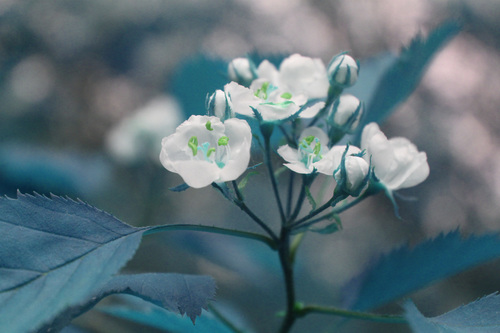
Pacific Serviceberry
gbif· cc-by-nc
Cesar Garcia Olmos
gbif· cc-by-nc
Andrew Simon
gbif· cc-by-nc
Chris McCarron
Description
Amelanchier alnifolia semiintegrifolia is a deciduous Shrub growing to 3 m (9ft 10in) at a slow rate. See above for USDA hardiness. It is hardy to UK zone 2 and is not frost tender. It is in flower in May, and the seeds ripen from June to July. The species is hermaphrodite (has both male and female organs) and is pollinated by Bees. The plant is self-fertile. Suitable for: light (sandy), medium (loamy) and heavy (clay) soils and can grow in heavy clay soil. Suitable pH: mildly acid and neutral soils. It can grow in semi-shade (light woodland) or no shade. It prefers moist soil.
Edible Uses
Edible fruit - raw or cooked. A sweet and succulent fruit, it is soft and juicy with a few small seeds in the centre and has a hint of apple in the flavour. A very acceptable fruit that can be eaten in quantity, it matures about 2 - 3 weeks later than most other members of the genus. Formerly an important food for the N. American Indians, it can also be dried and used as a raisin substitute. It is up to 13mm in diameter. The fruit is rich in iron and copper.
Medicinal Uses
Ophthalmic VDAn infusion of the inner bark is used as a treatment for snow-blindness. A compound concoction of the plant has been used in the treatment of gonorrhoea.
Distribution
Western. N. America.
Where It Grows
Coming Soon
Cultivation
Prefers a rich loamy soil in a sunny position or semi-shade but thrives in any soil that is not too dry or water-logged. Grows well in heavy clay soils. Plants are hardy to about -35°c. All members of this genus have edible fruits and, whilst this is dry and uninteresting in some species, in many others it is sweet and juicy. Many of the species have potential for use in the garden as edible ornamentals. This species is particularly interesting because it is quite compact and produces an excellent quality quite large fruit. The main draw-back to this genus is that birds adore the fruit and will often completely strip a tree before it is fully ripe. This species loses its leaves early in the autumn, especially in dry years. Closely related to, and included as a sub-species of A. alnifolia by most botanists. Hybridizes freely with other members of this genus. Grafting onto seedlings of A. lamarckii or Sorbus aucuparia is sometimes practised in order to avoid the potential problem of hybridizing.
Propagation
Seed - it is best harvested 'green', when the seed is fully formed but before the seed coat has hardened, and then sown immediately in pots outdoors or in a cold frame. If stored seed is obtained early enough in the autumn, it can be given 4 weeks warm stratification before being left out in the winter and it should then germinate in the spring. Otherwise seed can be very slow to germinate, perhaps taking 18 months or more. When large enough to handle, prick the seedlings out into individual pots and grow them on in a sheltered outdoor position, planting them out once they are 20cm or more tall. If there is sufficient seed it is best to sow it thinly in an outdoor seedbed. Grow the seedlings on for two years in the seedbed before planting them out into their permanent positions during the winter. Layering in spring - takes 18 months. Division of suckers in late winter. The suckers need to have been growing for 2 years before you dig them up, otherwise they will not have formed roots. They can be planted out straight into their permanent positions if required.
Other Uses
Wood. Wood - tough, hard, heavy, close grained.