Roystonea borinquena
O. F. Cook
Puerto Rican royal palm
iNaturalist· cc-by-sa
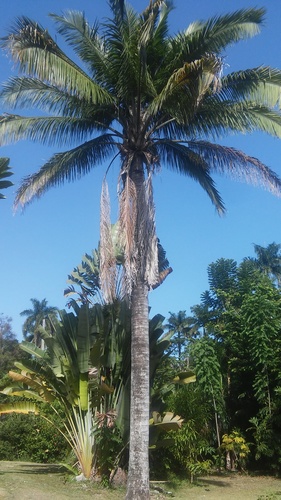
(c) Oscar Marín, some rights reserved (CC BY-SA), uploaded by Oscar Marín
iNaturalist· cc-by-sa
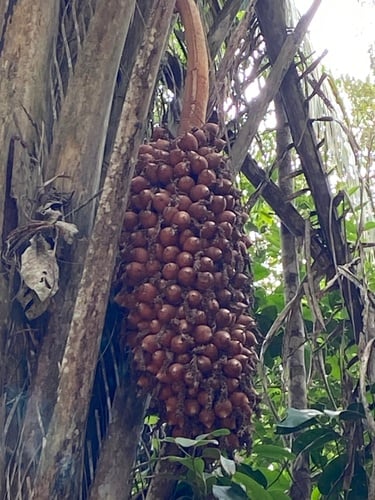
(c) Oscar Marín, some rights reserved (CC BY-SA), uploaded by Oscar Marín
iNaturalist· cc-by-nc
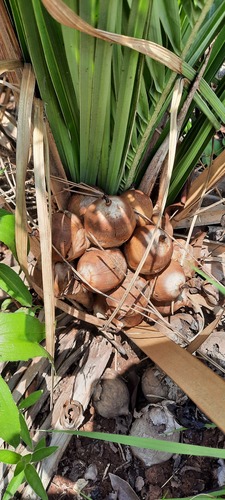
(c) Jenn Megyesi, some rights reserved (CC BY-NC), uploaded by Jenn Megyesi
Summary
Source: WikipediaRoystonea borinquena, commonly called the Puerto Rico royal palm (palma real puertorriqueña), is a species of palm which is native to Hispaniola (in both the Dominican Republic and Haiti), Puerto Rico and the Virgin Islands.
Description
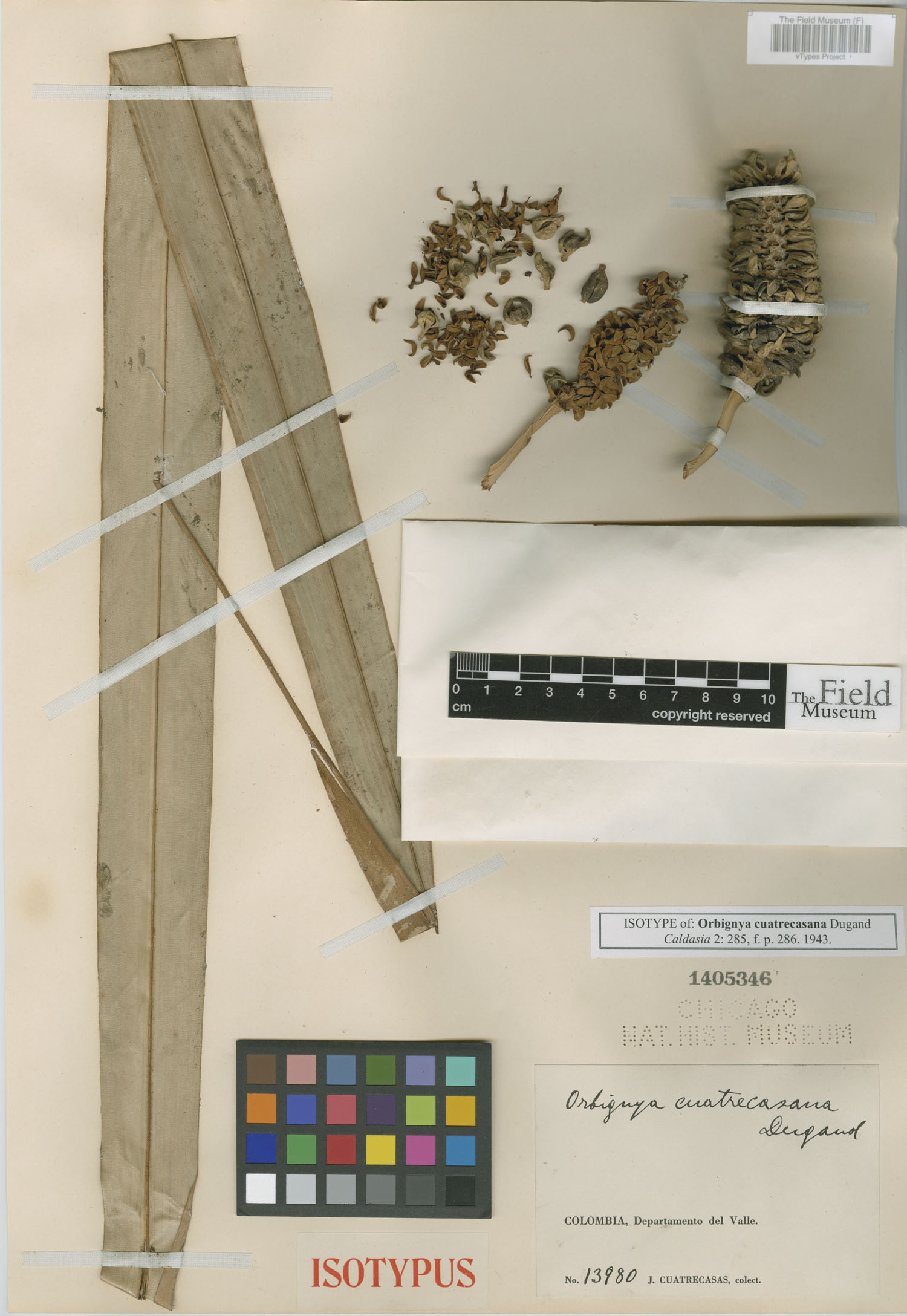
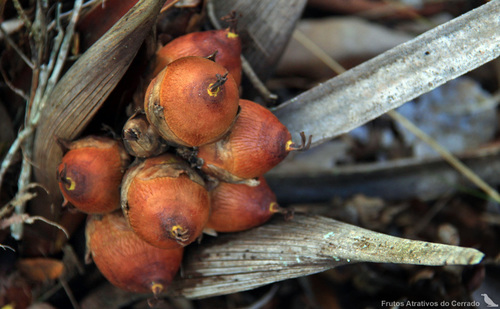
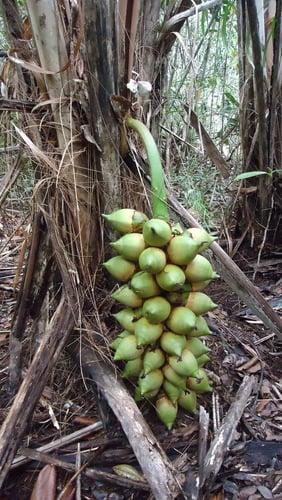
A solitary palm. The trunk is stout and tall. It bulges above the middle. It grows 15 m high. The trunk is 45 cm across. The crown-shaft is long. It is 1.6 m tall. The fronds are feathery. The leaflets are glossy green on the upper surface. The leaflets are arranged in many ranks. The fruiting stalk arises below the crown-shaft. The flowers are of one sex but both sexes occur on the one stalk. The flowers are densely crowded. The fruit are pale brown. Each fruit contains one seed.
Edible Uses
Royal palms are popular ornamental plants due to their striking appearance; Roystonea borinquena is extensively planted as an ornamental in Puerto Rico. Its tolerance of air pollution, its ability to grow in a variety of soil types, and the fact that it roots do not damage sidewalks, increase its utility for landscaping and street planting. Its timber is occasionally used for construction but is susceptible to termite attack. Leaves are used as thatch and the leaf sheaths can be laid flat and used to make the sides of buildings. Trunk bark has historically been used as clapboards called tablas (de palma) or planche (de yagua) for siding in the bohío houses indigenous to Hispaniola and Cuba. The fruit are also fed to pigs and other livestock.
Traditional Uses
Australia, Bahamas, Central America, Dominican Republic, Haiti*, Puerto Rico, US Virgin Islands, West Indies*,
This uses section is brief — help expand it
Distribution
It is a tropical plant. It is cold sensitive. It grows on savannas and cleared areas of limestone hills. It grows from sea level to 850 m altitude in the US Virgin Islands. In the Cairns Botanical Gardens. In Townsville palmetum. It suits hardiness zones 10-11.
Where It Grows
Slopes and valleys of moist, limestone hills. Forests, pastures, and river banks, being found in all but the upper mountains and the dry limestone regions of Puerto Rico.
Cultivation
A native of the moist troipical lowlands, the species regenerates naturally in areas with a mean annual rainfall of 1,250 - 2,500mm of rain; a mean annual temperature of 25°c, and frost free. Grows best in a position in full sun. Prefers a well drained position, preferably on limestone based soils. Mature trees withstand hurricane force winds. The plant is able to withstand a polluted atmosphere, and also to grow well on either moist, well-drained soils or partially compacted fill dirt. A fast-growing tree when young. Plants transplant very easily, even when mature. The roots don't damage sidewalks or kerbs even when the trees are planted in constricted spaces. The plant can flower and produce fruit all year round.
Propagation
Seed is easily germinated, the seedlings can take full sun immediately and are very fast growing.
Other Uses
The leaves can be used as a thatch on barns and houses. The dry leaf sheaths (yaguas) can be spread out flat to make the sides of buildings. The twisted young leaf segments are woven into chair seats and backs. Fresh leaves are widely displayed locally for religious services on Palm Sunday. The stems were once widely used in rural construction. Boards hewn from the harder outer part of the trunks are widely used for siding and flooring in rural construction. However, they are very susceptible to attack by dry-wood termites. An important honey plant, the flowers attract numerous bees.
Production
There are 10 Roystonea species.
Synonyms
Also Known As
Palma real, Palma caruta, Palmis, Palmiste
References (9)
- Bull. Torrey Bot. Club 28:552. 1901
- Cundall, P., (ed.), 2004, Gardening Australia: flora: the gardener's bible. ABC Books. p 1283
- Grandtner, M. M., 2008, World Dictionary of Trees. Wood and Forest Science Department. Laval University, Quebec, Qc Canada. (Internet database http://www.wdt.qc.ca)
- Henderson, A., Galeano, G and Bernal, R., 1995, Field Guide to the Palms of the Americas. Princeton. p 134
- Jones, D.L., 1994, Palms throughout the World. Smithtonian Institution, Washington. p 57, 342
Show all 9 references Hide references
- Kermath, B. M., et al, 2014, Food Plants in the Americas: A survey of the domesticated, cultivated and wild plants used for Human food in North, Central and South America and the Caribbean. On line draft. p 757
- Plants of Haiti Smithsonian Institute http://botany.si.edu
- Riffle, R.L. & Craft, P., 2003, An Encyclopedia of Cultivated Palms. Timber Press. p 442
- Timyan, J., 1996, Bwa Yo: Important Trees of Haiti. SE Consortium for International Development. Washington. p 6