Rorippa indica
(L.) Hiern
iNaturalist· cc0
no rights reserved, uploaded by 葉子
iNaturalist· cc-by-nc
(c) 羅忠良, some rights reserved (CC BY-NC), uploaded by 羅忠良
iNaturalist· cc-by-nc
(c) Shiwalee Samant, some rights reserved (CC BY-NC), uploaded by Shiwalee Samant
Summary
Source: WikipediaA compact perennial growing to 0.3 m tall with year-round flowering and seed ripening. The plant is hermaphroditic and adapts to light sandy, medium loamy, or heavy clay soils across mildly acid to basic pH ranges. It tolerates semi-shade or full sun and prefers consistently moist soil conditions.
Description
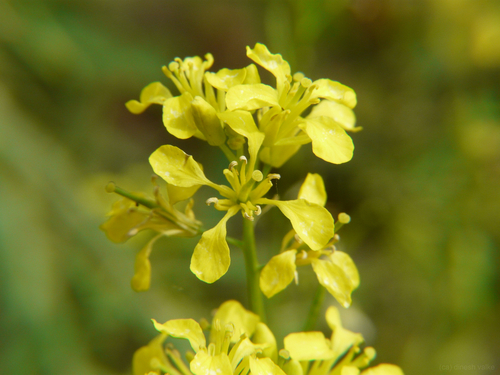
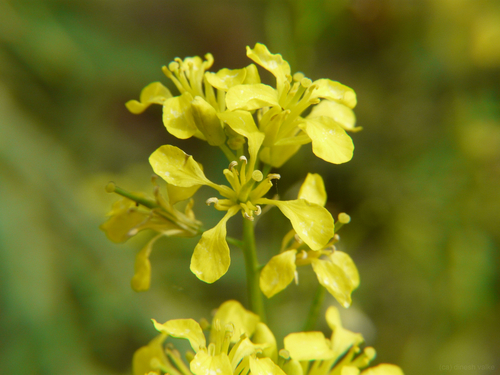
A cabbage family herb. It is an annual plant. It grows to 50 cm high. The leaves near the base are divided into lobes along the stalk. The lobes have teeth. For the leaves on the stem the largest lobe is at the end. The flowers are yellow. They occur in long stalks with many small flowers. The fruit is a pod. It is narrow and like a cylinder.
Edible Uses
Tender young leaves and stems are edible raw or cooked as a vegetable.
Traditional Uses
The tender shoots and leaves are cooked as a vegetable. The harvested leaves can be stored for 4-5 days.
This uses section is brief — help expand it
Medicinal Uses
This species has medicinal uses, though no further information is given.
Distribution
A tropical plant. In the Philippines it grows in Luzon and Bontoc. It grows in roadsides, field margins, gardens, river banks; near sea level to 3200 m altitude in China. In Nepal it grows between 1500-2000 m altitude. It grows in moist places. In Sichuan and Yunnan.
Where It Grows
Africa, Asia, Bangladesh, Cambodia, China, East Africa, Fiji, Himalayas, India, Indochina, Indonesia, Japan, Korea, Laos, Madagascar, Malaysia, Myanmar, Nepal, Northeastern India, Pacific, Pakistan, Papua New Guinea, PNG, Philippines, SE Asia, Sikkim, Taiwan, Thailand, Vietnam, North and South America,
Cultivation
Plants are grown from seed.
Propagation
Propagate by seed.
Other Uses
None known
Other Information
It is a cultivated food plant. Shoots are sold in local markets.
Notes
There are about 70 Rorippa species.
Nutrition
| Part | Moisture | kJ | kcal | Protein | Vit A | Vit C | Iron | Zinc |
|---|---|---|---|---|---|---|---|---|
| Leaves | 88.4 | 84 | 20 | 3.3 | — | 82 | — | — |
Synonyms
Also Known As
Cai-dat an, Gonga mula, Lampaka, Lobak kampung, Lokal, Pahelo jhar, Pauk-thi-bin, Pa ya guo mu, Phunil, Taw-mon-hnyin, Tian ge cai, Tori ghans, Uchi-hangam
References (35)
- Arora, R. K., 2014, Diversity in Underutilized Plant Species - An Asia-Pacific Perspective. Bioversity International. p 42 (As Nasturtium indicum)
- Baro, D., Baruah, S. and Borthukar, S. K. 2015, Documentation on wild vegetables of Baksa district, BTAD (Assam). Scholars Research Library. Archives of Applied Science Research, 2015, 7 (9):19-27
- Bodner, C. C. and Gereau, R. E., 1988, A Contribution to Bontoc Ethnobotany. Economic Botany, 43(2): 307-369
- Burkill, I.H., 1966, A Dictionary of the Economic Products of the Malay Peninsula. Ministry of Agriculture and Cooperatives, Kuala Lumpur, Malaysia. Vol 2 (I-Z) p 1560 (As Nasturtium indicum)
- Cao, Y., et al, 2020, Ethnobotanical study on wild edible plants used by three trans-boundary ethnic groups in Jiangcheng County, Pu’er, Southwest China. Journal of Ethnobiology and Ethnomedicine (2020) 16:66
Show all 35 references Hide references
- Cat. afr. pl. 1:xxvi. 1896
- Chen, B. & Qiu, Z., Consumer's Attitudes towards Edible Wild Plants, Ishikawa Prefecture, Japan. p 24 www.hindawi.com/journals/ijfr/aip/872413.pdf
- Dangol, D. R. et al, 2017, Wild Edible Plants in Nepal. Proceedings of 2nd National Workshop on CUAOGR, 2017.
- Dutta, U., 2012, Wild Vegetables collected by the local communities from the Churang reserve of BTD, Assam. International Journal of Science and Advanced Technology. Vol. 2(4) p 123
- Flora of China @ efloras.org Volume 8
- Foo, J.T.S.(ed), 1996, A Guide to Common Vegetables. Singapore Science Foundation. p 49
- Gautam, R. S., et al, 2022, Ethnobotanical Review of Wild Edible Plants of Nepal. Journal of Natural History Museum Volume 32, 2021-22 p 108
- Hu, Shiu-ying, 2005, Food Plants of China. The Chinese University Press. p 422
- Hwang, H., et al, 2013, A Study on the Flora of 15 Islands in the Western Sea of Jeollanamdo Province, Korea. Journal of Asia-Pacific Biodiversity Vol. 6, No. 2 281-310
- Hwang, HS, et al, 2014, Distribution characteristics of plant in the Ungseokbong Mountain, Gyeongsangnam-do, Korea. Journal of Asia-Pacific Biodiversity. 7(2014) e164-e178
- INFOODSUpdatedFGU-list.xls
- IUCN (2013). Ecological Survey of the Mekong River between Louangphabang and Vientiane Cities, Lao PDR, 2011-2012. Vientiane, Lao PDR: IUCN. 241 pp.
- Jain et al, 2011, Dietary Use and Conservation Concern of Edible Wetland Plants at Indo-Burma Hotspot: A Case Study from Northeast India. Journal of Ethnobiology and Ethnomedicine 7:29 p 7 (As Nasturtium indicum)
- Jardin, C., 1970, List of Foods Used In Africa, FAO Nutrition Information Document Series No 2.p 98
- Joshi, N., et al, 2007, Traditional neglected vegetables of Nepal: Their sustainable utilization for meeting human needs. Tropentag 2007. Conference on International Agricultural Research for Development.
- Kang, Y., et al, 2012, Wild food plants and wild edible fungi in two valleys on the Qinling Mountains (Shaanxi, central China) Journal of Ethnobiology and Ethnomedicine; 9:26
- Kuo, W. H. J., (Ed.) Taiwan's Ethnobotanical Database (1900-2000), http://tk.agron.ntu.edu.tw/ethnobot/DB1.htm
- Li, D. et al, 2017, Ethnobotanical survey of herbal tea plants from the traditional markets in Chaoshan, China. Journal of Ethnopharmacology. 205 (2017) 195-206
- Massal, E. and Barrau, J., 1973, Food Plants of the South Sea Islands. SPC Technical Paper No 94. Nounea, New Caledonia. p 35 (As Nasturtium indicum)
- Mot So Rau Dai an Duoc O Vietnam. Wild edible Vegetables. Ha Noi 1994, p 44
- Ochse, J.J. et al, 1931, Vegetables of the Dutch East Indies. Asher reprint. p 175 (As Nasturtium heterophyllum)
- Patiri, B. & Borah, A., 2007, Wild Edible Plants of Assam. Geethaki Publishers. p 6
- Pawera, L., et al, 2020, Wild Food Plants and Trends in Their Use: From Knowledge and Perceptions to Drivers of Change in West Sumatra, Indonesia, Foods. 2020, 9, 1240
- Pham-Hoang Ho, 1999, An Illustrated Flora of Vietnam. Nha Xuat Ban Tre. p 604
- Plants for a Future database, The Field, Penpol, Lostwithiel, Cornwall, PL22 0NG, UK. http://www.scs.leeds.ac.uk/pfaf/
- READ
- Tanaka, Y. & Van Ke, N., 2007, Edible Wild Plants of Vietnam: The bountiful garden. Orchid books. p 60
- World Checklist of Useful Plant Species 2020. Royal Botanic Gardens, Kew
- Zeven, A. C. & de West, J. M. J., 1982, Dictionary of cultivated plants and their regions of diversity. Wageningen. p 35 (As Nasturtium indicum)
- Zhou Taiyan, Lu Lianli, Yang Guang; Ihsan A. Al-Shehbaz, BRASSICACEAE (CRUCIFERAE), Flora of China.
More from Brassicaceae
Brassica juncea strumata
Large Petiole Mustard
Brassica juncea tsatsai multiceps
Green In The Snow
Brassica juncea tsatsai tumida
Swollen-Stem Mustard
Brassica juncea tumida
Swollen-Stem Mustard
Brassica juncea var. capitata
Capitata mustard
Brassica juncea var. crassicaulis
Bamboo shoot mustard