Lepidium schinzii
Thell.
Pepperwort
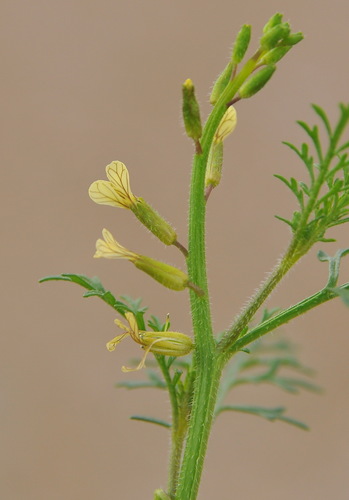
iNaturalist· cc-by-nc
(c) Gigi Laidler, some rights reserved (CC BY-NC), uploaded by Gigi Laidler
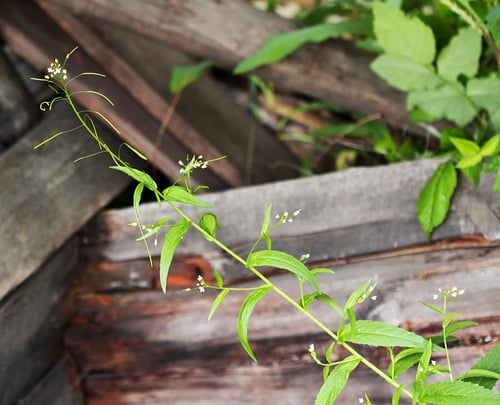
iNaturalist· cc-by-nc
(c) Gigi Laidler, some rights reserved (CC BY-NC)
Description
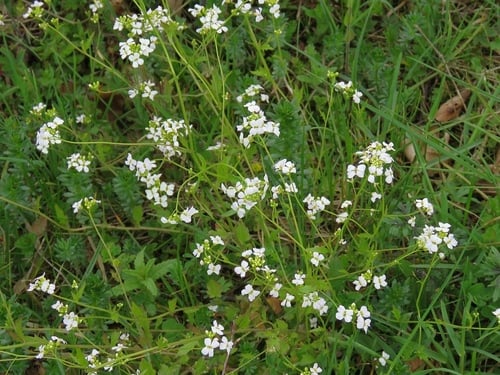
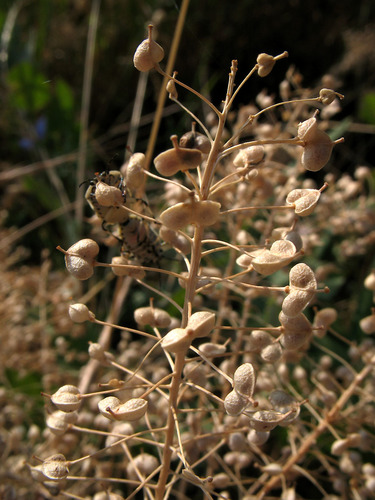
An erect herb. It grows 15-45 cm tall. It grows each year from seed. The branches extend upwards. The stems and branches are densely covered with small cup shaped nipple like structures. The leaves at the base are large and in a ring. They have deep lobes. The leaves on the stems are smaller and can have teeth along the edge. The flowers are in dense clusters at the top of the plant. These are 3-15 cm long. The flowers are small and green with a purple tinge. The fruit is a broad oval capsule. The seeds are small and light brown.
Edible Uses
The leaves are used to flavor other foods and can be dried for later use.
Traditional Uses
The leaves are used to give flavour to other foods. The leaves are also dried for later use.
This uses section is brief — help expand it
Distribution
It is a subtropical plant.
Where It Grows
Africa, Lesotho, South Africa, Southern Africa,