Robinia pseudoacacia
L.
Black Locust, False acacia
iNaturalist· cc-by-nc
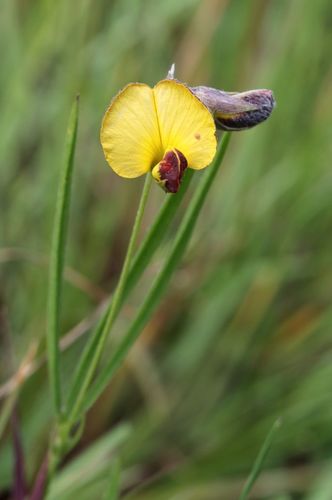
(c) Eric Koberle, some rights reserved (CC BY-NC), uploaded by Eric Koberle
iNaturalist· cc-by-nc
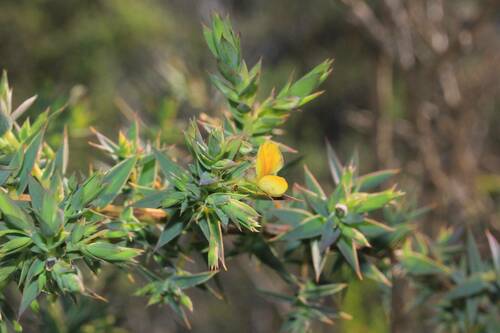
(c) suzieleslie, some rights reserved (CC BY-NC)
iNaturalist· cc-by-nc
(c) suzieleslie, some rights reserved (CC BY-NC)
Summary
Source: WikipediaRobinia pseudoacacia, commonly known as black locust, is a medium-sized hardwood deciduous tree, belonging to the tribe Robinieae of the legume family. Another common name is false acacia, a literal translation of the specific name (pseudo [Greek ψευδο-] meaning fake or false and acacia referring to the genus of plants with the same name). Although fossilized traces of the genus were found in Europe, the species itself is native to a few small areas of the United States, but has been widely planted and naturalized elsewhere, including temperate North America, Eurasia, and Africa. It is considered an invasive species in some regions.
Description
An upright tree. It grows 22-25 m tall and spreads 12-15 m wide. The trunk can be 60 cm across. It loses its leaves during the year. The branches are slightly arching and thorny. The leaves are alternate and compound. The leaves are dark green with up to 19 small oval leaflets. The leaflets are 30-50 mm long. The central stalk is 20-30 cm long. There are 2 spines at the base of each leaf. The leaves turn yellow in autumn. The flowers are creamy white and have a scent. They are pea like. They occur in drooping clusters about 14 cm long. These are in the axils of leaves near the tips of branches. The fruit are pods 7-10 cm long and flat. These are thin walled, smooth and dark reddish-brown. There are several pods on a central stalk. The seeds are dark and bean like and 3-5 mm long. There are 4-8 per pod.
Edible Uses
Seeds are oily, edible when cooked, and are boiled and used like peas — boiling removes their acid taste. Each seed is about 4mm long and is borne in pods up to 10cm long containing 4–8 seeds. Per 100g dry weight, the seed provides 21g protein, 3g fat, 28g fibre, and 6.8g ash, with 1400mg calcium and 0.3mg phosphorus. Young seedpods contain a sweetish pulp that is safe to eat and enjoyed by small children, though this report may be confused with honey locust (Gleditsia spp.). A strong, narcotic and intoxicating drink is made from the skin of the fruit. Piperonal, used as a vanilla substitute, is extracted from the plant. The flowers are fragrant and can be cooked and used in making jams and pancakes, or made into a pleasant drink. All edible uses should be treated with caution given the plant's known toxicity.
Traditional Uses
The flowers are sweet and edible. They are dipped in butter and fried. They are used to make a sweet tea. The leaves are used fresh or dried for tea. The flowers yield an oil used in flavouring. The young pods are cooked as a vegetable. The seeds are boiled and eaten.
Medicinal Uses
The flowers are antispasmodic, aromatic, diuretic, emollient, and laxative, and are cooked and eaten to treat eye ailments. The flower is reported to contain the antitumor compound benzoaldehyde. The inner bark and root bark are emetic, purgative, and tonic; the root bark has been chewed to induce vomiting or held in the mouth to relieve toothache, though it is rarely prescribed therapeutically in Britain. The fruit is narcotic, likely referring to the seedpod. The leaves are cholagogue and emetic, and leaf juice has been shown to inhibit viruses.
Known Hazards
The bark, leaves, and wood are toxic to both humans and livestock. Important constituents of the plant are the toxalbumin robin, which loses its toxicity when heated, and robinin, a nontoxic glucoside. Horses that consume the plant show signs of anorexia, depression, incontinence, colic, weakness, and cardiac arrhythmia. Symptoms usually occur about 1 hour following consumption, and immediate veterinary attention is required. The sawdust and shavings from Robinia lumber can cause contact dermatitis in sensitive persons.
Distribution
It is a temperate plant. It is native to S.E. United States. It grows in well drained temperate woodlands. It is frost hardy. It thrives on limestone soils. It can grow in alkaline soils. It cannot tolerate shade. It grows in areas with an annual rainfall between 510-1,400 mm. It can grow in arid places. It suits hardiness zones 3-10. Mt Cootha Botanical Gardens. Hobart Botanical Gardens. In Sichuan. In Yunnan. Arboretum Tasmania.
Where It Grows
Afghanistan, Africa, Albania, Argentina, Asia, Australia, Austria, Balkans, Belarus, Belgium, Bosnia, Britain, Bulgaria, Canada, Caucasus, Central America, Central Asia, Chile, China, Cypress, Czech Republic, East Africa, Easter Island, Eswatini, Europe, France, Georgia, Germany, Greece, Hungary, India, Iran, Iraq, Israel, Italy, Japan, Jordan, Korea, Lithuania, Macedonia, Mediterranean, Mexico, Middle East, Mongolia, Morocco, Myanmar, Netherlands, New Zealand, North Africa, North America*, Pakistan, Poland, Portugal, Reunion, Romania, SE Asia, Serbia, Slovakia, Slovenia, South Africa, Southern Africa, Spain, Swaziland, Switzerland, Taiwan, Tajikistan, Tasmania, Turkey, Türkiye, Ukraine,USA*, Yugoslavia, Zimbabwe,
Cultivation
Succeeds in any well-drained soil, preferring one that is not too rich. Succeeds in dry barren sites, tolerating drought and atmospheric pollution. Succeeds in a hot dry position. The plant is reported to tolerate an annual precipitation in the range of 61 to 191cm, an annual temperature in the range of 7.6 to 20.3°C and a pH of 6.0 to 7.0. A fast-growing tree for the first 30 years of its life, it can begin to flower when only 6 years old, though 10 - 12 years is more normal. The flowers are a rich source of nectar and are very fragrant with a vanilla-like scent. The branches are brittle and very liable to wind damage. When plants are grown in rich soils they produce coarse and rank growth which is even more liable to wind damage. The plants sucker freely and often form dense thickets, the suckers have vicious thorns. There are some named varieties selected for their ornamental value, some of these are thornless. Any pruning should be done in late summer in order to reduce the risk of bleeding. The leaves are rich in tannin and other substances which inhibit the growth of other plants. A very greedy tree, tending to impoverish the soil. (Although a legume, I believe it does not fix atmospheric nitrogen) A very good bee plant. This species is notably resistant to honey fungus. A sprouting standard sending up shoots from the base.
Propagation
Pre-soak seed for 48 hours in warm water, then sow in late winter in a cold frame. A short stratification improves both germination rates and speed. Prick seedlings into individual pots when large enough to handle and grow on in the greenhouse through their first winter, then plant out the following summer. Alternatively, seed can be sown in an outdoor seedbed in spring. Seed remains viable for over 10 years. Suckers can also be taken during the dormant season.
Other Uses
Widely planted for shelterbelts and windbreaks, and used to produce woody biomass for energy. It suckers freely, especially when coppiced, making it effective for stabilizing banks. Its extensive root system holds and stabilizes soil, it sprouts vigorously, fixes nitrogen, and produces leaf litter that protects the soil surface. Main uses include rehabilitation of surface mine sites and erosion control, but it is also applied to contaminated soils, depleted soils, gravel pits, logged areas, railroad embankments, and highway edges. Leaves are rich in tannin and contain substances that inhibit the growth of other plants. Flowers are a rich nectar source, and honey from this plant is considered high quality and commands a price premium. A drying oil is obtained from the seed. An essential oil extracted from the flowers is highly valued in perfumery. A yellow dye is obtained from the bark; robinetin yields brown-orange shades on cotton with an aluminum mordant, and similar shades to fisetin, quercetin, and myricetin with other mordants. Bark tannin content is 7.2% and heartwood of young trees contains 5.7% tannin on a 10% moisture basis, insufficient for commercial utilization. The bark can be used to make paper and as a substitute for silk and wool. The wood is close-grained, exceedingly hard, heavy, very strong due to high lignin content, resistant to shock, and very durable in contact with soil, weighing 45lb per cubic foot with minimal shrinkage on drying. Used in shipbuilding and for fence posts, tree nails, flooring, furniture, and woodenware. The variety rectissima, known as 'Long Island' or 'Shipmast' locust, has greater resistance to decay and wood borers, outlasting other locust posts and stakes by 50–100%. The wood makes excellent fuel but should be used with caution as it flares up and projects sparks. It is also used to make charcoal. The plant acts as a dynamic accumulator, gathering minerals and nutrients from the soil and storing them in a more bioavailable form for use as fertilizer or mulch amendment.
Production
Some seeds are produced every year with abundant crops every 2-3 years. Trees live for 90 years.
Other Information
The flowers are eaten especially by children.
Notes
There are about 20 Robinia species. Chemical composition (dry): Protein = 19.39%; (wet) = 16.97%. It can be invasive.
Nutrition
| Part | Moisture | kJ | kcal | Protein | Vit A | Vit C | Iron | Zinc |
|---|---|---|---|---|---|---|---|---|
| Fruit | — | — | 19.3 | — | — | — | — | — |
Synonyms
Also Known As
Acacia blanca, Acacio, Agacsi, Agaggio, Akac, Akacja, Ak'atsia, Akkasinamu, Bagrem, Bel bagrem, Biely agat, Cagg', False-Acacia, Huai Tzu, Huaihua, Robinia, Witakasia, Yalanci akasya, Yanghuai
References (76)
- Abbet, C., et al, 2014, Ethnobotanical survey on wild alpine food plants in Lower and Central Valais (Switzerland). Journal of Ethnopharmacology 151 (2014) 624–634
- Ambasta S.P. (Ed.), 2000, The Useful Plants of India. CSIR India. p 527
- Beckstrom-Sternberg, Stephen M., and James A. Duke. "The Foodplant Database." http://probe.nalusda.gov:8300/cgi-bin/browse/foodplantdb.(ACEDB version 4.0 - data version July 1994)
- Benvenuti, S. & Mazzoncini, M., 2021, The Biodiversity of Edible Flowers: Discovering New Tastes and New Health Benefits. Frontiers in Plant Science Article 569499.
- Biscotti, N. et al, 2018, The traditional food use of wild vegetables in Apulia (Italy) in the light of Italian ethnobotanical literature. Italian Botanist 5:1-24
Show all 76 references Hide references
- Blamey, M and Grey-Wilson, C., 2005, Wild flowers of the Mediterranean. A & C Black London. p 85
- Bodkin, F., 1991, Encyclopedia Botanica. Cornstalk publishing, p 886
- Bremness, L., 1994, Herbs. Collins Eyewitness Handbooks. Harper Collins. p 81
- Brickell, C. (Ed.), 1999, The Royal Horticultural Society A-Z Encyclopedia of Garden Plants. Convent Garden Books. p 885
- Bussman, R. W., et al, 2021, Unity in diversity—food plants and fungi of Sakartvelo (Republic of Georgia), Caucasus. Journal of Ethnobiology and Ethnomedicine (2021) 17:72 p 9
- Cerne, M., 1992, Wild Plants from Slovenia used as Vegetables. Acta Horticulturae 318
- Chen, B. & Qiu, Z., Consumer's Attitudes towards Edible Wild Plants, Ishikawa Prefecture, Japan. p 24 www.hindawi.com/journals/ijfr/aip/872413.pdf
- Coombes, A.J., 2000, Trees. Dorling Kindersley Handbooks. p 199
- Cordero, S. E., Abello, L. A., & Galvez, F. L., 2017, Plantas silvestres comestibles y medicinales de Chile y otras partes del mundo. CORMA p 113
- Cundall, P., (ed.), 2004, Gardening Australia: flora: the gardener's bible. ABC Books. p 1209
- Denes, A., et al, 2012, Wild plants used for food by Hungarian ethnic groups living in the Carpathian Basin. Acta Societatis Botanicorum Poloniae 81 (4): 381-396
- EMBREY & WANG,
- Ertug, F, Yenen Bitkiler. Resimli Türkiye Florası -I- Flora of Turkey - Ethnobotany supplement
- Facciola, S., 1998, Cornucopia 2: a Source Book of Edible Plants. Kampong Publications, p 110
- Farrar, J.L., 1995, Trees of the Northern United States and Canada. Iowa State University press/Ames p 216
- Gonzalez, J. A., et al, 2011, The consumption of wild and semi-domesticated edible plants in the Arribes del Duero (Salamanca-Zamora, Spain): an analysis of traditional knowledge. Genetic. Resour Crop Evolution 58:991-1006
- Grandtner, M. M., 2008, World Dictionary of Trees. Wood and Forest Science Department. Laval University, Quebec, Qc Canada. (Internet database http://www.wdt.qc.ca)
- Hall, N. et al, 1972, The Use of Trees and Shrubs in the Dry Country of Australia, AGPS, Canberra. p 394
- Harris, E & J., 1983, Field Guide to the Trees and Shrubs of Britain. Reader's Digest. p 174
- Hedrick, U.P., 1919, (Ed.), Sturtevant's edible plants of the world. p 572
- Hibbert, M., 2002, The Aussie Plant Finder 2002, Florilegium. p 252
- http://www.botanic-gardens-ljubljana.com/en/plants
- Hu, Shiu-ying, 2005, Food Plants of China. The Chinese University Press. p 483
- Hussey, B.M.J., Keighery, G.J., Cousens, R.D., Dodd, J., Lloyd, S.G., 1997, Western Weeds. A guide to the weeds of Western Australia. Plant Protection Society of Western Australia. p 156
- ILDIS Legumes of the World http:www:ildis.org/Legume/Web
- Jackes, D. A., 2007, Edible Forest Gardens
- Janaćković, P. et al, 2019, Traditional knowledge on plant use from Negotin Krajina (Eastern Serbia): An ethnobotanical study. Indian Journal of Traditional Knowledge Vol 18 (1), pp 25-33
- Jia, X., et al, 2022, Ethnobotany of wild edible plants in multiethnic areas of the Gansu–Ningxia–Inner Mongolia junction zone. Journal of Ethnobiology and Ethnomedicine 18:53
- Joyce, D., 1998, The Garden Plant Selector. Ryland, Peters and Small. p 118
- Kang, Y., et al, 2012, Wild food plants and wild edible fungi in two valleys on the Qinling Mountains (Shaanxi, central China) Journal of Ethnobiology and Ethnomedicine; 9:26
- Kermath, B. M., et al, 2014, Food Plants in the Americas: A survey of the domesticated, cultivated and wild plants used for Human food in North, Central and South America and the Caribbean. On line draft. p 750
- Kim, H. & Song, M., 2013, Ethnobotanical ananalysis for traditional knowledge of wild edible plants in North Jeolla Province (Korea). Genetic. Resour. Crop Evol. (2013) 60:1571-1585
- Kiple, K.F. & Ornelas, K.C., (eds), 2000, The Cambridge World History of Food. CUP p 1803
- Lazarides, M. & Hince, B., 1993, Handbook of Economic Plants of Australia, CSIRO. p 206
- Liu, Yi-tao, & Long, Chun-Lin, 2002, Studies on Edible Flowers Consumed by Ethnic Groups in Yunnan. Acta Botanica Yunnanica. 24(1):41-56
- Little, E.L., 1980, National Audubon Society Field Guide to North American Trees. Alfred A. Knopf. p 526
- Lord, E.E., & Willis, J.H., 1999, Shrubs and Trees for Australian gardens. Lothian. p 71
- Loughmiller, C & L., 1985, Texas Wildflowers. A Field Guide. University of Texas, Austin. p 136
- Luczaj, L., 2012, Ethnobotanical review of wild edible plants of Slovakia. Acta Societatis Botanicorum Poloniae 81(4):245-255
- Luczaj, L. et al, 2013, Wild edible plants of Belarus: from Rostakinski's questionnaire of 1883 to the present. Journal of Ethnobiology and Ethnomedicine 9:21
- Luczaj, L., et al, 2015, Wild food plants and fungi used by Ukrainians in the western part of the Maramureş region in Romania. Acta Soc Bot Pol 84(3):339–346
- Luczaj, L. et al, 2017, Comfrey and Buttercup Eaters: Wild Vegetables of the Imereti Region in Western Georgia, Caucasus. Economic Botany, 71(2), 2017, pp. 188–193
- Marinelli, J. (Ed), 2004, Plant. DK. p 467
- Mattalia, G., et al, 2012, Traditional uses of wild food and medicinal plants among Brigasc, Kye ́, and Provenc ̧al communities on the Western Italian Alps. Genet Resour Crop Evol. Springer
- Menendez-Baceta, G., et al, 2012, Wild edible plants traditionally gathered in Gorbeialdea (Biscay, Basque Country) Genetic Resources and Crop Evolution 59:1329-1347
- Miskoska-Milevska, E. et al, 2020, Traditional uses of wild edible plants in the Republic of North Macedonia. PHYTOLOGIA BALCANICA 26(1): 155–162, Sofia, 2020 p 158
- Moerman, D. F., 2010, Native American Ethnobotany. Timber Press. p 481
- Molares, S. & Ladio, A., 2012, The Usefulness of Edible and Medicinal Fabaceae in Argentine and Chilean Patagonia: Environmental Availability and Other Sources of Supply. Evidence-Based Complementary and Alternative Medicine. Volume 2012, Article ID 901918, 12 pages, Hindawi Publishing Corporation.
- Paczkowska, G . & Chapman, A.R., 2000, The Western Australian Flora. A Descriptive Calatogue. Western Australian Herbarium. p 445
- Palmieri, V. S., et al, 2022, Wild edible plants of the Central Mountains in Argentina. Comparing subregions to understand the complexity of local botanical knowledge. Rodriguésia 73: e01092021. 2022
- Pieroni, A., 1999, Gathered wild food plants in the Upper Valley of the Serchio River (Garfagnana), Central Italy. Economic Botany 53(3) pp 327-341
- Pieroni, A., et al, 2012, "We are Italians!": The Hybrid Ethnobotany of a Venetian Diaspora in Eastern Romania. Human Ecology 40:435-451
- Pieroni, A. & Soukand, R., 2018, Forest as Stronghold of Local Ecological Practice: Currently Used Wild Food Plants in Polesia, Northern Ukraine. Economic Botany, XX(X) pp. 1-21
- Plants for a Future database, The Field, Penpol, Lostwithiel, Cornwall, PL22 0NG, UK. http://www.scs.leeds.ac.uk/pfaf/
- Prakofjewa, J., et al, 2023, Boundaries Are Blurred: Wild Food Plant Knowledge Circulation across the Polish-Lithuanian-Belarusian Borderland. Biology 2023, 12, 571.
- Redzic, S. J., 2006, Wild Edible Plants and their Traditional Use in the Human Nutrition in Bosnia-Herzegovina. Ecology of Food and Nutrition, 45:189-232
- Redzic, S., 2010, Use of Wild and Semi-Wild Edible Plants in Nutrition and Survival of People in 1430 Days of Siege of Sarajevo during the War in Bosnia and Herzegovina (1992–1995). Coll. Antropol 34 (2010) 2:551-570
- Royal Botanic Gardens, Kew (1999). Survey of Economic Plants for Arid and Semi-Arid Lands (SEPASAL) database. Published on the Internet; http://www.rbgkew.org.uk/ceb/sepasal/internet [Accessed 29th April 2011]
- Sansanelli, S., et al, 2014, Wild food plants traditionall consumed in the area of Bologna (Emilia Romagna region, Italy). Journal of Ethnobiology and Ethnomedicine 10:69
- Sansanelli, S., et al, 2017, Ethnobotanical survey of wild food plants traditionally collected and consumed in the Middle Agri Valley (Basilicata region, southern Italy). Journal of Ethnobiology and Ethnomedicine (2017) 13:50
- Simkova, K. et al, 2014, Ethnobotanical review of wild edible plants used in the Czech Republic. Journal of Applied Botany and Food Quality 88, 49-67
- Sp. pl. 2:722. 1753
- Swaziland's Flora Database http://www.sntc.org.sz/flora
- Tardio, J., et al, Ethnobotanical review of wild edible plants in Spain. Botanical J. Linnean Soc. 152 (2006), 27-71
- Valder, P., 1999, The Garden Plants of China. Florilegium. p 326
- van Wyk, B, van Wyk, P, and van Wyk B., 2000, Photographic guide to Trees of Southern Africa. Briza. p 264
- Van Wyk, Br. and van Wyk P., 2009, Field Guide to Trees of Southern Africa. Struik Nature. p 472
- Wang, J. et al, 2013, A Study on the Utilization of Wild Plants for Food in Liangshan Yi Autonomous Prefecture. Plant Diversity and Resources. 35(4): 416-471
- World Checklist of Useful Plant Species 2020. Royal Botanic Gardens, Kew
- www.desert-tropicals.com
- Zizka, G., 1991, Flowering Plants of Easter Island. Palmarum Hortus Francofurtensis