Acacia robusta subsp. clavigera
Burchell, (E. Meyer) Brenan
Sickle-pod splendid acacia
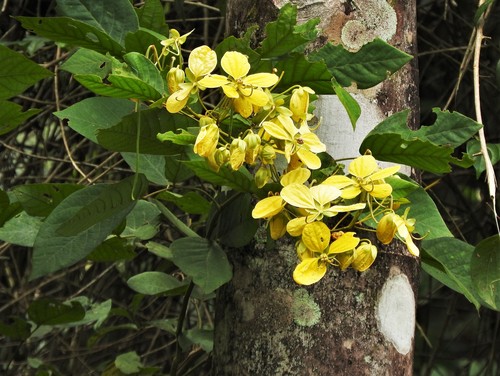
iNaturalist· cc-by-nc-sa
(c) David Hoare, some rights reserved (CC BY-NC-SA)
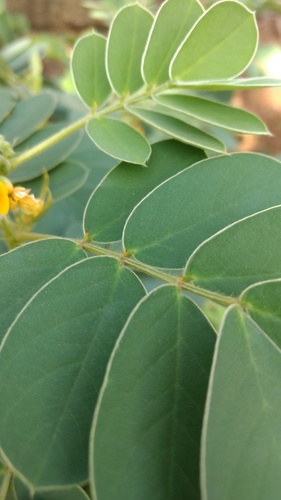
iNaturalist· cc-by-nc-sa
(c) David Hoare, some rights reserved (CC BY-NC-SA)
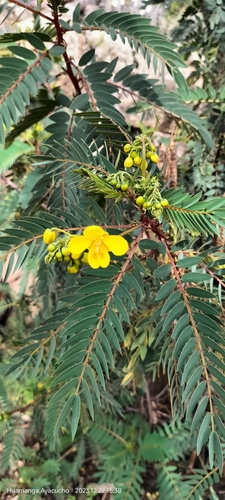
iNaturalist· cc-by-nc-sa
(c) David Hoare, some rights reserved (CC BY-NC-SA)
Description
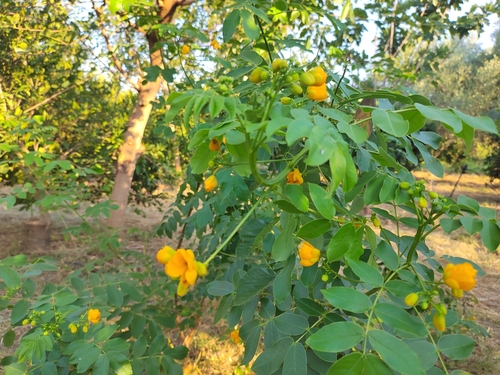
A shrub or small tree. It grows 5 m tall. There are prickles along the stem. The leaves are twice divided and there are 8-18 pairs of pinnae. There are up to 50 pairs of pinnules on each pinnae. The flowers are yellow. They are in large clusters at the ends of branches. The pods are flattened.
Edible Uses
The gum of this plant is edible.
Distribution
It is a tropical and subtropical plant. It can tolerate frost. It grows on alluvial soils. It grows between 15-915 m above sea level. It can grow in arid places.
Where It Grows
Africa, Angola, Asia, Botswana, Central Africa, East Africa, Eswatini, Indonesia, Malawi, Mozambique, Namibia, SE Asia, South Africa, Southern Africa, Swaziland, Zambia, Zimbabwe,
Cultivation
Plants can be grown from seeds. They germinate easily. They can be put into boiling water and allowed to cool to improve germination. Seedlings germinate in 6-10 days.
Production
It grows quickly.
Notes
There are about 1,350 Acacia species. Over 1,000 occur in Australia. Also as Mimosaceae.
Synonyms
Also Known As
Micaia, Mungua, Narrow-pod robust thorn, N'gololo, Umgamanzi, Umhlabunga
References (6)
- Grivetti, 1976, 1979,
- ILDIS Legumes of the World http:www;ildis.org/Legume/Web
- Peters, C. R., O'Brien, E. M., and Drummond, R.B., 1992, Edible Wild plants of Sub-saharan Africa. Kew. p 127
- Royal Botanic Gardens, Kew (1999). Survey of Economic Plants for Arid and Semi-Arid Lands (SEPASAL) database. Published on the Internet; http://www.rbgkew.org.uk/ceb/sepasal/internet [Accessed 27th April 2011]
- Sukarya, D. G., (Ed.) 2013, 3,500 Plant Species of the Botanic Gardens of Indonesia. LIPI p 101
Show all 6 references Hide references
- www.zimbabweflora.co.zw 2011