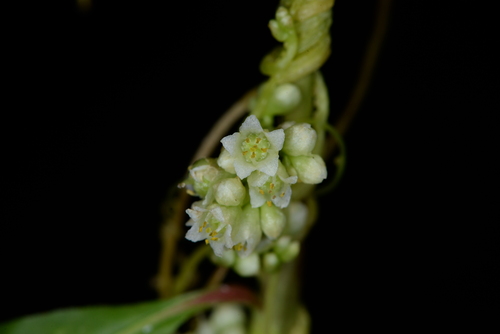
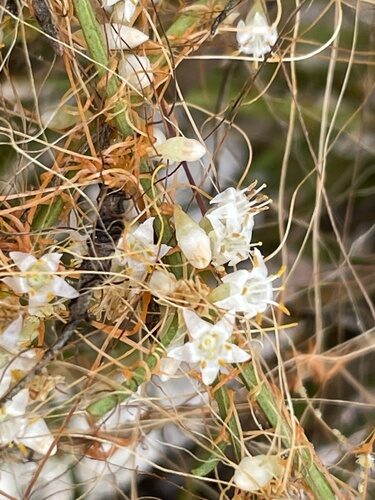
Rivea hypocrateriformis
(Desr.) Choisy
Midnapore creeper, Clove scented creeper
iNaturalist· cc-by-nc
(c) Rujuta Vinod, some rights reserved (CC BY-NC), uploaded by Rujuta Vinod
iNaturalist· cc-by
(c) Aravinth, some rights reserved (CC BY), uploaded by Aravinth
iNaturalist· cc-by
(c) Aravinth, some rights reserved (CC BY), uploaded by Aravinth
Description
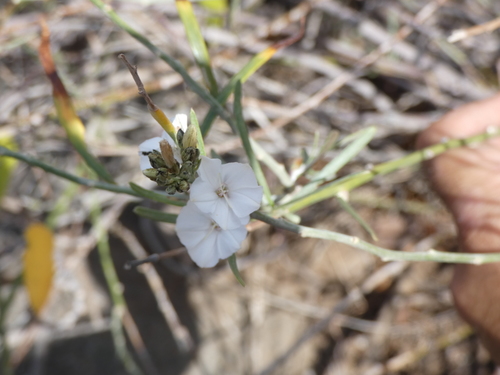
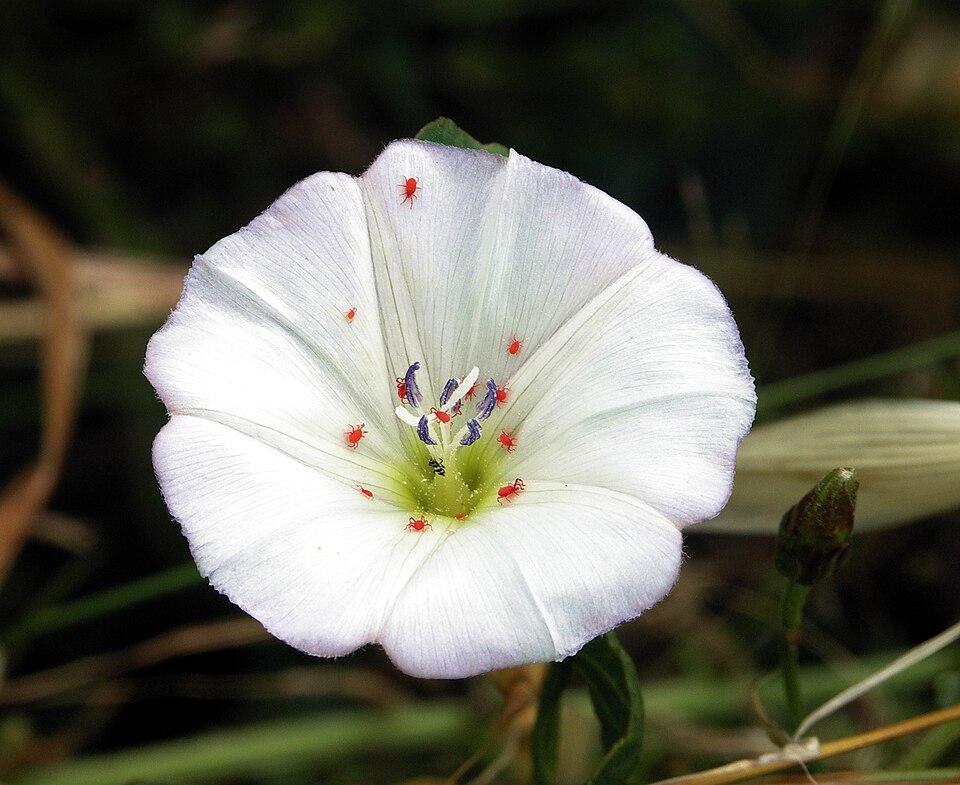
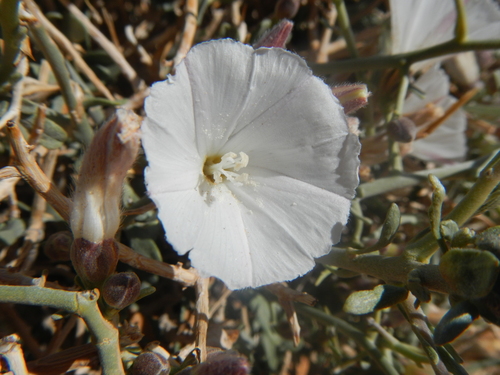
A climber. It is twining. The stem have silky hairs. The leaves are 3-4 cm long by 3-6 cm wide. They are heart shaped. The leaf stalks are 6 cm long. The flowers can occur singly or in groups in the axils of leaves. They are white and 7 cm across. The fruit is a cone shaped capsule. It is 1.5 cm long by 1 cm wide. There are about 4 seeds.
Edible Uses
Young leaves and shoots are eaten as a vegetable, typically boiled with chili peppers or salt for flavour. The fruit and flowers are also eaten cooked.
Traditional Uses
The young leaves and shoots are eaten as a vegetable. They are boiled with chili peppers or salt to add flavour. The fruit are eaten cooked.
This uses section is brief — help expand it
Medicinal Uses
One of the main uses of this plant in Ayurvedic medicine is as a contraceptive. When taken in the very early stages, it can prevent implantation of the foetus and is known to completely interrupt early pregnancy and influence the estrous cycle. The plant is also reported for its ethnomedicinal uses in treating cough, headache, skin disease, malaria etc, as well as treating exteranal conditions such as burns, piles and to relieve pain The roots are given to a woman after parturition. An ethanolic extract of the leaf juice is used to treat rheumatic pain and hair scalp skin diseases. A methanol extraction of the root has shown good antimicrobial activity .
Distribution
It is a subtropical plant. It grows along the edges of fields and roadsides. It grows in dry evergreen and deciduous forests. It grows up to 900 m above sea level.
Where It Grows
Asia, Himalayas, India, Nepal, Northeastern India, Pakistan, Sri Lanka,
Cultivation
Grows in the wild in moist, gravelly-loamy soils.
Production
In India the fruit are available August to November.
Notes
There are 3 Rivea species.
Synonyms
Also Known As
Boddikura, Boodhikeerai, Budthi kiray, Common night glory, Fang, Guwal-kakri, Harlu ara ba, Kalmilata, Kulni luta, Masti-ganto, Matli, Musetai kodi, Mustae, Mustai, Niru boddi, Phaangi, Phandi, Phang, Phanji, Sanjvel, Thor-ki-bel
References (20)
- Ambasta S.P. (Ed.), 2000, The Useful Plants of India. CSIR India. p 527
- Arora, R. K., 2014, Diversity in Underutilized Plant Species - An Asia-Pacific Perspective. Bioversity International. p 45
- Ferns, Useful Tropical Plants
- GAMMIE,
- GUPTA & KANODIA,
Show all 20 references Hide references
- Kannan, M., et al, 2015, Ethnobotanical survey on wild edible plants of Kalrayan Hills, Salem District, Tamil Nadu, India. Global J. Res. Med Plants & Indigen. med. 4(12): 236-246
- Kiran, K. C., et al, 2019, Diversity and Seasonal Availability of Potential Wild Edible Plants from Vidarbha Region of Maharashtra State, India. Int.J.Curr.Microbiol.App.Sci (2019) 8(2): 1434-1446
- Kuvar, S. D. & Shinde, R. D., 2019, Wild Edible Plants used by Kokni Tribe of Nasik District, Maharashtra. Journal of Global Biosciences. Volume 8, Number 2, 2019, pp. 5936-5945
- Prabha, Y. P., et al, 2010, Documentation of Wild Edible Plants of Melghat Forest, Dist. Amravati, Maharashtra State, India. Ethnobotanical Leaflets 14: 751-58, 2010.
- Rahangdale, D.R. & Rahangdale, S.S., 2014, Potential Wild Edible Plant Resources from Maharashtra Future Prospects for their Conservation and Improvement. Life Science Leaflets. http://lifesciencesleaflets.ning.com
- Rajkalkshmi, P. et al, 2001, Total carotenoid and beta-carotene contents of forest green leafy vegetables consumed by tribals of south India. Plant Foods for Human Nutrition 56:225-238
- Rasingam, L., 2012, Ethnobotanical studies on the wild edible plants of Irula tribes of Pillur Valley, Coimbatore district, Tamil Nadu, India. Asian Pacific Journal of Tropical Biomedicine. (2012) S1493-S1497
- Sasi, R. & Rajendran, A., 2012, Diversity of Wild Fruits in Nilgiri Hills of the Southern Western Ghats - Ethnobotanical Aspects. IJABPT, 3(1) p 82-87
- SHANKARNARAYAN,
- SHORTT,
- Singh, H.B., Arora R.K.,1978, Wild edible Plants of India. Indian Council of Agricultural Research, New Delhi. p 34
- Singh, V. and Singh, P., 1981, Edible Wild Plants of Eastern Rajasthan. J. Econ. Tax. Bot. Vol 2 pp 197-207
- Singh, V. B., et al, (Ed.) Horticulture for Sustainable Income and Environmental Protection. Vol. 1 p 219
- WATT,
- World Checklist of Useful Plant Species 2020. Royal Botanic Gardens, Kew