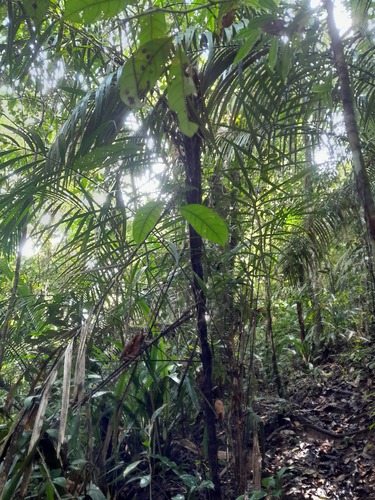
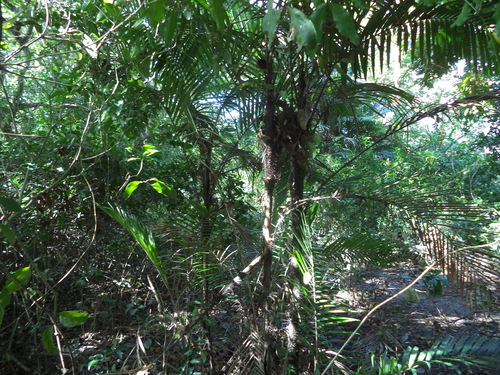
Rhopalostylis sapida
H. H. Wendl. & Drude
Nikau palm, Nakau, Shaving-brush palm, Feather duster palm, Nika palm
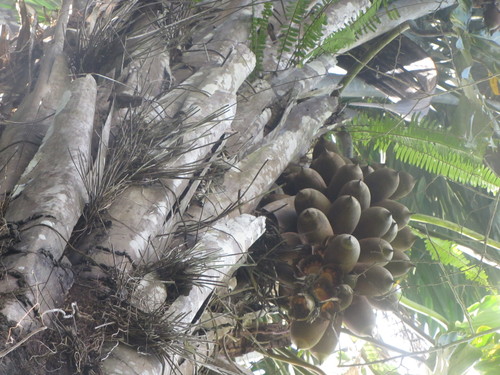
iNaturalist· cc-by
(c) Katja Schulz, some rights reserved (CC BY), uploaded by Katja Schulz
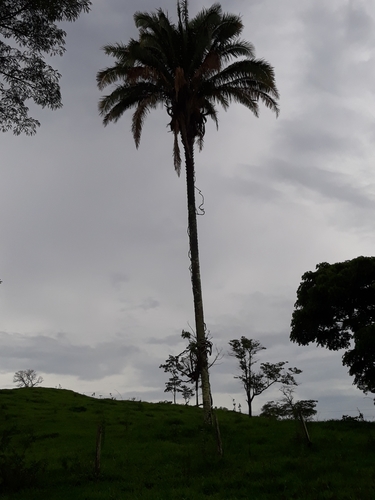
iNaturalist· cc-by
(c) Katja Schulz, some rights reserved (CC BY), uploaded by Katja Schulz
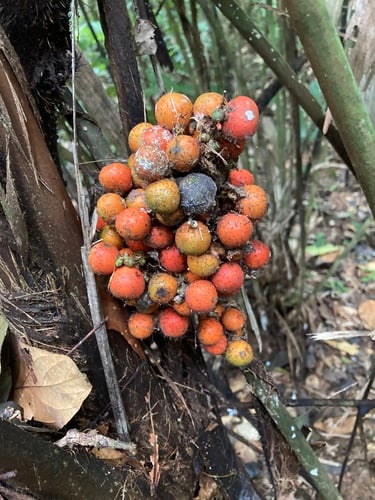
iNaturalist· cc-by
(c) tanetahi, some rights reserved (CC BY)
Summary
Source: WikipediaRhopalostylis sapida, commonly known as nīkau, is a palm tree endemic to New Zealand, and the only palm native to mainland New Zealand.
Description
An upright palm with bulging crown-shaft. It can be 8-12 m high. The trunk is 10 cm across. It is ringed with the scars of fallen leaves. The crown has 12-16 straight erect leaves. There is a crown-shaft 30 cm long. The leaves and leaflets are stiff and upright. This gives the palm a "feather duster" like appearance. The leaves are 1.5-2 m long. The midrib of the leaf is often slightly twisted. The flower stalk grows below the crown-shaft. It is 25-40 cm long. The flowers are purple to red. The fruit are bright red when ripe. They are 8-12 mm long and 7-8 mm wide.
Edible Uses
The young unopened flowers are cooked and eaten, the palm heart is eaten, and the fruit, sap, and cabbage are also consumed.
Traditional Uses
The young unopened flower is cooked and eaten. The palm heart is eaten.
This uses section is brief — help expand it
Medicinal Uses
No specific medicinal uses documented.
Distribution
It is a warm temperate plant. They grow in moist forests in New Zealand. It grows naturally as far south as 44°S. It can only tolerate light frosts. They will grow in cool climates. It grows from the coast to 700 m altitude. Young palms need protection from the sun for the first 4-5 years. It suits hardiness zones 9-11. In Hobart Botanical Gardens.
Where It Grows
Australia, Hawaii, New Caledonia, New Zealand*, Pacific, Tasmania,
Cultivation
Plants are grown from seed. Seed can be slow to germinate.
Production
Plants respond strongly to fertiliser. Plants are slow growing and do not form a trunk for 15 years. They do not flower for 30 years.
Notes
There are 2-3 Rhopalostylis species.
Synonyms
References (25)
- Balick, M.J. and Beck, H.T., (Ed.), 1990, Useful palms of the World. A Synoptic Bibliography. Colombia p 121
- Balick, M.J. and Beck, H.T., (Ed.), 1990, Useful palms of the World. A Synoptic Bibliography. Colombia p 302 (As Areca sapida)
- Balick, M.J. and Beck, H.T., (Ed.), 1990, Useful palms of the World. A Synoptic Bibliography. Colombia p 434 (As Kentia sapida)
- Blomberry, A. & Rodd, T., 1982, Palms. An informative practical guide. Angus & Robertson. p 160
- Bodkin, F., 1991, Encyclopedia Botanica. Cornstalk publishing, p 881
Show all 25 references Hide references
- Brooker, 1986,
- Brooker, et al
- Crowe, A., 1997, A Field Guide to the Native Edible Plants of New Zealand. Penguin. p 41
- Cundall, P., (ed.), 2004, Gardening Australia: flora: the gardener's bible. ABC Books. p 1203
- O. C. E. M. G. de Kerchove de Denterghem, Palmiers 255. 1878
- Dowe, J.L., 1989, Palms of the South-West Pacific. Palm and Cycad Society of Australia. p 44
- Facciola, S., 1998, Cornucopia 2: a Source Book of Edible Plants. Kampong Publications, p 30
- Gibbons, M., 1993, Palms. Compact study Guide and Identifier. Sandstone. p 69
- Gibbons, M., 2003, A pocket guide to Palms. Chartwell Books. p 186
- Haynes, J., & McLaughlin, J., 2000, Edible palms and Their Uses. University of Florida Fact sheet MCDE-00-50-1 p 12
- Hedrick, U.P., 1919, (Ed.), Sturtevant's edible plants of the world. p 559
- Huxley, A. (Ed.), 1977, The Encyclopedia of the Plant Kingdom. Chartweil Books. p 166
- Jones, D.L., 1994, Palms throughout the World. Smithtonian Institution, Washington. p 57, 58, 340
- Lord, E.E., & Willis, J.H., 1999, Shrubs and Trees for Australian gardens. Lothian. p 99
- Martin, F.W. & Ruberte, R.M., 1979, Edible Leaves of the Tropics. Antillian College Press, Mayaguez, Puerto Rico. p 210 (As Kentia sapida)
- Matthews, J., 1987, New Zealand Native Plants for your Garden. Pacific Publishers, p 107
- Riffle, R.L. & Craft, P., 2003, An Encyclopedia of Cultivated Palms. Timber Press. p 440
- Salmon, J.T., 1989, The Native Trees of New Zealand. Heinmann Reid p 355
- Stewart, K., 1984, Collins handguide to the Native Trees of New Zealand. Collins. p 132
- Wong, M., 2006, Edible Plants for Hawai'i Landscapes. College of Tropical Agriculture and Human Resources. Univ. of Hawai'i