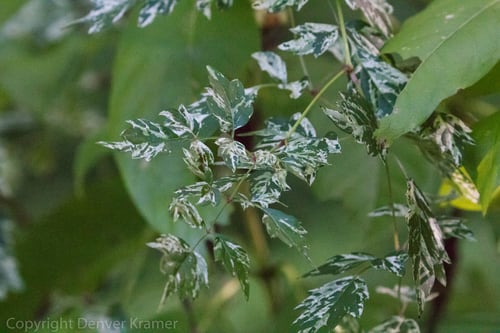
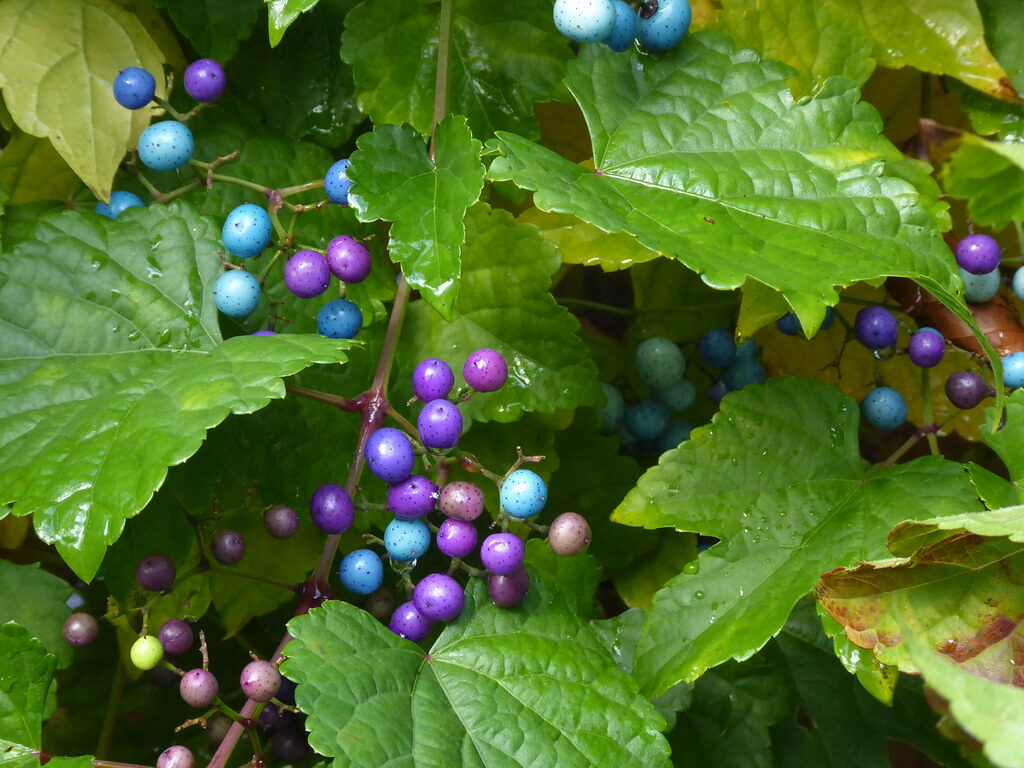
Rhoicissus tridentata
(L. f.) Wild & R. B. Drummond
Droog-my-keel grape, Bitter grape, Bushman's grape
iNaturalist· cc-by
(c) i_c_riddell, some rights reserved (CC BY), uploaded by i_c_riddell
iNaturalist· cc-by-sa
(c) Tony Rebelo, some rights reserved (CC BY-SA), uploaded by Tony Rebelo
iNaturalist· cc-by-sa
(c) Tony Rebelo, some rights reserved (CC BY-SA), uploaded by Tony Rebelo
Summary
Source: WikipediaRhoicissus tridentata is a climbing plant in the family Vitaceae. Parts of the plant are used in South Africa in traditional herbal remedies during pregnancy.
Description
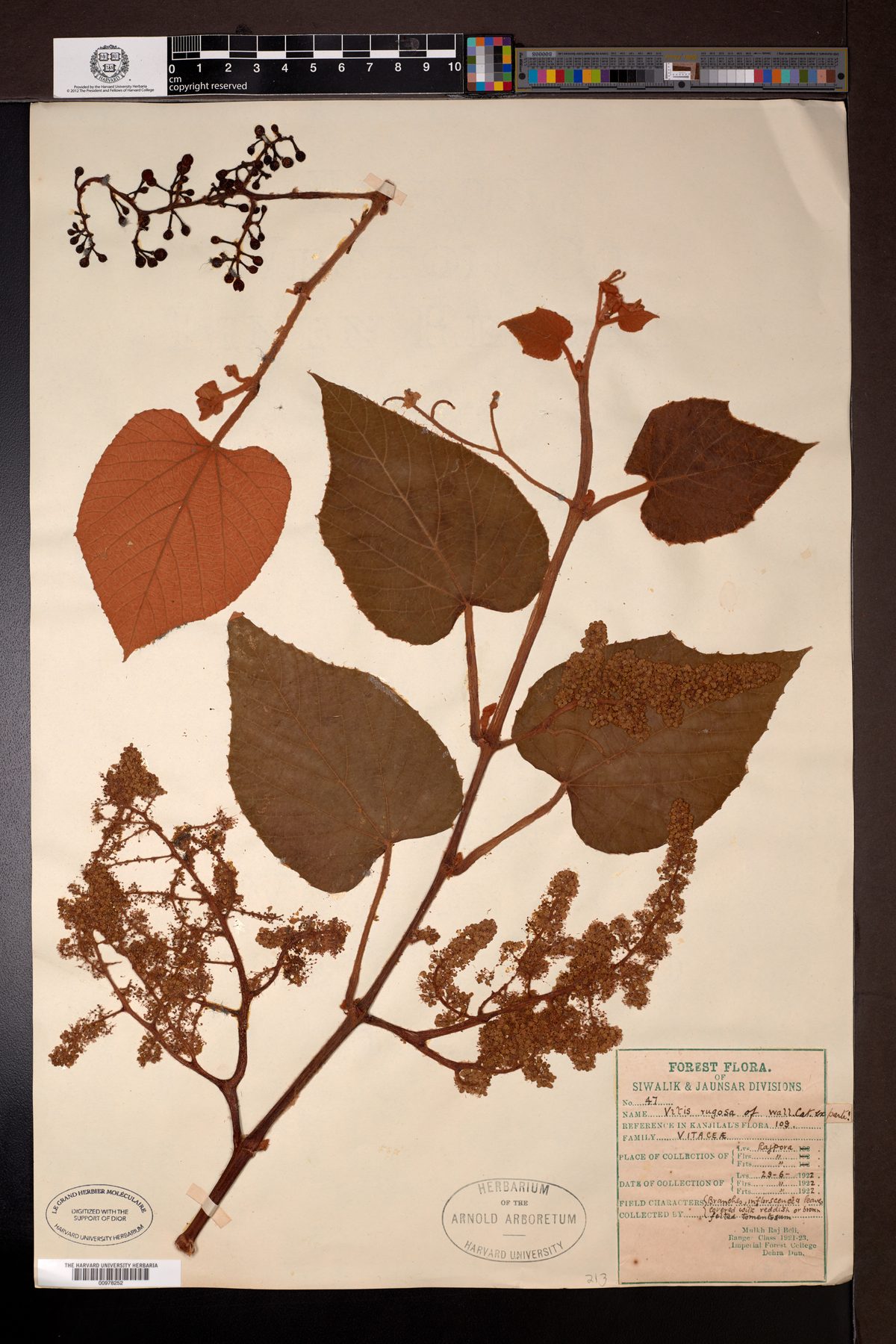
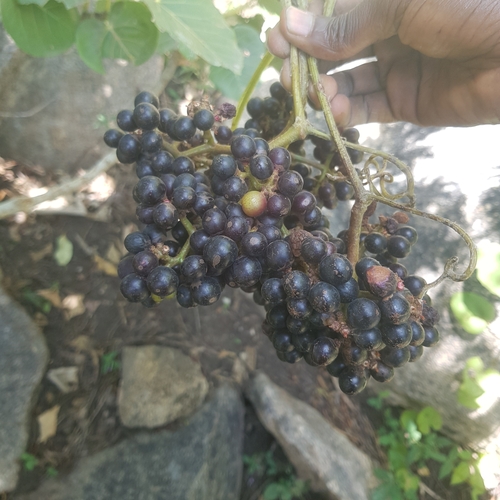
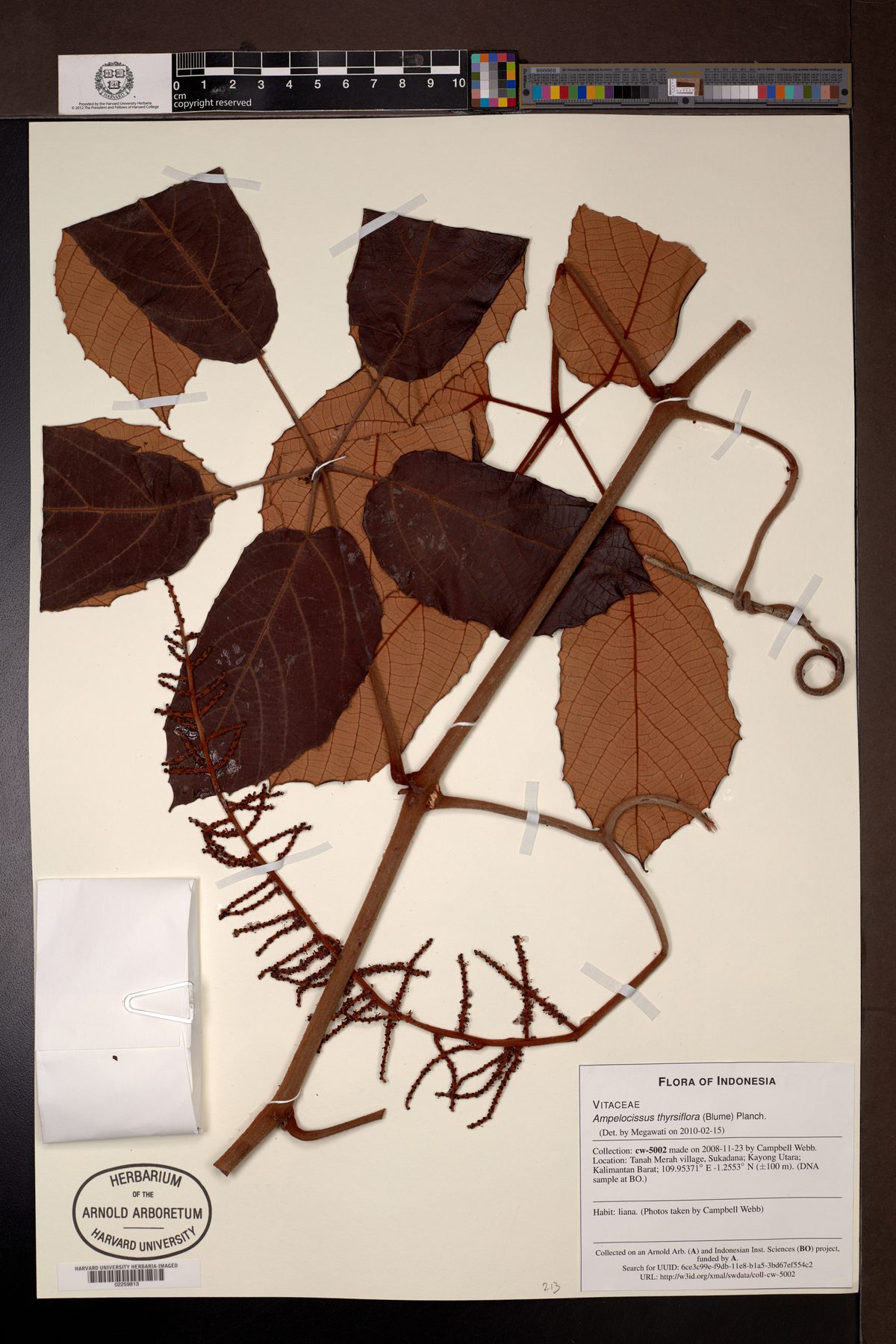
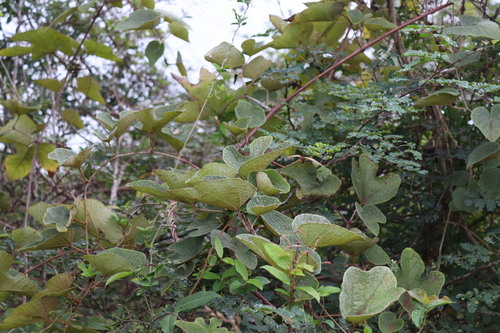
It is a small neat tree. It grows to 3.6 m high. It can be a climber. It has a very extensive root system with a thickened rootstock or swellings along it. It may have many stems. The young branches are covered with rust-coloured hairs. It has tendrils. The leaves vary greatly in size and shape. They have 3 rigid leaflets. Leaves can be 10 cm long and 7 cm wide. The central leaflet is often triangular. The side leaflets are unequal-sided. Leaflets are glossy green above and paler underneath. The flowers are small and greenish. They occur in clusters opposite the leaves. The fruit is 1.3 cm across. They are smooth and round. They are black when mature. There are 1-2 seeds inside. The fruit is edible.
Edible Uses
The fruit is eaten, though it is very sour and particularly popular with children. The large thickened rootstock is edible and is used in drinks and added to soups.
Traditional Uses
The fruit is eaten. It is very sour. The large thickened rootstock is edible. It is used for drinks and put into soups. Caution: The tubers are also claimed to be toxic.
Known Hazards
The tubers are claimed to be toxic.
Distribution
A tropical plant. In South Africa it grows from sea level to 1200 m altitude. In some places it can grow to 2,700 m above sea level. It will grow in a range of conditions. It is often at the edge of evergreen forest in high rainfall areas. It grows in areas with an annual rainfall between 380-1,500 mm. It can grow in arid places.
Where It Grows
Africa, Angola, Arabia, Botswana, Burundi, Central Africa, Congo, East Africa, Eswatini, Ethiopia, Kenya, Malawi, Middle East, Mozambique, Nigeria, Rwanda, Saudi Arabia, South Africa*, Southern Africa, Swaziland, Tanzania, Uganda, West Africa, Yemen, Zambia, Zimbabwe,
Cultivation
Plants can be grown from seeds or cuttings.
Other Information
The fruit are eaten especially by children.
Synonyms
Also Known As
Baboon grape, Boesmansdruif, Chizizo, Imbozisa, Isinwazi, Kasalasya, Mnamaftsela, Morara, Mpelesya, Mpesya, Mpete, Mpeza, Mutumbulambudzana, N-kilenya, Olkilenyai, Qashro, Sinwati, Thithiu, Uemba, Umguco, Wedel-asfess, Ziangayango
References (27)
- Asfaw, Z. and Tadesse, M., 2001, Prospects for Sustainable Use and Development of Wild Food Plants in Ethiopia. Economic Botany, Vol. 55, No. 1, pp. 47-62
- Bekele-Tesemma A., Birnie, A., & Tengnas, B., 1993, Useful Trees and Shrubs for Ethiopia. Regional Soil Conservation Unit. Technical Handbook No 5. p 386
- Burkill, H. M., 1985, The useful plants of west tropical Africa, Vol. 5. Kew.
- Fowler, D. G., 2007, Zambian Plants: Their Vernacular Names and Uses. Kew. p 64
- Fox, F. W. & Young, M. E. N., 1982, Food from the Veld. Delta Books. p 366
Show all 27 references Hide references
- https://growwild.co.za Edible Indigenous plants
- Jardin, C., 1970, List of Foods Used In Africa, FAO Nutrition Information Document Series No 2.p 158
- Joffe, P., 2007, Creative Gardening with Indigenous Plants. A South African Guide. Briza. p 358
- Kirkia 3:19. 1963
- Long, C., 2005, Swaziland's Flora - siSwati names and Uses http://www.sntc.org.sz/flora/
- Lulekal, E., et al, 2011, Wild edible plants in Ethiopia: a review on their potential to combat food insecurity. Afrika Focus - Vol. 24, No 2. pp 71-121
- Magwede, K., van Wyk, B.-E., & van Wyk, A. E., 2019, An inventory of Vhavenḓa useful plants. South African Journal of Botany 122 (2019) 57–89
- Malaisse, F., 1997, Se nourrir en floret claire africaine. Approche ecologique et nutritionnelle. CTA., p 91.
- Mbuvi, M. T. E., et al, 2019, Annonated checklist of plant species of Loita Forest Narok County, Kenya. Int. J. Adv. Res. Biol. Sci. (2019). 6(3): 54-110
- Palgrave, K.C., 1996, Trees of Southern Africa. Struik Publishers. p 563
- Palmer, E and Pitman, N., 1972, Trees of Southern Africa. Vol. 2. A.A. Balkema, Cape Town p 1417
- Peters, C. R., O'Brien, E. M., and Drummond, R.B., 1992, Edible Wild plants of Sub-saharan Africa. Kew. p 203
- Royal Botanic Gardens, Kew (1999). Survey of Economic Plants for Arid and Semi-Arid Lands (SEPASAL) database. Published on the Internet; http://www.rbgkew.org.uk/ceb/sepasal/internet [Accessed 13th June 2011]
- Ruiters-Welcome, A. K., 2019, Food plants of southern Africa. Ph.D. thesis. Univ. of Johannesburg p 108
- Swaziland's Flora Database http://www.sntc.org.sz/flora
- Tredgold, M.H., 1986, Food Plants of Zimbabwe. Mambo Press. p 13
- van Wyk, Be., & Gericke, N., 2007, People's plants. A Guide to Useful Plants of Southern Africa. Briza. p 54
- von Katja Rembold, 2011, Conservation status of the vascular plants in East African rain forests. Dissertation Universitat Koblenz-Landau p 180
- Welcome, A. K. & Van Wyk, B.-E., 2019, An inventory and analysis of the food plants of southern Africa. South African Journal of Botany 122 (2019) 136–179
- White, F., Dowsett-Lemaire, F. and Chapman, J. D., 2001, Evergreen Forest Flora of Malawi. Kew. p 601
- Williamson, J., 2005, Useful Plants of Malawi. 3rd. Edition. Mdadzi Book Trust. p 214
- World Checklist of Useful Plant Species 2020. Royal Botanic Gardens, Kew