Cyphostemma buchananii
(Planch.) Wild. & Drummond
Namwalicheche, Ndemikangono
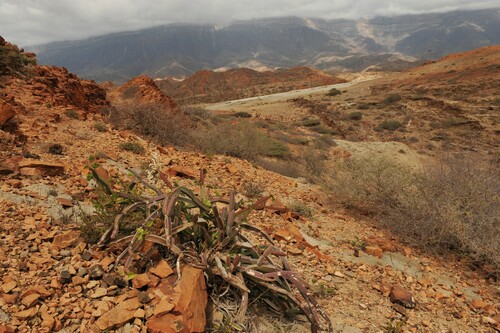
iNaturalist· cc-by
(c) Wynand Uys, some rights reserved (CC BY), uploaded by Wynand Uys
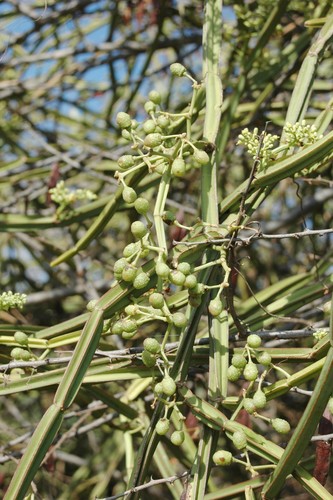
iNaturalist· cc-by-nc
(c) Troos van der Merwe, some rights reserved (CC BY-NC)
Description
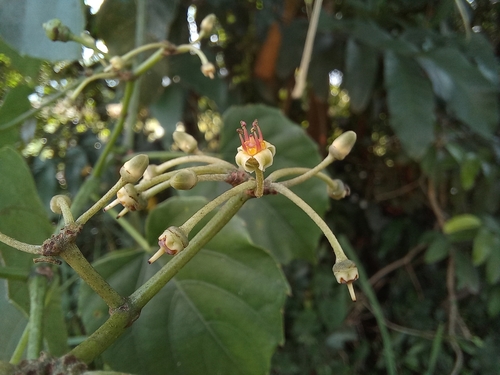
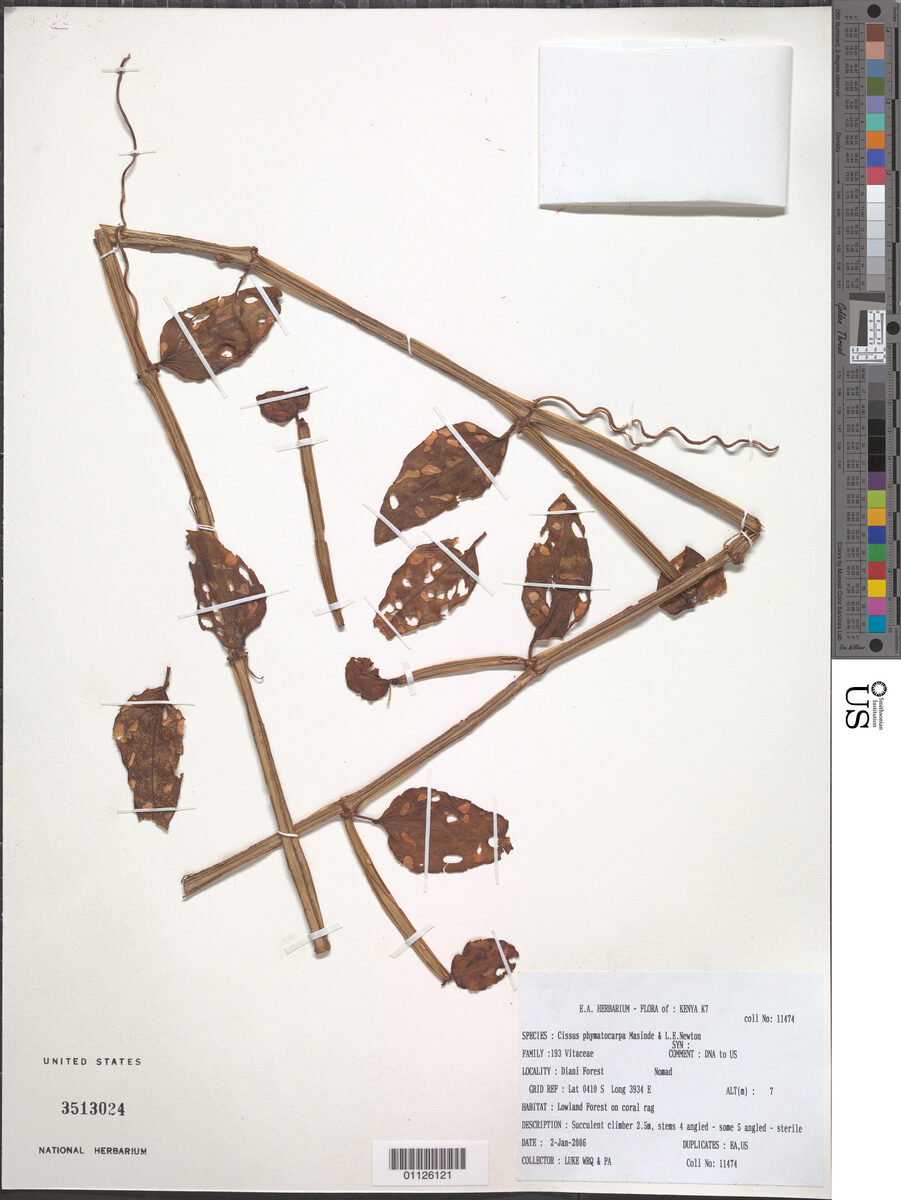
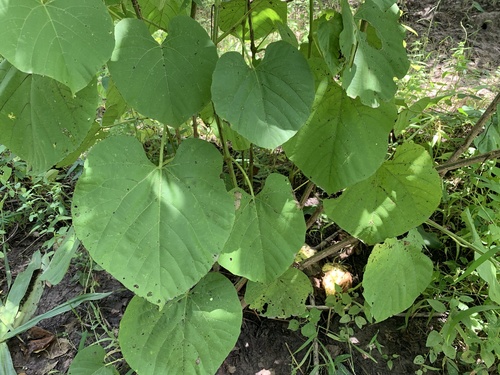
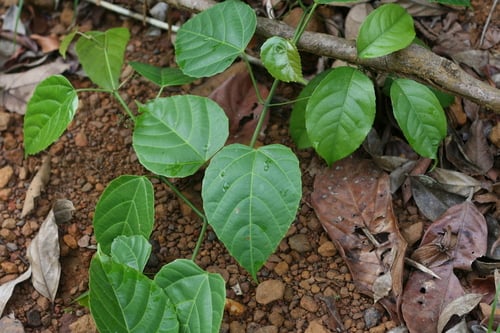
A climbing herb or shrub. It grows about 1 m tall. The leaves have 5 lobes like fingers on a hand. The leaves are white underneath with brown veins. The leaflet blades are 11 cm long by 7 cm wide. They are narrowly oval. There are rounded teeth along the edge. The flowers have reddish petals. The fruit are red and oval. They are hairy. The seed is about 7 mm long by 5 mm wide.
Edible Uses
The ripe red fruits are eaten raw. The roots are chewed, especially by children, and the young stems are also chewed.
Traditional Uses
The ripe fruit are eaten. The roots are chewed especially by children. The young stems are chewed.
This uses section is brief — help expand it
Medicinal Uses
Used in traditional medicine, though specific applications are not detailed in available data.
Distribution
A tropical plant. It grows on the edges of forests and in woodland. It grows in dry soil. It can grow in arid places.
Where It Grows
Africa, Botswana, Central Africa, Congo, East Africa, Kenya, Malawi, Mozambique, South Africa, Southern Africa, Tanzania, Zambia, Zimbabwe,
Synonyms
Also Known As
Idangaje, Kululumbe, Mbuluwi, Mushoramombe, Namwalicece, Nkululumbi, Puepuete, Tongo tongo
References (12)
- Flora Zambesiaca. http://apps.kew.org/efloras
- Fowler, D. G., 2007, Zambian Plants: Their Vernacular Names and Uses. Kew. p 63
- Fox, F. W. & Young, M. E. N., 1982, Food from the Veld. Delta Books. p 368
- Grivetti, L. E., 1980, Agricultural development: present and potential role of edible wild plants. Part 2: Sub-Saharan Africa, Report to the Department of State Agency for International Development. p 66 (As Cissus)
- Peters, C. R., O'Brien, E. M., and Drummond, R.B., 1992, Edible Wild plants of Sub-saharan Africa. Kew. p 202
Show all 12 references Hide references
- Reis, S. V. and Lipp, F. L., 1982, New Plant Sources for Drugs and Foods from the New York Botanical Garden herbarium. Harvard. p 174 (As Cissus buchananii)
- Royal Botanic Gardens, Kew (1999). Survey of Economic Plants for Arid and Semi-Arid Lands (SEPASAL) database. Published on the Internet; http://www.rbgkew.org.uk/ceb/sepasal/internet [Accessed 13th June 2011]
- Tredgold, M.H., 1986, Food Plants of Zimbabwe. Mambo Press. p 6
- Wild, 1975,
- Williamson, J., 2005, Useful Plants of Malawi. 3rd. Edition. Mdadzi Book Trust. p 93
- World Checklist of Useful Plant Species 2020. Royal Botanic Gardens, Kew
- www.zimbabweflora.co.zw 2011