Rhododendron arboreum
Smith
Rose tree, Tree Rhododendron
iNaturalist· cc0
no rights reserved
iNaturalist· cc0
no rights reserved
iNaturalist· cc0
no rights reserved
Summary
Source: WikipediaRhododendron arboreum, the tree rhododendron, is an evergreen shrub or small tree with a showy display of bright red flowers. It is found in Bhutan, China, India, Myanmar, Nepal, Sri Lanka, Pakistan and Thailand. It is the national flower of Nepal.
Description
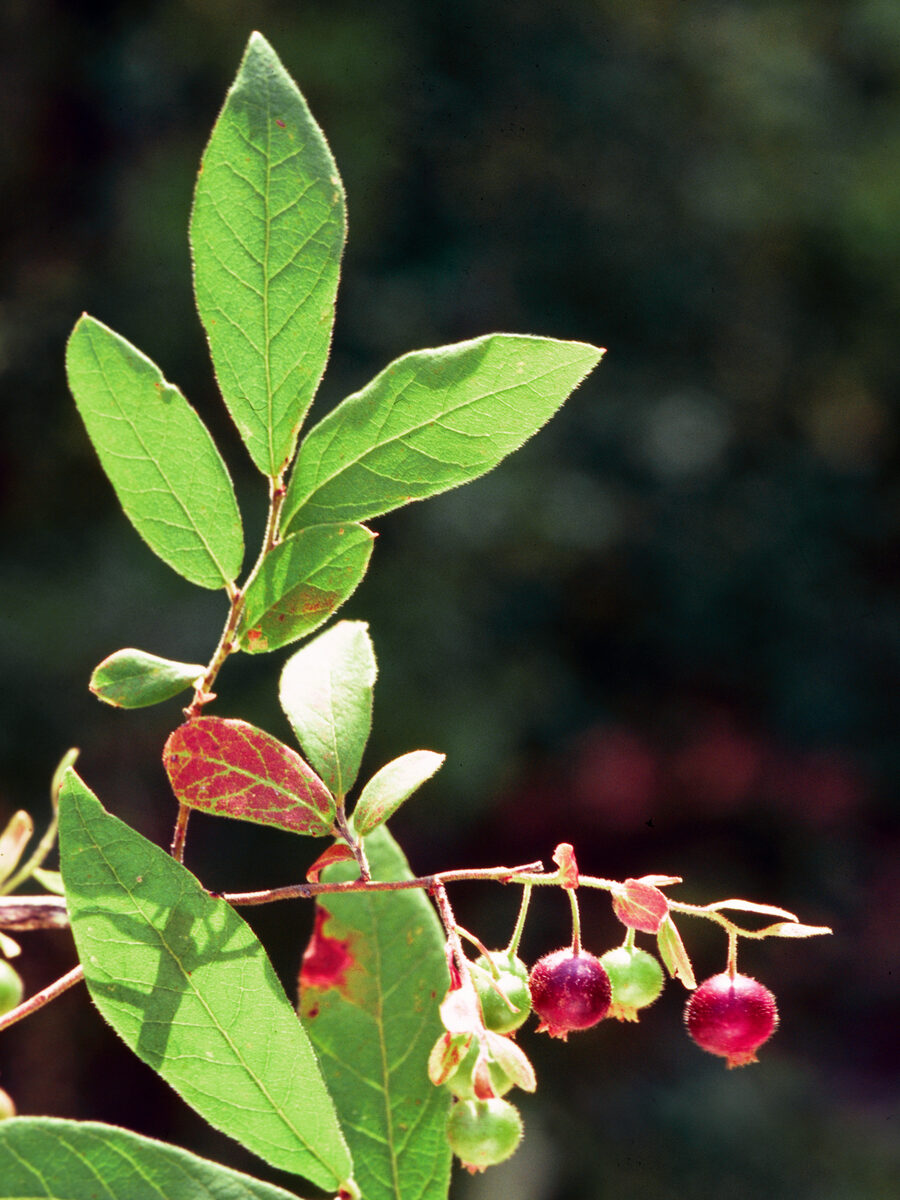
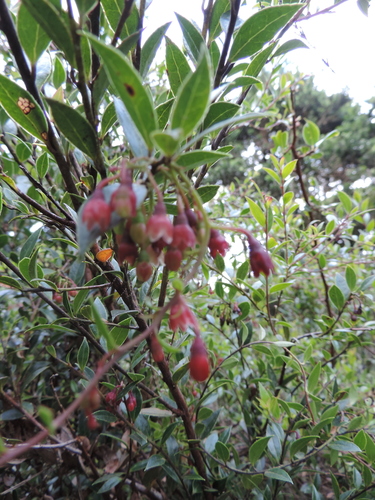
A small evergreen tree. It can be 1-8-15 m high. It can spread 4.5 m high. The leaves have stalks. The leaves are crowded towards the ends of the branches. Leaves are 4.5-16 cm long by 1.5-6 cm wide. They are oblong to sword shaped and narrow at both ends. They are silvery underneath. The flowers are red, white or pink. The flowers are crowded in large round heads. There are 10 stamens. The fruit capsule is 1.5-2 cm long. It has ribs along it.
Edible Uses
The tender leaves can be used as a cooked vegetable, though caution is advised regarding toxicity. The flowers can be eaten raw or cooked — they have a sweet-sour taste and are said to make a good sub-acid jelly. They are sometimes simply pickled with salt and chili. Caution is advised, as large quantities of the flowers can cause intoxication.
Traditional Uses
The flower petals are eaten raw. They are also used to make jelly. The juice from them is used to make drinks. They are also used for colouring drinks and syrups. They are also used for chutney. The flower can be pickled with salt and chili. CAUTION: The young leaves are poisonous. The young leaves are cooked as a vegetable. They are boiled.
Medicinal Uses
The young leaves are astringent and used as a poultice — made into a paste and applied to the forehead to treat headaches. Juice from the bark is used to treat coughs, diarrhoea and dysentery. A decoction of the flowers is used to suppress vomiting, particularly when accompanied by loss of appetite, and flower juice is used in the treatment of menstrual disorders. The petals are eaten to help dislodge animal bones stuck in the throat.
Known Hazards
Caution is advised regarding toxicity of the leaves. Large quantities of the flowers can cause intoxication.
Distribution
A tropical and subtropical plant. It grows in the highlands of Vietnam between 2,550 and 3,000 m altitude. In Nepal it grows between 1400-3300 m altitude. It grows on hillsides in mixed oak forests. It is native to the Himalayas. It suits hardiness zones 7-9. Arboretum Tasmania.
Where It Grows
Asia, Australia, Bhutan, China, Himalayas, India, Indochina, Myanmar, Nepal, Northeastern India, NW India, Pakistan, SE Asia, Sikkim, Sri Lanka, Tasmania, Thailand, Tibet, Vietnam,
Cultivation
Succeeds in most humus rich lime free soils except those of a dry arid nature or heavy or clayey. Prefers a peaty or well-drained sandy loam. Succeeds in sun or shade, the warmer the climate the more shade a plant requires. Requires a pH between 4.5 and 5.5. Hardy to between -10 and -15°c, the pink flowered form is hardier than the red. Succeeds in a woodland though, because of its surface-rooting habit, it does not compete well with surface-rooting trees. Plants need to be kept well weeded, they dislike other plants growing over or into their root system, in particular they grow badly with ground cover plants, herbaceous plants and heathers. There are many named varieties selected for their ornamental value. Plants form a root ball and are very tolerant of being transplanted, even when quite large, so long as the root ball is kept intact. This plant is the national flower of Nepal. The flowers are sold in local markets and used as offerings to the Gods and Godesses. A very ornamental plant, it is not very hardy outdoors in much of Britain, but grows well in the milder areas of the country. Plants in this genus are notably susceptible to honey fungus.
Propagation
Sow seed in a greenhouse as soon as it is ripe in autumn, providing artificial light. Alternatively, sow in a lightly shaded part of a warm greenhouse in late winter, or in a cold greenhouse in April. Surface-sow and keep the compost consistently moist. Pot up seedlings once large enough to handle and grow on under glass for at least the first winter. Layering in late July takes 15–24 months. Cuttings of half-ripe wood taken in August and rooted in a frame are difficult.
Other Uses
Leaf juice spread over cots and beds repels bed lice. The wood is soft and even-grained but seasons poorly; it is used in turnery, for making charcoal and as fuel. In Nepal it is widely used for household implements, building small houses and fences, and planks are carved into boxes, cupboards and other furniture. It burns well with long-lasting heat, though overcollection for fuel and charcoal has become a conservation concern.
Production
It is slow growing.
Other Information
The flower petals are eaten raw especially by children.
Notes
There are over 500 Rhododendron species.
Synonyms
Also Known As
Ardawal, Aru, Baras, Bhorans, Braah, Brash, Broa, Brus, Burah, Burans, Buransh, Burars, Burash, Chacheon, Chahan, Chak-hlei, Chhan, Chhawk-hlei-par-sen, Chiu, Daipa, Dieng-tiew-saw, Dieng-tin-thuin, Dotial, Etok, Ghonas, Gunras, Gurans, Guras, Gurash, Gurauns, Hardulli, Kamri, Lal hardul, Lalgurus, Laligurans, Laliguras, Lidainipa, Mandal, Ngeisoh, Ngay-sheek, Pori, Samu, Surang, Taggu, Takro, Taung-zalat-ni, Tin-saw, Zalutri
References (44)
- Altschul, S.V.R., 1973, Drugs and Foods from Little-known Plants. Notes in Harvard University Herbaria. Harvard Univ. Press. Massachusetts. no. 3175
- Ambasta S.P. (Ed.), 2000, The Useful Plants of India. CSIR India. p 521
- Aryal, K. P., et al, 2018, Diversity and use of wild and non-cultivated edible plants in the Western Himalaya. Journal of Ethnobiology and Ethnomedicine (2018) 14:10
- Bahuguna, A. et al, 2010, Floristic Diversity and Indigenous uses of Forest Vegetation of Dabka Watershed in Indian Central Himalayas. Ethnobotanical Leaflets 14:491-510
- Brickell, C. (Ed.), 1999, The Royal Horticultural Society A-Z Encyclopedia of Garden Plants. Convent Garden Books. p 869
Show all 44 references Hide references
- Coombes, A.J., 2000, Trees. Dorling Kindersley Handbooks. p 144
- Cundall, P., (ed.), 2004, Gardening Australia: flora: the gardener's bible. ABC Books. p 1145
- Dangol, D. R. et al, 2017, Wild Edible Plants in Nepal. Proceedings of 2nd National Workshop on CUAOGR, 2017.
- Dobriyal, M. J. R. & Dobriyal, R., 2014, Non Wood Forest Produce an Option for Ethnic Food and Nutritional Security in India. Int. J. of Usuf. Mngt. 15(1):17-37
- Exot. bot. 1:9, t. 6. 1805
- Flora of Pakistan. www.eFloras.org
- Ghimeray, A. K., Lamsal, K., et al, 2010, Wild edible angiospermic plants of the Illam Hills (Eastern Nepal) and their mode of use by local community. Korean J. Pl. Taxon. 40(1)
- Ghimire, S. K., et al, 2008, Non-Timber Forest Products of Nepal Himalaya. WWF Nepal p 65
- GUPTA,
- Hamayun, M., Ethnobotanical Studies of some Useful Shrubs and Trees of District Buner, NWFP, Pakistan
- Joshi, A. R.. and Joshi, J., 2009, Plant Diversity and Ethnobotanical Notes on tree species of Syabru Village, Langtang National Park, Nepal. Ethnobotanical Leaflets 13:651-64
- Joshi, N., et al, 2007, Traditional neglected vegetables of Nepal: Their sustainable utilization for meeting human needs. Tropentag 2007. Conference on International Agricultural Research for Development.
- Kar, A., et al, 2013, Wild Edible Plant Resources used by the Mizos of Mizoram, India. Kathmandu University Journal of Science, Engineering and Technology. Vol. 9, No. 1, July, 2013, 106-126
- Khakurel, D., et al, 2021, Foods from the wild: Local knowledge, use pattern and distribution in Western Nepal. PLOS ONE.
- Khan, M. & Hussain, S., 2014, Diversity of wild edible plants and flowering phenology of district Poonch (J & K) in the northwest Himalaya. Indian Journal of Sci, Res. 9(1): 032-038
- Khodram,S. D., et al, 2019, Local knowledge of edible flowers used in Mizoram. Indian Journal of Traditional Knowledge Vol 18(40 pp 715-723
- Manandhar, N.P., 2002, Plants and People of Nepal. Timber Press. Portland, Oregon. p 395
- Masoodi, H. U. R. & Sundriyal, R. C., 2020, Richness of non-timber forest products in Himalayan communities—diversity, distribution, use pattern and conservation status. Journal of Ethnobiology and Ethnomedicine 16:56
- Mehta, P. S. et al, 2010, Native plant genetic resources and traditional foods of Uttarakhand Himalaya for sustainable food security and livelihood. Indian Journal or Natural products and Resources. Vol 1(1), March 2010 pp 89-96
- Mukhia, P.K., et al, 2013, Wild plants as Non Wood Forest Products used by the rural community of Dagana, a southern foothill district of Bhutan, SAARC Journal, 27 pages
- Namrata, et al, 2011, Wild Edible Plants of Uttarakhand Himalaya: A Potential Nutraceutical Source. Research Journal of Medicinal Plant. (5) 6: 670-684
- Pfoze, N. L., et al, 2012, Survey and assessment of floral diversity on wild edible plants from Senapati district of Manipur, Northeast India. Journal or Biodiversity and Environmental Sciences. 1(6):50-52
- Pham-Hoang Ho, 1999, An Illustrated Flora of Vietnam. Nha Xuat Ban Tre. p 613
- Radha, B., et al, 2013, Wild Edible Plant Resources of the Lohba Range of Kedarnath Forest Division (KFD), Garhwal Himalaya, India. Int. Res J. Biological Sci. Vol. 2 (11), 65-73
- Rana, D., et al, 2019, Ethnobotanical knowledge among the semi-pastoral Gujjar tribe in the high altitude (Adhwari’s) of Churah subdivision, district Chamba, Western Himalaya. Journal of Ethnobiology and Ethnomedicine (2019) 15:10
- Rashid, A., Anand, V.K. & Serwar, J., 2008, Less Known Wild Plants Used by the Gujjar Tribe of District Rajouri, Jammu and Kashmir State. International Journal of Botany 4(2):219-244
- Rijal, A., 2011, Surviving on Knowledge: Ethnobotany of Chepang community from mid-hills of Nepal. Ethnobotany Research & Applications 9:181-215
- Sahni, K.C., 2000, The Book of Indian Trees. Bombay Natural History Society. Oxford. p 116
- Sawian, J. T., et al, 2007, Wild edible plants of Meghalaya, North-east India. Natural Product Radiance Vol. 6(5): p 421
- Sharma, P., et al, 2013, Wild edibles of Murari Devi and surrounding areas in Mandi district of Himachal Pradesh, India. International Journal of Biodiversity and Conservation. Vol. 5(9), pp. 580-592, September 2013
- Sundriyal, M., et al, 1998, Wild edibles and other useful plants from the Sikkim Himalaya, India. Oecologia Montana 7:43-54
- Sundriyal, M., et al, 2004, Dietary Use of Wild Plant Resources in the Sikkim Himalaya, India. Economic Botany 58(4) pp 626-638
- Sundriyal, M. & Sundriyal, R. C., 2004, Structure, Phenology, Fruit Yield, and Future Prospects of some Prominent Wild Edible Plant Species of the Sikkim Himalaya, India. Journal of Ethnobiology 24(1): 113-138
- Tewari, D.N., 1994, Important Plants of India. International Book Distributors, India. p 43
- Thakur, D., et al, 2017, Why they eat, what they eat: patterns of wild edible plants consumption in a tribal area of Western Himalaya. Journal of Ethnobiology and Ethnomedicine (2017) 13:70
- Thapa, L. B., et al, 2014, Wild Edible Plants used by endangered and Indigenous Raji Tribe in Western Nepal. International Journal of Applied Sciences and Biotechnology. Vol 2(3):243-252
- Thokchom, R., et al, 2016, Documentation and assessment of wild medicinal and edible flowers of valley districts of Manipur. International Journal of Research in Applied, Natural and Social Sciences. 4(11):13-20
- Tsering, J., et al, 2017, Ethnobotanical appraisal on wild edible plants used by the Monpa community of Arunchal Pradesh. Indian Journal of Traditional Knowledge. Vol 16(4), October 2017, pp 626-637
- www.worldagroforestrycentre.org/treedb/