Garcinia madruno
(Kunth) Hammel
Madrono
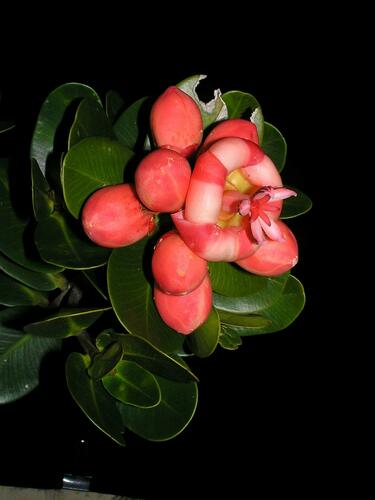
iNaturalist· cc-by
(c) GERMAN LEONEL SARMIENTO CRUZ, some rights reserved (CC BY), uploaded by GERMAN LEONEL SARMIENTO CRUZ
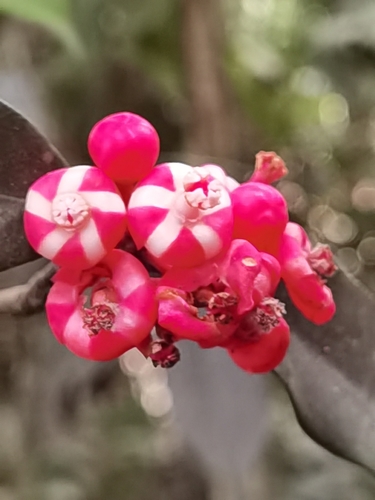
iNaturalist· cc-by-nc
(c) keyingLi, some rights reserved (CC BY-NC), uploaded by keyingLi
iNaturalist· cc-by-nc-sa
(c) Gabriel Camilo Jaramillo Giraldo, some rights reserved (CC BY-NC-SA), uploaded by Gabriel Camilo Jaramillo Giraldo
Summary
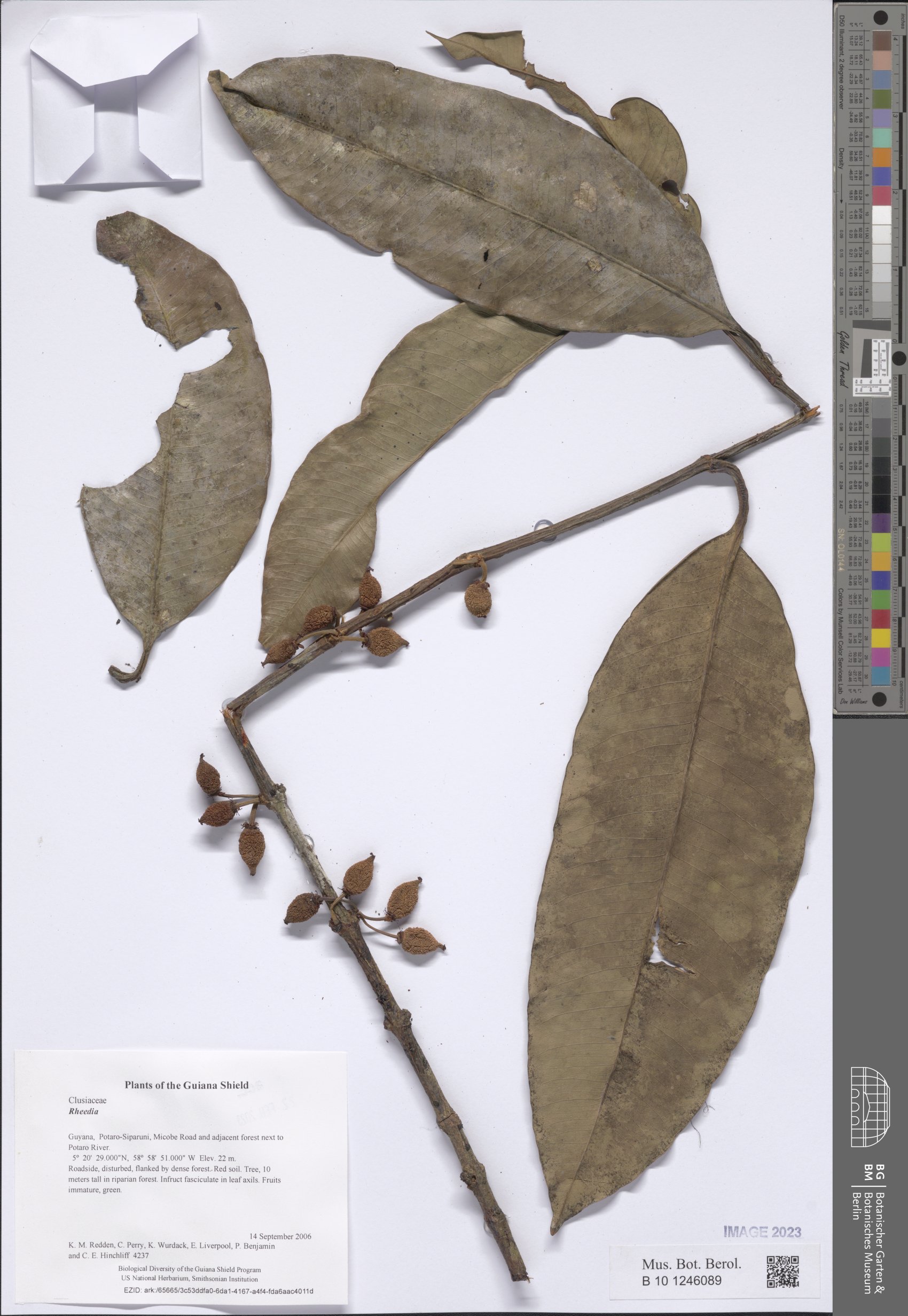
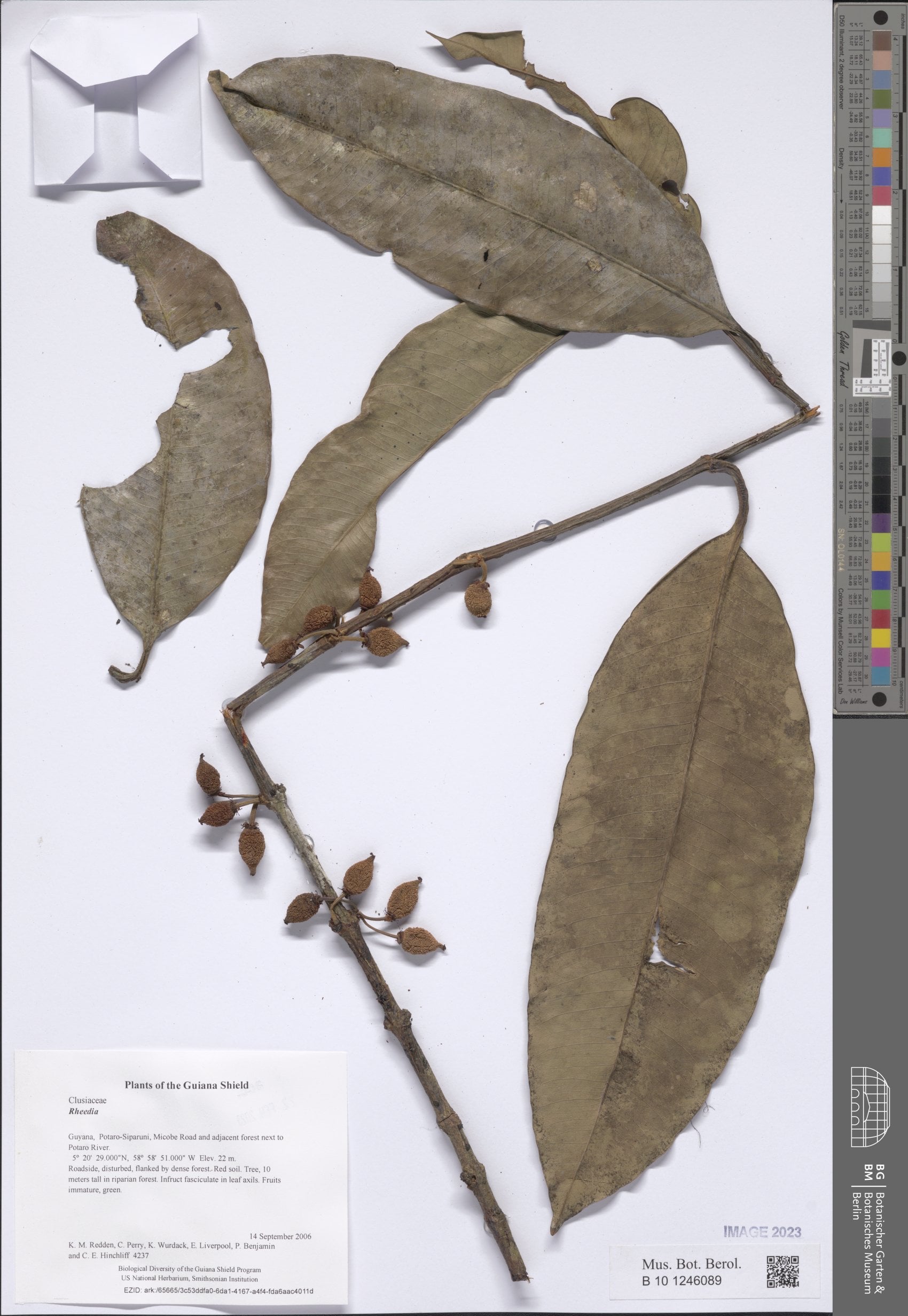
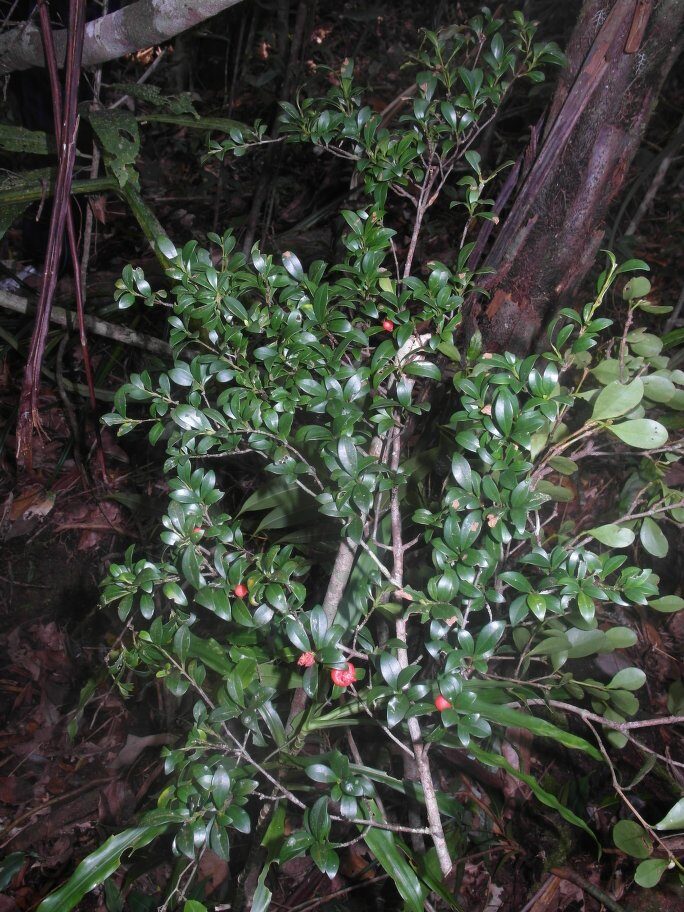
Source: WikipediaGarcinia madruno, the charichuela, is a fruit-producing tree species from the rainforests of Central and South America. The leaves are dark green and leathery. The fruit looks like a shriveled droopy lemon and has a similar rind, so is sometimes called a lemon drop mangosteen. The interior is soft white pulp and has a popular, slightly citrusy taste people have compared to a sweet santol fruit or lemony cotton candy. The species was formerly included in the genus Rheedia, which has since been absorbed into Garcinia, as Rheedia species are now known as "new world mangosteens".
Description
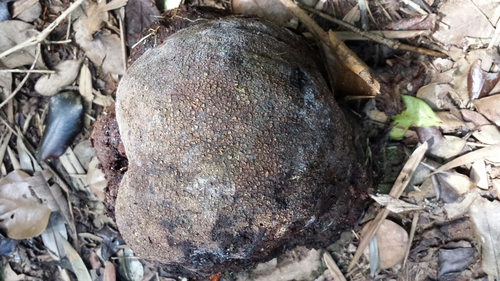
An evergreen tree. It can grow to 10-15 m tall. It has sharply pointed leathery leaves. Leaves are 10 to 15 cm long. They are dark green on top and lighter green underneath. There are 20-40 male flowers and 5-10 female flowers in a group. Fruit are 3-5 cm long and oval. The fruit skin is yellow, and with a warty appearance and a brittle texture. The fruit flesh is white and with several (1-3) large seeds.
Edible Uses
The fruit can be eaten raw or cooked. Its translucent whitish pulp is juicy, slightly aromatic, and pleasantly subacid. It is commonly eaten raw but is also used for making jams, preserves, and drinks. The yellow, oval to elliptic fruits are 6–7.5cm long.
Traditional Uses
The fruit are eaten fresh.
This uses section is brief — help expand it
Medicinal Uses
The yellow latex of the tree is used to treat ulcers and other sores.
Distribution
A tropical plant. It suits the hot humid tropical lowlands. It grows naturally in the eastern Amazon in Brazil. It grows in dry forests and in sandy soils. The tree has salt tolerance. Heavy frosts can damage trees. In Colombia it grows up to 1,200 m above sea level.
Where It Grows
Amazon, Andes, Australia, Bolivia, Brazil*, Central America, Colombia, Costa Rica, Ecuador, French Guiana, Guianas, Guyana, Honduras, Mexico, Nicaragua, North America, Panama, Paraguay, Peru, Philippines, Puerto Rico, SE Asia, South America, Suriname, Trinidad-Tobago, Venezuela, West Indies,
Cultivation
Plants are grown from seed. Seeds are collected from fully ripe fruit and washed and dried. Seeds need to be planted fresh in a partly shaded location. Seedlings emerge in 60-70 days.
Propagation
Sow seed in a semi-shaded position in a nursery seedbed as soon as it is ripe. Germination rates in excess of 70% are usually achieved, with sprouting occurring within 60–70 days.
Other Uses
A greenish resin known as 'Maria Balsam' is obtained from the tree. The pinkish wood is coarse-textured, irregular-grained, hard, and heavy. It is not widely used, being employed mainly in local construction and as fuel. More generally, wood from trees in the Americas formerly classified under Rheedia has dark yellow-brown, grayish- or pinkish-brown heartwood merging gradually into the sapwood, sometimes specked with resinous exudations. The texture is medium to coarse, the grain straight to irregular and roey, with medium to rather low lustre and no discernible odour or taste. Surinam species are rated durable against decay fungi and fairly resistant to dry wood termites; Colombian species resist brown-rot fungus but not white-rot in laboratory assays, though under field conditions the wood is susceptible to decay and insect attack. It dries rapidly but tends to warp and check during air seasoning. Workability varies from moderate to high resistance to cutting, with variable finishing results. Uses include furniture, quarter-sawn flooring, heavy construction, and general carpentry.
Production
Plants grow rapidly. Trees start producing fruit when 3 m high. Fruit need to be fully mature before harvesting.
Other Information
The fruit are popular. They are sold in local markets. It is cultivated.
Synonyms
Also Known As
Achachairu, Achachairucillo, Bacuri-espino, Bacuri-verdadeiro, Bacuri, Bohiajo-sha-a, Cerillo, Cero, Charichuelo, Cozoiba, Curupita, Fruta re mono, Guayabacoa, Impiquiritoqui, Jorco, Kontaka, Machari, Madrona, Madrone rheedia, Madruno, Majoro, Ocoro, Ontomemo, Palo de cruz, Pevicho, Pungara, Punkara muyu, Punkara yura, Satro, Shiquishi, Staca cundiacium, Tahuate, Trobo, Unkara yura, Warade, Wayampinim
References (30)
- Ann. Missouri Bot. Gard. 76:928. 1989
- Asprilla-Perea, J., & Diaz-Puente, J.M., 2018, Traditional use of wild edible food in rural territories within tropical forest zones: A case study from the northwestern Colombia. New Trends and Issues Proceedings on Humanities and Social Sciences [Online]. 5(1), 162–181. (As Rheedia madruno)
- Castaneda, H., & Stepp, J. R., 2007, Ecosystems as Sources of Useful Plants for the Guaymi People of Costa Rica. Ethnobotany Journal. 5:249-257
- Condit, R., et al, 2011, Trees of Panama and Costa Rica. Princeton Field Guides. p 136
- Facciola, S., 1998, Cornucopia 2: a Source Book of Edible Plants. Kampong Publications, p 80 (As Rheedia madruno)
Show all 30 references Hide references
- Galeano, G., 2000, Forest Use at the Pacific Coast of Choco, Colombia: A Quantitative Approach. Economic Botany, Vol. 54, No. 3, pp. 358-376
- Grandtner, M. M., 2008, World Dictionary of Trees. Wood and Forest Science Department. Laval University, Quebec, Qc Canada. (Internet database http://www.wdt.qc.ca)
- Grandtner, M. M. & Chevrette, J., 2013, Dictionary of Trees, Volume 2: South America: Nomenclature, Taxonomy and Ecology. Academic Press p 261
- Hedrick, U.P., 1919, (Ed.), Sturtevant's edible plants of the world. p 556 (As Rheedia madruno)
- Hunter, D., et al, 2019, The potential of neglected and underutilized species for improving diets and nutrition. Planta (2019) 250:709-729
- INFOODSUpdatedFGU-list.xls (As Rheedia madruno)
- Kew Plants of the World On line
- Kuhnlein, H. V., et al, 2009, Indigenous Peoples' food systems. FAO Rome p 107 (As Rheedia madruno)
- Langlois, H. C., 2004, Ethnobotanical analysis of different successional stages as sources of wild edible plants for the Guaymi people in Costa Rica. M. Sc. thesis University of Florida.
- Lopez-Diago, D. & Garcia, N., 2021, Wild edible fruits of Colombia. Biota ColomBiana 22 (2) p 35
- Lorenzi, H., Bacher, L., Lacerda, M. & Sartori, S., 2006, Brazilian Fruits & Cultivated Exotics. Sao Paulo, Instituto Plantarum de Estuados da Flora Ltda. p 129
- Lorenzi, H., 2009, Brazilian Trees. A Guide to the Identification and Cultivation of Brazilian Native Trees. Instituto Plantarum de Estuados da Flora Ltda. Vol. 3 p 94
- Martin, F. W., et al, 1987, Perennial Edible Fruits of the Tropics. USDA Handbook 642 p 30 (As Rheedia madruno) (Also as Rheedia acuminata)
- Morton, J. F., 1987, Fruits of Warm Climates. Wipf & Stock Publishers p 310 (As Rheedia madruno)
- NYBG herbarium "edible"
- Philips, O., 1992, The potential for harvesting fruits in tropical rainforests: new data from Amazonian Peru. Biodiversity and Conservation 2, 18-38
- Roa, J. A. G. & Boada, D. S. G., 2018, Fundación para el Fortalecimiento de la Fruticultura y Plantas Alimenticias no Convencionales en Colombia. (Also as Garcinia acuminata)
- Shanley, P. et al, (Eds), 2011, Fruit trees and useful plants in Amazonian life. Non-wood Forest Products No 20. FAO, CIFOR and PPI. p 72
- Smith, N., et al, 2007, Amazon River Fruits. Flavors for Conservation. Missouri Botanical Gardens Press. p 102
- Tankard, G., 1990, Tropical fruit. An Australian Guide to Growing and using exotic fruit. Viking p 110 (As Rheedia madruno)
- Torre, de la, L., et al, 2008, Enciclopedia de las Plantas Útiles del Ecuador. Herbario QCA. Pontificia Universidad Católica del Ecuador. p 286
- USDA, ARS, National Genetic Resources Program. Germplasm Resources Information Network - (GRIN). [Online Database] National Germplasm Resources Laboratory, Beltsville, Maryland. Available: www.ars-grin.gov/cgi-bin/npgs/html/econ.pl (10 April 2000)
- Wiersema, J. H. & Leon, B., 2013, World Economic Plants. A Standard Reference CRC Press. 2nd Ed. p 317
- World Checklist of Useful Plant Species 2020. Royal Botanic Gardens, Kew
- Zambrana, P, et al, 2017, Traditional knowledge hiding in plain sight – twenty-first century ethnobotany of the Chácobo in Beni, Bolivia. Journal of Ethnobiology and Ethnomedicine (2017) 13:57