Antidesma erostre
F. Muell. ex Benth.
Wild Currant, Currant-tree, Currantwood
iNaturalist· cc-by-nc
(c) Aaron Bean, some rights reserved (CC BY-NC), uploaded by Aaron Bean
iNaturalist· cc-by-nc
(c) kerrycoleman, some rights reserved (CC BY-NC)
iNaturalist· cc-by-nc
(c) Russell Cumming, some rights reserved (CC BY-NC)
Description
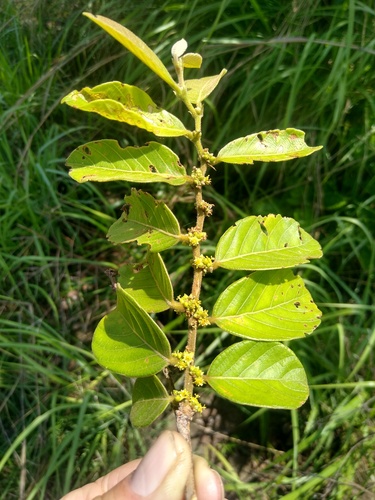
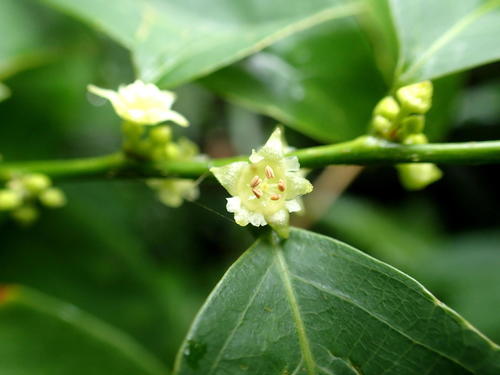
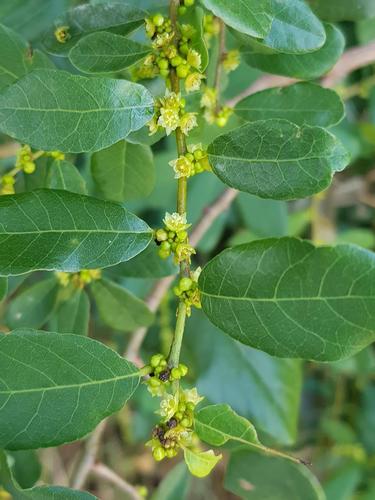
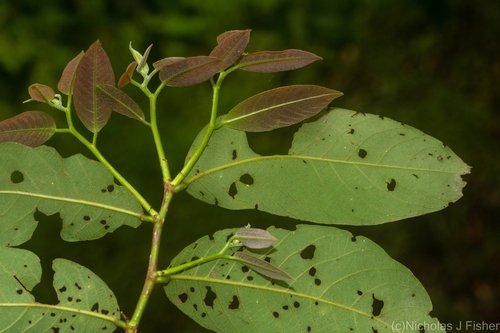
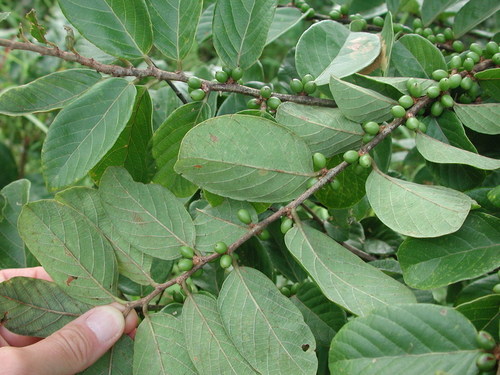
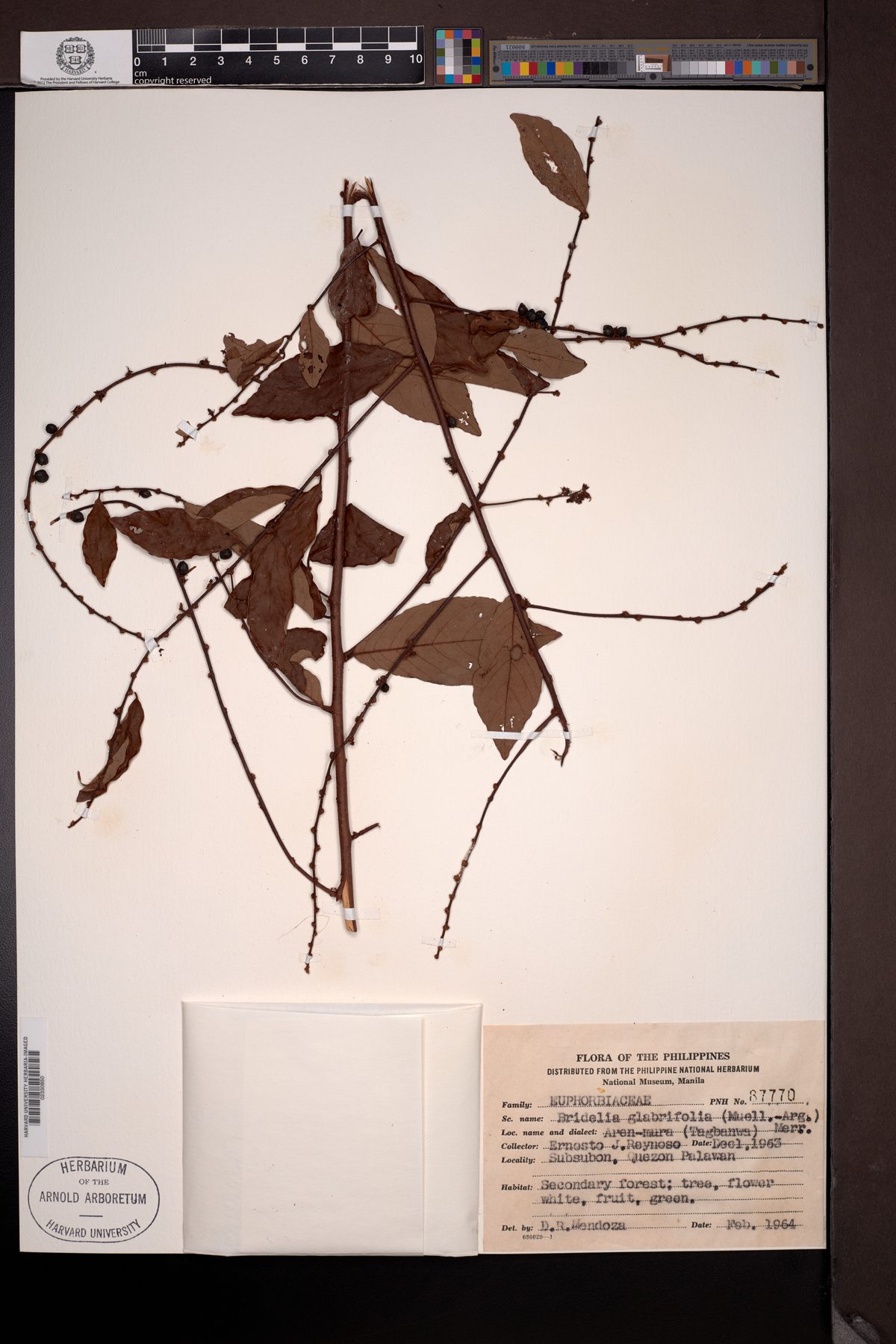
A small tree which grows 3-6 m tall. The tree has a stiff habit. Trees can grow to 20 m tall. It spreads to 2-4 m across. The bark is pale brown. The leaves are oblong or sword shaped and 5-10 cm long by 2-3 cm wide. Leaves are simple and shiny on both surfaces. They are smooth and without hairs and are drawn out into a long point. They have a slender leaf stalk. The female flower bunch has stalks of flowers around a common axis. The bunches are 2-4 cm long. They are slender and produced in the axils of leaves or at the ends of branches. The fruit is about 5 mm across and 7 mm long. The fruit are oval, flattened and red. The fruit are acid and edible. There is one seed about 7 mm long by 5 mm across.
Edible Uses
The acid red fruit can be used for desserts or jam.
Traditional Uses
The fruit can be used for desserts or jam.
This uses section is brief — help expand it
Medicinal Uses
Not mentioned.
Distribution
A tropical plant. It is a plant for the tropics and subtropics. It grows in coastal and highland areas in north east Queensland in Australia. It needs a sunny position and well drained soils. In north Queensland it grows from sea level to 1150 m altitude.
Where It Grows
Australia*, Pacific, Papua New Guinea, PNG,
Cultivation
Plants can be grown from seed or cuttings. Fresh seeds should be used.
Production
Plants may be slow growing. Fruit are available March to November. (September to December).
Other Information
It is not known if it is used for food in Papua New Guinea.
Notes
There are about 100-170 Antidesma species.
References (6)
- Cherikoff V. & Isaacs, J., The Bush Food Handbook. How to gather, grow, process and cook Australian Wild Foods. Ti Tree Press, Australia p 198
- Cooper W & Cooper W T, 1994, Fruits of the Rain Forest. RD Press p 34
- Elliot, W.R., & Jones, D.L., 1982, Encyclopedia of Australian Plants suitable for cultivation. Vol 2. Lothian. p 208
- Jackes, B.R., 2001, Plants of the Tropics. Rainforest to Heath. An Identification Guide. James Cook University. p 52
- Jones D, L, 1986, Ornamental Rainforest Plants in Australia, Reed Books, p 180, 340
Show all 6 references Hide references
- www.pngplants.org