Rhamnus virgata
Roxb.
Buckthorn, Indian buckthorn
iNaturalist· cc-by-nc
(c) Phuentsho, some rights reserved (CC BY-NC), uploaded by Phuentsho
iNaturalist· cc-by-nc
(c) Phuentsho, some rights reserved (CC BY-NC), uploaded by Phuentsho
Description
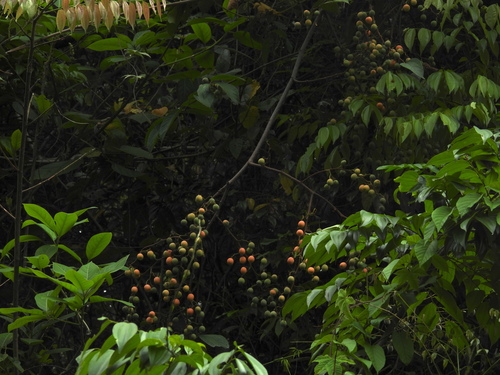
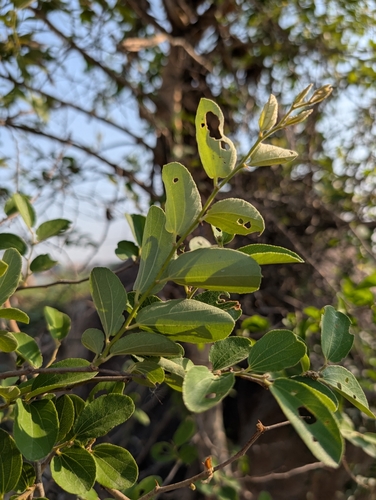
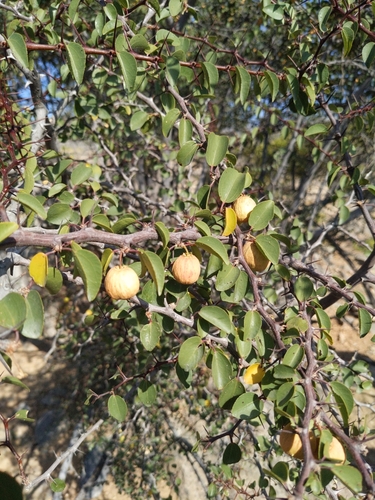
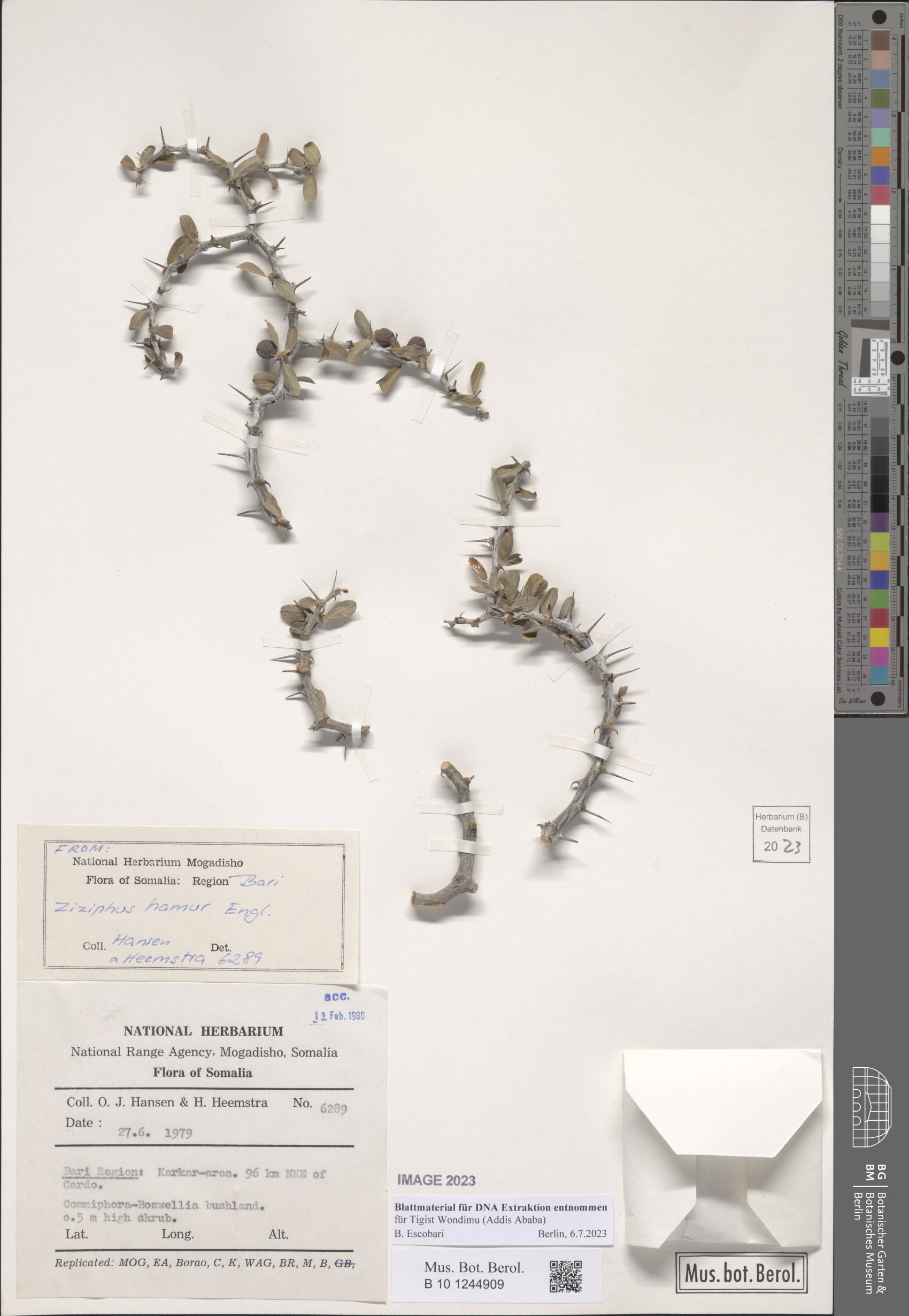
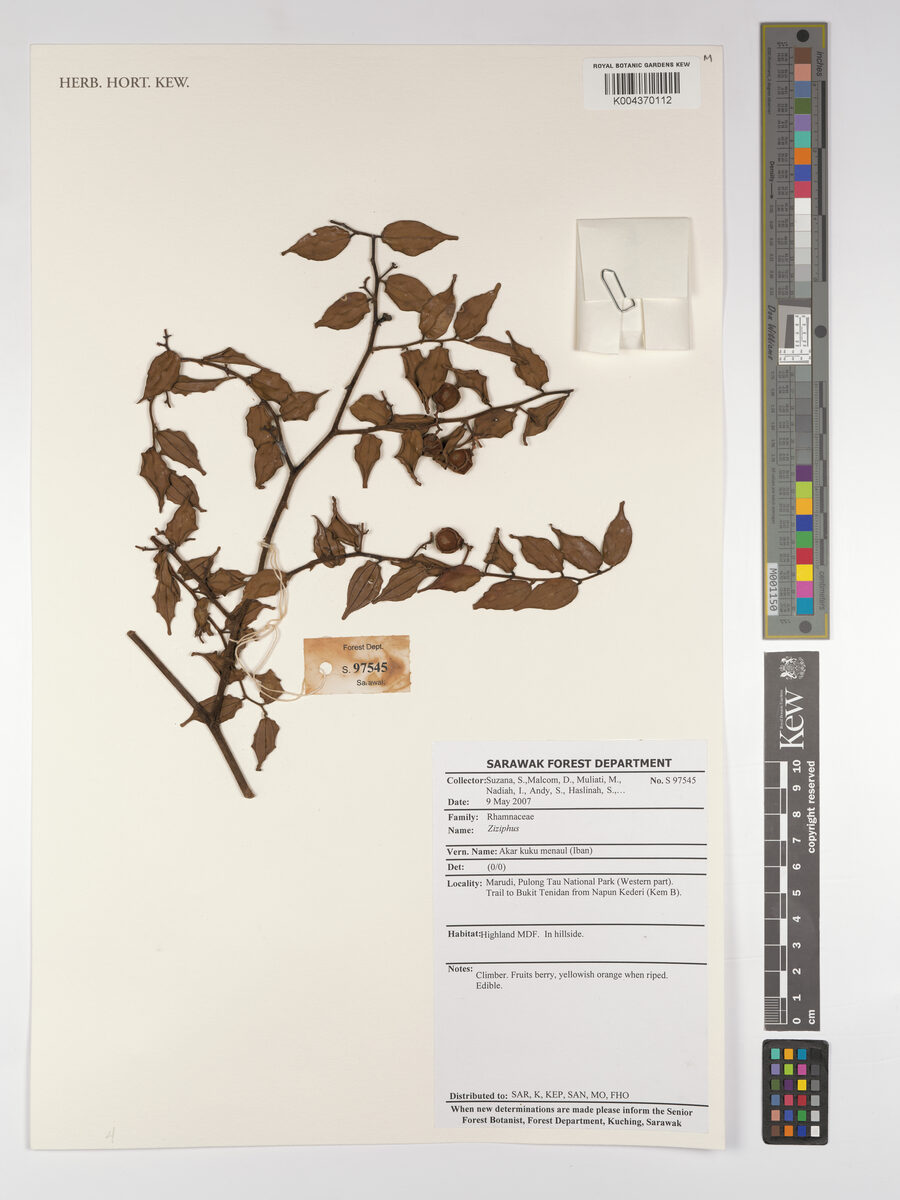
A shrub or small tree. It has many branches. The branches usually end in a sharp thorn. The leaves are almost opposite and 2-10 cm long by 1-6 cm wide. They are narrowly sword shaped. There can be teeth along the edge. The flowers are of one sex and are in the axils of leaves. The flowers are 4-5 mm long. The fruit are oval and 7 mm long. They have 2-4 seeds. The seeds are shiny and have a groove on the back. They are dark brown and 5 mm long by 2 mm wide.
Edible Uses
The leaves are boiled and eaten with salt and oil.
Traditional Uses
The leaves are boiled and eaten with salt and oil.
This uses section is brief — help expand it
Distribution
It is a subtropical plant. In China it grows on mountain slopes between 1,200-3,800 m above sea level. In Sichuan and Yunnan.
Where It Grows
Afghanistan, Asia, Bhutan, China, Himalayas, India, Indochina, Myanmar, Nepal, Northeastern India, Pakistan, SE Asia, Thailand, Tibet,
Notes
There are over 100 Rhamnus species.
Synonyms
Also Known As
Chato, Chadua, Chandul, Chaurda, Chetain, Chetula, Kanji, Tadru
References (5)
- Ambasta S.P. (Ed.), 2000, The Useful Plants of India. CSIR India. p 519
- Plants for a Future database, The Field, Penpol, Lostwithiel, Cornwall, PL22 0NG, UK. http://www.scs.leeds.ac.uk/pfaf/
- READ,
- Fl. ind. 2:351. 1824
- Tsering, J., et al, 2017, Ethnobotanical appraisal on wild edible plants used by the Monpa community of Arunchal Pradesh. Indian Journal of Traditional Knowledge. Vol 16(4), October 2017, pp 626-637