Ziziphus jujuba
Mill., non Lam.
Chinese Date, Chinese jujube
iNaturalist· cc-by-nc
(c) Mohammad Marafi, some rights reserved (CC BY-NC)
iNaturalist· cc-by-nc
(c) oreste83, some rights reserved (CC BY-NC)
iNaturalist· cc-by-nc
(c) Mohammad Marafi, some rights reserved (CC BY-NC)
Summary
Source: WikipediaJujube is a deciduous tree growing to 10m tall and 7m wide at a fast rate, hardy to UK zone 6. Hermaphrodite, insect and bee-pollinated flowers bloom April to May with seeds ripening in October. Self-fertile and wildlife-attracting, it thrives in light sandy, medium loamy, or heavy clay soils, preferring well-drained and nutritionally poor soils. It tolerates mildly acid to very alkaline pH, cannot grow in shade, and adapts to both dry and moist soils with drought tolerance.
Description
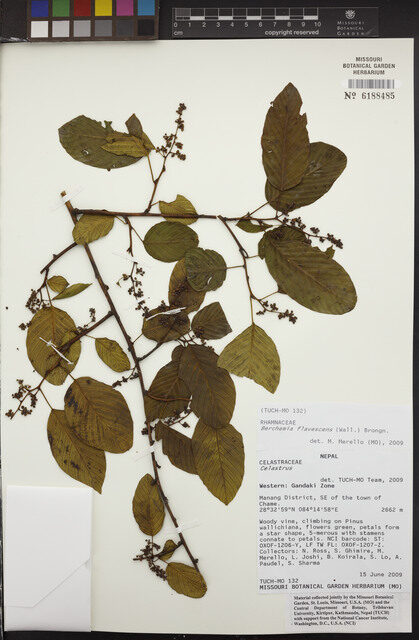
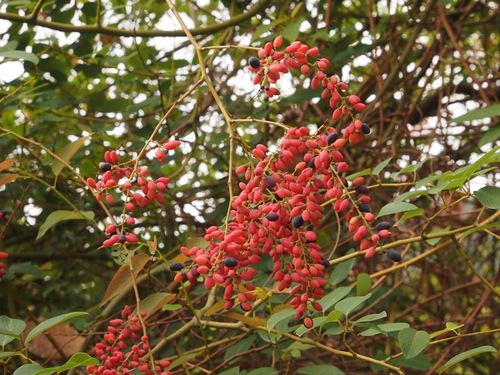
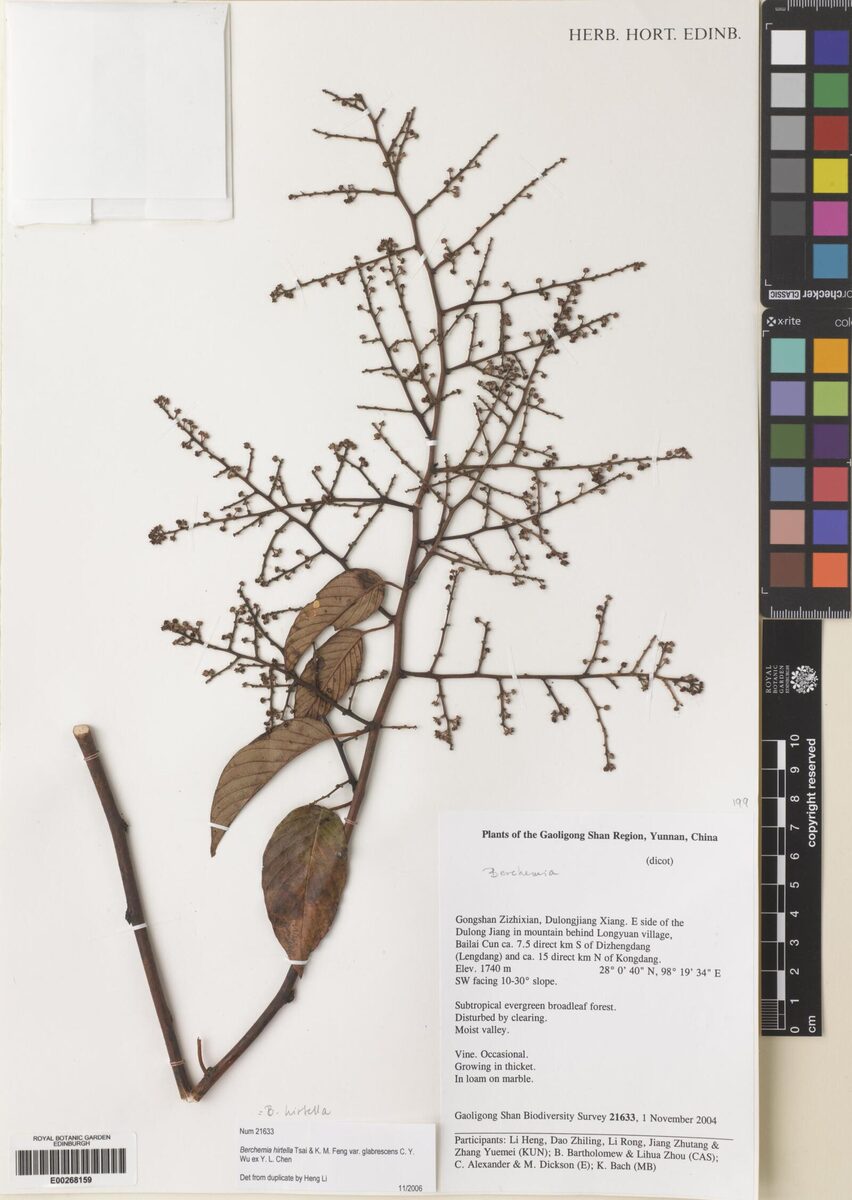
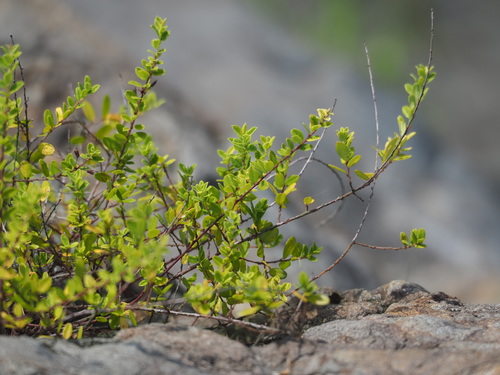
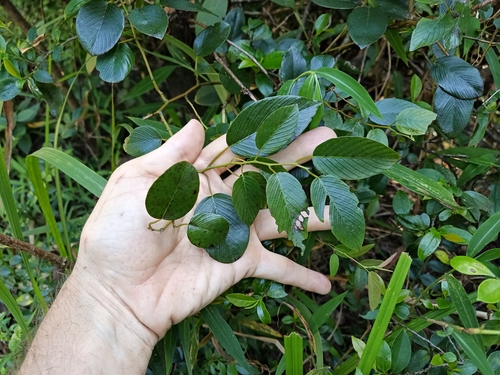
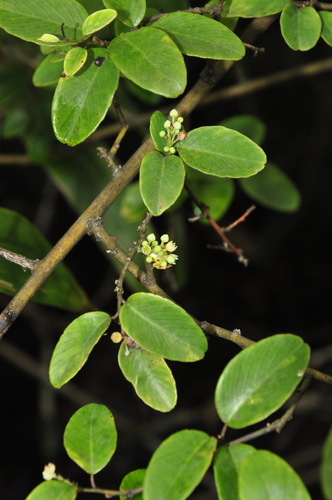
A small deciduous tree. It can grow to 13 m tall. It has drooping branches. There are thorns on the branches. The plant sends up thorny suckers often at a distance from the tree. These need to be cut off. They can be used for rootstock for grafting. The leaves are small and oval. They are 2-5 cm long and bright shiny green. The leaves turn bright yellow before falling. During the growing season, each node of a woody branch produces one to 10 small branches. These fall off later. The flowers are small and 0.5 cm across. They are white to green and produced in large numbers in the angles of leaves. The fruit are round or long and vary from cherry to plum size. They are 2-3 cm long. They have a single hard stone with two seeds. The fruit changes from green to yellow with red spots as it ripens. When fully red and ripe it softens and wrinkles. There are many named varieties.
Edible Uses
The fruit can be eaten raw or cooked and is mealy, sweet, and sourish-sweet in flavour. It can be enjoyed fresh, dried like dates, or used in puddings, cakes, breads, jellies, and soups. Dried fruit has the finest flavour. Fruits are often left to become wrinkled and spongy, which increases their sweetness, before being eaten fresh or cooked. Dried fruit can also be ground into a powder used in preparing kochujang, a fermented hot pepper-soybean paste resembling miso. The fruit contains about 8.7% sugars, 2.6% protein, 1.4% ash, 1.7% pectin, and 1.3% tannin. Each fruit — approximately 25mm long, though cultivated varieties may be larger — contains one or two seeds. Average yields from wild trees in the Himalayas are around 9.5kg per year. The fruit can also serve as a coffee substitute. Dried fruit provides approximately 350 calories per 100g and contains (per 100g): protein 7.3g, fat 1.2g, carbohydrate 84g, fibre 4g, ash 3g, calcium 130mg, phosphorus 168mg, iron 3.5mg, sodium 12mg, potassium 1050mg, vitamin A 125mg, thiamine 0.1mg, riboflavin 0.18mg, niacin 2.8mg, and vitamin C 300mg. The leaves can be cooked and eaten but are considered a famine food, used only when other options are exhausted.
Traditional Uses
The fruit are eaten fresh, dried or preserved in sugar. They can be stewed, baked, pickled, or used in puddings, cakes, breads, jellies, soups and sweetmeats. The ripe fruit are powdered and cooked with millet or rice. The kernels are edible.
Medicinal Uses
Jujube is both a valued food and an effective herbal remedy, known to support weight gain, improve muscular strength, and increase stamina. In Chinese medicine it is prescribed as a tonic to strengthen liver function, and Japanese research has demonstrated that it increases immune-system resistance. In one Chinese clinical trial, 12 patients with liver complaints who were given jujube, peanuts, and brown sugar nightly showed improved liver function within four weeks. The fruit also acts as an antidote, diuretic, emollient, and expectorant. Dried fruits contain saponins, triterpenoids, and alkaloids and are used as an anodyne, anticancer agent, pectoral, refrigerant, sedative, stomachic, styptic, and tonic. They are considered to purify the blood and aid digestion, and are used internally for chronic fatigue, loss of appetite, diarrhoea, pharyngitis, bronchitis, anaemia, irritability, and hysteria. The seed contains saponins, triterpenes, flavonoids, and alkaloids and is used as a hypnotic, narcotic, sedative, stomachic, and tonic, particularly for palpitations, insomnia, nervous exhaustion, night sweats, and excessive perspiration. The root treats dyspepsia; a decoction of the root has been used for fevers, and powdered root is applied to old wounds and ulcers. The leaves are astringent and febrifuge, said to promote hair growth, and are formed into a plaster for treating strangury. The plant is a folk remedy for anaemia, hypertonia, nephritis, and nervous diseases, and is widely used in China as a treatment for burns.
Known Hazards
Caution in diabetics on allopathic medication.
Distribution
A subtropical plant. It can stand high temperatures in summer then due to winter dormancy can tolerate very cold temperatures. It only requires a small winter chill to enable it to fruit. They do best in warm sunny positions. They cannot grow in shade. They do best in sandy well drained soils. They can grow in soils with high salinity or alkalinity. It can tolerate drought but fruits best with adequate rainfall. It grows on the Deccan in India. It grows in western Sudan. It suits hardiness zones 7-10. In Sichuan and Yunnan.
Where It Grows
Afghanistan, Africa, Antigua and Barbuda, Asia, Australia, Balkans, Bangladesh, Belize, Brazil, Britain, Cambodia, Caucasus, Central Africa, Central America, Central Asia, Chad, China, Colombia, Cook Islands, East Africa, Ethiopia, Eurasia, Europe, Fiji, France, Georgia, Ghana, Greece, Guiana, Guianas, Guyana, Himalayas, India, Indochina, Indonesia, Iran, Italy, Japan, Jordan, Kenya, Korea, Laos, Macedonia, Madagascar, Malaysia, Mali, Mauritius, Mediterranean, Mexico, Middle East, Mongolia, Morocco, Myanmar, Nepal, North Africa, North America, Northeastern India, NW India, Pacific, Pakistan, Philippines, Portugal, Russia, Saudi Arabia, SE Asia, Serbia, Sikkim, South America, Spain, Sri Lanka, St. Vincent and Grenadines, Slovenia, Sudan, Suriname, Syria, Tajikistan, Tanzania, Tasmania, Thailand, Tibet, Turkey, Türkiye, Turkmenistan, USA, Uzbekistan, Venezuela, Vietnam, West Africa,
Cultivation
Succeeds in most soils so long as they are well-drained. Prefers an open loam and a hot dry position. Succeeds in an alkaline soil. Plants are fast growing, even in poor soils. Plants are hardy to about -20°c. Another report says that they are hardy to about -30°c when fully dormant. The jujube is often cultivated in warm temperate zones for its edible fruit, there are many named varieties. The trees need a hot dry summer if they are to fruit well, which rather restricts their potential in a country like Britain. The tree spreads by root suckers and self-sowing, often forming dense thickets. Where the climate suits it, the plant can escape from cultivation and become an invasive and problematic weed. Trees are resistant to most pests and diseases. Responds well to coppicing. Trees form a deep taproot and should be planted into their permanent positions as soon as possible. Fast growing and quick to mature, it can fruit in 3 - 4 years from seed. A sprouting standard sending up shoots from the base. most cultivars of the Ziziphus jujuba tree (jujube) are self-fertile. However, pollination can be improved by introducing bees. Fruits are typically harvested in late Summer to early Autumn. It flowers from late Spring to early Summer. Jujube is a moderately fast-growing tree that, under optimal conditions, reaches maturity in about 3-4 years.
Propagation
Seed is best sown in a cold frame as soon as it is ripe. Stored seed requires 3 months of warm stratification followed by 3 months of cold stratification. Germination should occur in the first spring, though it may take a further 12 months. Prick seedlings into individual pots when large enough to handle and grow on in a cold frame for at least the first winter before planting out in early summer. Root cuttings can be taken in a greenhouse in winter; best results come from maintaining a temperature of 5–10°C. Cuttings of mature wood from the current season's growth can be taken November to January in a frame. Suckers can be divided during the dormant season and planted directly into permanent positions if needed.
Other Uses
Ziziphus jujuba can be used in windbreaks, hedgerows, and for soil improvement through nitrogen fixation, and also provides shade and erosion control. Plants can be grown as a hedge and trained as an espalier. The small fragrant flowers are rich in nectar and attract pollinators including bees. The fruit is eaten by birds and other wildlife, and the dense foliage provides shelter for nesting and roosting. Rough bark and dense foliage also offer overwintering sites for some invertebrates. The wood is dense, hard, compact, and tough, used for turnery and agricultural implements; it also makes excellent fuel and good charcoal.
Production
Fruit are produced 4-5 years after planting. Fruit do not ripen at the same time so fruit can be picked from the one tree over several weeks. Fruit need to be picked when ripe. Ripe fruit can be stored at room temperature for about one week. Tree dried fruit stores for a long time.
Other Information
It is a cultivated food plant. About half a million hectares are grown in Xingjiang in China.
Notes
Plants are affected by witches broom (phytoplasma) that are spread by insects. Calcium chloride has been used to stop fruit cracking. Fruit are reasonably high in folates 23μg/100.
Nutrition
| Part | Moisture | kJ | kcal | Protein | Vit A | Vit C | Iron | Zinc |
|---|---|---|---|---|---|---|---|---|
| Fruit dried | 19.7 | 1201 | 287 | 3.7 | — | 13 | 1.8 | 0.2 |
| Fruit - raw | 77.9 | 331 | 79 | 1.2 | 4 | 69 | 0.5 | 0.1 |
Synonyms
Also Known As
Adidaram, Amlai, Annep, Attiram, Azufaifa, Azufatio, Baira, Bairi, Ban ber, Barari, Bary konkamber, Bayar, Bayer, Bedara china, Ber, Bera, Beri, Boroi, Dara, Debara, Elanthai, Eng-si, Hirnap, Hung jo, Hung zao, Hunnap, Jand beri, Jujube, Kandiari, Kandika, Karkanra, Kunezi, Lian hua, Mahkaw, Makhkaw-hku, Malay jujube, Mansanitas, Markhanai, Markhanray, Masan, Matan, MotaBor, Moti ber, Mutondo, Nabak, Navadni čičimak, Olijf, Phitni, Phut-saa-chiin, Phut-sah-chin, Pitni-ber, Put sa, Ranbor, Reygoo, Sagee, Sageen, Seo bair, Sengri, Simli, Singli, Suanzao, Tao ta, Tomonon, Tsao, Unab, Unabi, Unnab, Urnabi, Widara, Yellanday kai, Yububa, Zazen, Zi, Zi-daw-thi
References (104)
- Abbiw, D.K., 1990, Useful Plants of Ghana. West African uses of wild and cultivated plants. Intermediate Technology Publications and the Royal Botanic Gardens, Kew. p 42
- Ahmad, K. & Pieroni, A., 2016, Folk knowledge of wild food plants among the tribal communities of Thakht-e-Sulaiman Hills, North-West Pakistan. Journal of Ethnobiology and Ethnomedicine, 12:17
- Alexander, D.M., Scholefield, P.B., Frodsham, A., 1982, Some tree fruits for tropical Australia. CSIRO, Australia. p 17
- Ali, H., et al, 2011, Ethnobotanical profile of some plant resources in Malam Jabba valley of Swat, Pakistan. Journal of Medicinal Plants Research Vol. 5(18), pp 4676-4687
- Al-Qura'n, S. A., 2010, Ethnobotanical and Ecological Studies of Wild Edible Plants in Jordan. Libyan Agriculture Research Center Journal International 1(4):231-243 (As Ziziphus ziziphus)
Show all 104 references Hide references
- Ambasta, S.P. (Ed.), 2000, The Useful Plants of India. CSIR India. p 702
- Amin, M., et al, 2023, Edible wild plant species used by different linguistic groups of Kohistan Upper Khyber Pakhtunkhwa (KP), Pakistan. Journal of Ethnobiology and Ethnomedicine 19:6 p 14
- Arora, R. K., 2014, Diversity in Underutilized Plant Species - An Asia-Pacific Perspective. Bioversity International. p 90
- Ashton, M. S., et al 1997, A Field Guide to the Common Trees and Shrubs of Sri Lanka. WHT Publications Ltd. pdf p 317
- Balkrishna, A., et al, 2022, Indigenous Uses of Plants among Forest-dependent Communities of Seijosa, Arunachal Pradesh. International Journal of Economic Plants 2022, 9(1):064-080
- Barwick, M., 2004, Tropical and Subtropical Trees. A Worldwide Encyclopedic Guide. Thames and Hudson p 429
- Bhatia, H., et al, 2018, Traditionally used wild edible plants of district Udhampur, J&K, India. Journal of Ethnobiology and Ethnomedicine (2018) 14:73
- Bianchini, F., Corbetta, F., and Pistoia, M., 1975, Fruits of the Earth. Cassell. p 164
- Blamey, M and Grey-Wilson, C., 2005, Wild flowers of the Mediterranean. A & C Black London. p 130 (As Zizyphus zizyphus)
- Bodkin, F., 1991, Encyclopedia Botanica. Cornstalk publishing, p 1036 (As Ziziphus vulgaris var. spinosus)
- Bremness, L., 1994, Herbs. Collins Eyewitness Handbooks. Harper Collins. p 90
- Burkill, I.H., 1966, A Dictionary of the Economic Products of the Malay Peninsula. Ministry of Agriculture and Cooperatives, Kuala Lumpur, Malaysia. Vol 2 (I-Z) p 2348
- Burkill, I.H., 1966, A Dictionary of the Economic Products of the Malay Peninsula. Ministry of Agriculture and Cooperatives, Kuala Lumpur, Malaysia. Vol 2 (I-Z) p 2347 (As Ziziphus vulgaris)
- Bussman, R. W., et al, 2021, Unity in diversity—food plants and fungi of Sakartvelo (Republic of Georgia), Caucasus. Journal of Ethnobiology and Ethnomedicine (2021) 17:72 p 13
- Cengel, D. J. & Dany. C., (Eds), 2016, Integrating Forest Biodiversity Resource Management and Sustainable Community Livelihood Development in the Preah Vihear Protected Forest. International Tropical Timber Organization p 110
- Cheifetz, A., (ed), 1999, 500 popular vegetables, herbs, fruits and nuts for Australian Gardeners. Random House p 257
- Coronel, R.E., 1982, Fruit Collections in the Philippines. IBPGR Newsletter p 8
- CRÉAC'H, (As Ziziphus orthocantha)
- Cundall, P., (ed.), 2004, Gardening Australia: flora: the gardener's bible. ABC Books. p 1498
- Darley, J.J., 1993, Know and Enjoy Tropical Fruit. P & S Publishers. p 130
- Diarra, N. et al, 2016, Etude ethnobotanique des plantes alimentaires utilisées en période de soudure dans les régions Sud du Mali. Int. J. Biol. Chem. Sci. 10(1): 184-197
- Engel, D.H., & Phummai, S., 2000, A Field Guide to Tropical Plants of Asia. Timber Press. p 115
- Ertug, F, Yenen Bitkiler. Resimli Türkiye Florası -I- Flora of Turkey - Ethnobotany supplement
- Facciola, S., 1998, Cornucopia 2: a Source Book of Edible Plants. Kampong Publications, p 191
- Flora of China. www.eFloras.org (As var. spinosa)
- Flora of Pakistan. www.eFloras.org
- Flowerdew, B., 2000, Complete Fruit Book. Kyle Cathie Ltd., London. p 163
- Flowerdew, B., 2000, Complete Fruit Book. Kyle Cathie Ltd., London. p 163 (As Ziziphus vulgaris var. spinosus)
- Food Composition Tables for use in East Asia FAO http://www.fao.org/infoods/directory No. 884
- Fowler, D. G., 2007, Zambian Plants: Their Vernacular Names and Uses. Kew. p 54
- Gard. dict. ed. 8: Ziziphus no. 1. 1768
- Gautam, R. S., et al, 2020, Wild Edible Fruits of Nepal. Int. J. Appl. Sci. Biotechnol. Vol 8(3): 289-304
- Gunes, S. et al, 2018, Survey of wild food plants for human consumption in Karaisali (Adana-Turkey). Indian Journal of Traditional Knowledge. Vol. 17(2), April 2018, pp 290-298
- Hamayun, M., Ethnobotanical Studies of some Useful Shrubs and Trees of District Buner, NWFP, Pakistan
- Hedrick, U.P., 1919, (Ed.), Sturtevant's edible plants of the world. p 706
- Hedrick, U.P., 1919, (Ed.), Sturtevant's edible plants of the world. p 707 (As Ziziphus sativa)
- Heywood, V.H., Brummitt, R.K., Culham, A., and Seberg, O. 2007, Flowering Plant Families of the World. Royal Botanical Gardens, Kew. p 278
- Hibbert, M., 2002, The Aussie Plant Finder 2002, Florilegium. p 311
- http://www.botanic-gardens-ljubljana.com/en/plants
- Hu, Shiu-ying, 2005, Food Plants of China. The Chinese University Press. p 531
- Illustrated Flora of Central Texas p 936 (As Ziziphus zizyphus)
- IRVINE,
- Jackes, D. A., 2007, Edible Forest Gardens
- Jardin, C., 1970, List of Foods Used In Africa, FAO Nutrition Information Document Series No 2.p 169
- Jia, X., et al, 2022, Ethnobotany of wild edible plants in multiethnic areas of the Gansu–Ningxia–Inner Mongolia junction zone. Journal of Ethnobiology and Ethnomedicine 18:53
- John, L., & Stevenson, V., 1979, The Complete Book of Fruit. Angus & Robertson p 165
- Kamal, M., et al, 2009, Ethnobotanically Important Plants of District Bannu, Pakistan. Pak. J. Pl. Sci., 15 (2): 87-93
- Karki, S., et al, 2017, Minor Fruits in Nepal: Utilization and Conservation Efforts. Proceedings of 2nd National Workshop on CUAPGR, 2017.
- Kaya, O. M., et al, 2020, An ethnobotanical research in Sanhurfa central district and attached Villages (Turkey). Indian Journal of Traditional Knowledge. Vol. 19(1) pp 7-23
- Khan, D. & Shaukat, S.S., 2006, The Fruits of Pakistan: Diversity, Distribution, Trends of Production and Use. Int. J. Biol. Biotech., 3(3):463-499
- Khojimatov, O. K. et al, 2015, Some wild growing plants in traditional foods of Uzbekistan. Journal of Ethnic Foods. 2 (2015) 25-28
- Khan, A. H., et al, 2023, Traditional foraging for ecological transition? Wild food ethnobotany among three ethnic groups in the highlands of the eastern Hindukush, North Pakistan. Journal of Ethnobiology and Ethnomedicine 19:9
- Kiple, K.F. & Ornelas, K.C., (eds), 2000, The Cambridge World History of Food. CUP p 1794
- Kiran, K. C., et al, 2019, Diversity and Seasonal Availability of Potential Wild Edible Plants from Vidarbha Region of Maharashtra State, India. Int.J.Curr.Microbiol.App.Sci (2019) 8(2): 1434-1446
- Majeed, M., et al, 2021, Gathered Wild Food Plants among Diverse Religious Groups in Jhelum District, Punjab, Pakistan. Foods 2021, 10, 594.
- Martin, F. W., et al, 1987, Perennial Edible Fruits of the Tropics. USDA Handbook 642 p 53
- McMakin, P.D., 2000, Flowering Plants of Thailand. A Field Guide. White Lotus. p 108
- Morley, B.D., & Toelken, H.R., (Eds), 1983, Flowering Plants in Australia. Rigby. p 226
- Mutie, F. G., 2020, Conservation of Wild Food Plants and Their Potential for Combatting Food Insecurity in Kenya as Exemplified by the Drylands of Kitui County. Plants 2020, 9, 1017
- Mutie, F. M., et al, 2023, Important Medicinal and Food Taxa (Orders and Families) in Kenya, Based on Three Quantitative Approaches. Plants 2023, 12, 1145
- Nassif, F., & Tanji, A., 2013, Gathered food plants in Morocco: The long forgotten species in Ethnobotanical Research. Life Science Leaflets 3:17-54
- Parmar, C., & Kaushel, M. K., 1982, In Wild Fruits. Kalyani Publishers, New Delhi, India. p 98
- Phangchopi, U., et al, 2015, Diversity of wild edible plants in Marat Longri Wildlife Sanctuary, Assam. Indian Journal of Natural Products and Resources Vol. 6(4), December 2015 pp. 305-313
- Pieroni, A., et al, 2005, Food for two seasons: Culinary uses of non-cultivated local vegetables and mushrooms in a south Italian village. International Journal of Food Sciences and Nutrition, 56(4): 245-272
- Plants for a Future database, The Field, Penpol, Lostwithiel, Cornwall, PL22 0NG, UK. http://www.scs.leeds.ac.uk/pfaf/
- Pradhan, R., et al, 2020, Potential Wild Edible Plants and its Significance in Livelihood of Indigenous People of Male Mahadeshwara Hills, Karnataka. Economic Affairs Vol. 64, No. 4 pp. 01-14
- Purseglove, J.W., 1968, Tropical Crops Dicotyledons, Longmans. p 642
- Rajapaksha, U., 1998, Traditional Food Plants in Sri Lanka. HARTI, Sri Lanka. p 415
- Rashid, A., Anand, V.K. & Serwar, J., 2008, Less Known Wild Plants Used by the Gujjar Tribe of District Rajouri, Jammu and Kashmir State. International Journal of Botany 4(2):219-244
- Rashid, H. E., 1977, Geography of Bangladesh. Westview. p 346
- READ, (As Ziziphus vulgaris var. spinosus)
- Reich, L. , 1991, Uncommon Fruits Worthy of Attention. Reading, Mass., Addison-Wesley pp 139-146
- Reitveld, S., 2013, The Animals and Plants of the Zazamalala Forest in Western Madagascar. p 131
- Roa, J. A. G. & Boada, D. S. G., 2018, Fundación para el Fortalecimiento de la Fruticultura y Plantas Alimenticias no Convencionales en Colombia.
- Roth, W.E., 1901,
- Sansanelli, S., et al, 2017, Ethnobotanical survey of wild food plants traditionally collected and consumed in the Middle Agri Valley (Basilicata region, southern Italy). Journal of Ethnobiology and Ethnomedicine (2017) 13:50
- Segura, S., et al, 2018, The edible fruit species in Mexico. Genet Resour Crop Evol (2018) 65:1767–1793
- Sawian, J. T., et al, 2007, Wild edible plants of Meghalaya, North-east India. Natural Product Radiance Vol. 6(5): p 423
- Self, M., 199, Phoenix Seeds catalogue. p 15
- Sher, Z., Hussain, F., & Ibrar, M., 2014, Traditional knowledge on plant resources of Ashezai and Salarzai Valleys, District Buner, Pakistan. African Journal of Plant Science. Vol. 8(1), pp. 42-53, January 2014
- SHORTT,
- Smith, A.C., 1985, Flora Vitiensis Nova, Lawaii, Kuai, Hawaii, Volume 3 p 697
- Smith, K., 1998. Growing Uncommon Fruits and Vegetables. New Holland. p 80
- Solomon, C., 2001, Encyclopedia of Asian Food. New Holland. p 192
- Sivakumar, A. & Murugesan, M., 2005, Ethnobotanical Studies of the wild edible plants used by the tribals of the Anaimalai Hills, the Western Ghats. Ancient Science of Life. XXV(2) Oct-Dec.
- Standley, P. C. & Record, S. J., 1936, The Forests and Flora of British Honduras. (Belize). p 238
- Striegel, L., et al, 2019, Promising Tropical Fruits High in Folates. Foods 2019, 8, 363; doi:10.3390/foods8090363. www.mdpi.com/journal/foods
- Tankard, G., 1990, Tropical fruit. An Australian Guide to Growing and using exotic fruit. Viking p 106
- Tardio, J., et al, Ethnobotanical review of wild edible plants in Spain. Botanical J. Linnean Soc. 152 (2006), 27-71
- USDA, ARS, National Genetic Resources Program. Germplasm Resources Information Network - (GRIN). [Online Database] National Germplasm Resources Laboratory, Beltsville, Maryland. Available: www.ars-grin.gov/cgi-bin/npgs/html/econ.pl (10 April 2000)
- Valder, P., 1999, The Garden Plants of China. Florilegium. p 345
- van Wyk, B., 2005, Food Plants of the World. An illustrated guide. Timber press. p 391
- WATT,
- Wiersema, J. H. & Leon, B., 2013, World Economic Plants. A Standard Reference CRC Press. 2nd Ed. p 736
- Woo, Y., et al, 2017, Antioxidant Potential of Selected Korean Edible Plant Extracts. Hindawi BioMed Research International Volume 2017, Article ID 7695606
- World Checklist of Useful Plant Species 2020. Royal Botanic Gardens, Kew
- www.ethnobiomed.com
- http://cookislands.bishopmuseum.org
- Zawiah, N. & Othaman, H., 2012, 99 Spesies Buah di FRIM. Institut Penyelidikan Perhutanan Malaysia. p 238